When I was little, I used to love watching The Snowman. Along with Rupert and the Frog Song, it was one of those short, music-based children’s films that I wanted to watch again and again, bursting into tears every time it ended until dad or mum rewound the video. As you can read here, it is now forty years old, and its creation is being celebrated with a new version. The new version is played on a violin rather than sung. While it’s good to see an old Christmas classic being kept alive, if you ask me it doesn’t come close to the original, and I certainly can’t see myself wanting to listen to it over and over again.
Author: tiiroac
Try Rwanda
This seems very topical.

There’s Cold, And Then There’s Cold
I probably jumped the gun slightly when I blogged about how cold it was last week, particularly given how mild it has been since. Earlier I saw the jaw-dropping news that temperatures in North America could soon reach as low as -45C. I must say I find that astonishing: I had no idea that temperatures on Earth, outside the Arctic or Antarctic, could get so low. Last week was cold enough, but how could anyone survive such freezing weather? I certainly couldn’t: my powerchair would probably just cease up as soon as I went outside, so my heart goes out to any fellow disabled people who have to cope in such scary conditions. I also worry about what this weather implies regarding climate change.
I See No Strikes
As I wrote a few days ago, I totally support the NHS strikes. What the Tories have forced nurses and their colleagues to do is disgraceful. The government bears complete responsibility for any deaths which might occur as a result of these strikes, and the fact that they are trying to pin the blame on the nurses is even more sickening. With that in mind, this afternoon I decided to check things out for myself by trundling over to my local hospital to see what was going on. It isn’t far, and I was in the mood for some political activism. I wanted to show any strikers I found my support. Getting there, however, I was disappointed: the Queen Elizabeth hospital was quiet and normal, with no sign of any strikes. My hopes of an exciting, political afternoon sticking it up the Tory scumbags suddenly disappeared, and I trundled on.
The Briefest Interaction
It’s strange, but these days I rarely have any real physical contact with friends. Apart from Serkan and John, I rarely actually interact with anyone I consider a friend. These days all my friends are online, and whereas when I was living in Charlton I used to go to the park café to talk to people, I don’t have anywhere I go like that any more. I suppose I fell out of the habit during the pandemic, and I rather miss it.
This afternoon, though, a strange, fleeting thing happened. I was coming back from the South Bank: it had been absolutely ages since I had been there, and I wanted to go somewhere other than Stratford. I also wanted to see the Globe and BFI again, just to see what, if anything, was on. On my way home I was trundling through North Greenwich station, when I saw another powerchair user getting off the same train I was. We both then headed towards the lift.
When I caught up with her, I noticed she had a PA with her. She had CP too, so I started to try to chat to them both, first making a silly joke and then introducing myself. Funnily enough it turned out that her name was Charlottte.
It was only the briefest interaction. We walked from the lift to the bus stops together, talking a bit, and then parted ways. I didn’t even get her surname or contact details. Yet, strangely, it felt so good to be talking to someone new, making a new friend. I can’t remember the last time I had spoken to anyone like that though, and who knows whether I’ll ever meet either Charlotte or her personal assistant again. It appears that the last three years have socially distanced everyone in more ways than one.
The Degradation of Journalism
What could have caused the current rise in outspoken, vitriolic journalism? People like Jeremy Clarkson have publishing articles in the tabloid press which are becoming increasingly hate filled and crass. Thousands of people have now complained about an article Clarkson published a couple of days ago, in which he mouthed off about Princess Meghan. Yet this is typical of such so-called journalists. They obviously do it to get attention: they want to appeal to people who think that reading such shyte somehow renders them independent, free thinkers, rebelling against the so-called snowflake mainstream. Thus they print any baseless absurdity which comes to mind, deliberately trying to antagonise and insult, not caring who they insult. In fact, the more insulting they become the better, as it gives their core readership a false sense of superiority. The result, ultimately, is the total degradation of journalism.
I can’t help wondering, though, whether this trend started online. The internet is now a Wild West of heresy and speculation, claim and counterclaim. Bloggers and YouTubers constantly compete for an audience, making all sorts of claims in order to get hits, struggling to stand out. The result of this free for all is the rise of conspiracy theories and quackery, as every self-ordained influencer vies for attention by attempting to appear more and more outspoken. Online discourse is thus slowly reduced to a hodgepodge of reactionary nonsense as people begin making claims which are less and less qualified. Unfortunately this trend is now being echoed in the print media, especially the tabloid press, so it has reached the point where I would not insult my shit by wiping my arse with rags like the Sun, Mail or Express. Like online influencers, journalists are under more and more pressure to stand out, to appear to be breaking the mould. The things they print therefore become more and more crass and unjustified. This is one of the nastier effects that the online world has had on the physical one, and I dread to think where it will end.
To Kill A Mockingbird On Stage
Last night was very, very special indeed. In fact it was quite incredible. I don’t read much these days, and know I should read much more. I used to really like reading, and as a teenager and young adult I was really into books. One of my all-time favourites was/is Harper Lee’s To Kill A Mockingbird. It was one of the books I studied for GCSE English Literature, and is the kind of book which stays with you: the characters Lee created are so vivid, the lessons she teaches are so strong, that a reader can’t help falling in love with the text. I, like many others, see To Kill A Mockingbird as an all-time classic, and one of the great works of twentieth century literature.
A couple of days ago, John messaged me over Facebook, suggesting that we go and watch the stage adaptation up in Soho. At first I was in two minds about it: it would mean re-arranging my Saturday night routine. Yet, after a bit of thought, it soon struck me as a good idea. After all, I can’t remember the last time I went to the theatre, and would make a nice change from my usual Saturday night in front of the TV. John also mentioned a scheme where Personal Assistants get cheaper tickets, which made it even more appealing.
Thanks to the Elisabeth Line, getting up into central London is now easier than ever: a short bus ride takes us to Woolwich, and within half an hour we were in the midst of a bustling metropolis on a Saturday night. I had forgotten how thrilling it was to be up there, with all the lights, noise and people. Yet the greatest moments were yet to come.
The Gielgud Theatre is just a short, easy walk from Tottenham Court Road Station. Getting there I was a bit worried about accessibility, but as usual we were shown in to the theatre through a side door. The theatre was grand and palatial, with three tiers of seats overlooking the stage. I honestly couldn’t remember the last time I had been in such a space. I got out of my powerchair, took my seat, and the play soon began.
Quite a lot has been written about adapting books into plays. As with film adaptations, it isn’t straightforward: you are essentially translating a narrative from one artistic language into another, and there are many creative choices writers and directors have to make – choices which an audience may disagree with. Yet as soon as the performance began last night, I was transported back twenty-five years to Mr Dale’s English class at Woodford Lodge High School; as well as to Maycomb Alabama, around seventy years before that. It was truly, truly incredible: as soon as the character Scout, played by Anna Munden, appeared on stage, it felt like I had been reunited with a long lost friend who I hadn’t spoken to in many decades, but whose voice I remembered as vividly as the sound of birdsong.
The performance itself was incredible. After only one viewing, I don’t feel I can give a proper review, but I must say the direction, production and set design were immaculate. The theatre has quite a sophisticated stage which moves, which made scene changes almost seamless. More than that though, the performances the actors gave were jaw dropping. I have always sort of associated the figure of Atticus Finch with Gregory Peck, who famously played him in the 1962 film adaptation; yet to see Matthew Modine play him last night blew me and the rest of the audience away. Modine brought Atticus to life so that Maycomb’s only honourable man really felt like he was there, on the stage in central london. His performance was touching and nuanced, yet ultimately tragic: as good and noble a man as atticus was, as much as he saw the folly of prejudice, he didn’t understand how deeply those prejudices ran or how unshakable they were. That really came across in Modine’s performance last night, so that you really felt for this man, battling in vain against utterly repugnant forces.
Of course, similar plaudits could be awarded to the rest of the cast. I won’t go through their performances one by one, but as an ensemble they were magnificent, playing off one another as if they were family. A hell of a lot of effort had clearly been put into producing this show, and that dedication to performing a truly great, noble story – one which seeks to right the wrongs of an unjust world – really came across last night. It had been well over twenty years since I last read Lee’s book, but last night it came flooding back, reminding me why it was so special: Lee’s first person prose is so evocative of a time and place I had no experience of, that it made me half believe that I was actually there. To see that translated onto the stage, so that a theatre in Soho was actually transported to the American deep south for three hours on a Saturday evening, was truly remarkable.
My appetite for theatre has now been reignited. If I can just pop up into central London to watch a play like John and I did last night, what else can I do. And if they are that jaw-droppingly good, then surely I need to see more. Yet more than that, last night I watched the stage adaptation of a text which still means so much to me; characters I knew from my childhood brought vividly to life. Evenings like that really stick with you, and give joy and meaning to life.
I Support Striking Nurses
I was in two minds about posting my entry yesterday. It is a piece of writing I had been working on for three or four days, and part of me thought I should save it to develop further, and blog about something else. I’m aware that, if I start ranting about religion too much, it will just get repetitive and people will stop reading my ramblings. I also know that there are plenty of other things I can write about here, not least the current strikes. Yet the problem with that is, where on Earth do I begin, and what can I possibly contribute? I therefore felt a bit apprehensive about blogging about it, so I wrote about something else entirely.
Of course I support the strikes, especially the nurses strike. We all now owe so much to the NHS; what NHS did for this country during the pandemic put it’s value beyond doubt. Of course it’s nurses deserve to be payed properly. Yet I’m quite sure anyone reading this will know that already: it’s blindingly obvious to anyone who looks at the situation that the Tories are slowly trying to run the health service into the ground so that they can eventually privatise it. The way in which they have been trying to turn public opinion away from it by demonising the nasty evil striking nurses should make that all the more apparent. Thus while I thoroughly support the nurses in their struggle for fair pay, I’m not sure there is anything I can say on here which would help their cause, which hasn’t already been expressed far more eloquently elsewhere. All I can really say is that the nurses have my unwavering support, and that I really hope they get the pay they deserve.
Should Street Preaching Be Banned?
When it is confined to churches and mosques, I can just about abide religion. At least people have a choice whether to go to church to listen to the bullshit or not. When it comes to preaching in the street, though, I have a real and growing problem. Surely people have a right to go about their business in peace, and not to have religious dogma forced upon them by preachers yelling through microphones, demanding we all start to believe their set of myths and submit to their authority. To do that seems to me the height of arrogance; to force their views onto everyone else , shouting that we will all burn in hell if we don’t believe their baseless crap, seems utterly perverse. Such dogma has been used to trap and control people for aeons, and I find seeing it being imposed on the public in high streets and public places quite sickening.
I now think street preaching ought to be banned, especially in multicultural, multi-ethnic cities such as London. Of course, those who defend it will do so by saying they have the Freedom of speech; yet people also have a right to go shopping without being forcibly indoctrinated. What such preachers are doing is aggressive and repressive: It usurps people’s fear of death to sucker them in, so that they can be controlled and manipulated, often bribed into ‘donating’ huge sums of money. Surely this has no place in any modern society, and should be seen as the scam it is. For this to be happening on the high street, where people are forced to listen to this arrogant indoctrination, is surely sickening.
I was up in stratford recently, just for a walk. There is a huge shopping complex there, next to the olympic park. Just outside the tube station is a public square. There was quite a large group of religious zealots, all gathered around a man who was mouthing his head off about how ‘Jesus was the only way to be saved’. He was shouting very loudly indeed, so that there was no way to ignore him; he was forcing his views and beliefs onto everyone in the area. If he had been shouting about anything else, I have no doubt he would have been arrested for disturbing the peace; or even sectioned as mentally ill, given the baseless, absurd gibberish he was spouting. Yet because it was based upon Christianity, he was allowed to keep shouting, demanding that everyone believes what he did; insisting that what he said was the only ‘truth’ and that all other views were invalid; and that anyone who did not listen to him was going to suffer for eternity after they die.
As much as I believe that all views can and must be tolerated, I have a real problem with this. Religion is nothing but a scam: a trap which has held people back for centuries. While it claims to give people hope and a sense of belonging, that hope is based upon nothing but a delusion, one which ensnares people, bringing them under the control of preachers so that they can be exploited. Such preachers use the fear of death, among other things, to entice people, trapping them into a baseless delusion they are never allowed to escape from; such delusions are reinforced over and over again in the name of ‘peace’ or ‘hope’, but simply act to maintain the authority of religious leaders. They cannot allow anyone to question the validity of the myths they derive their authority from, lest such authority evaporate. We see conspiracy theorists doing exactly the same things: using people’s fears to control them, entrapping them with proven falsehoods and outright lies, offering people secret knowledge which only they have access to. Why, then, is one shunned while the other is revered? If we saw someone in the high street shouting that the moon is made of cheese, 9/11 didn’t happen and that wanking makes you go blind, passers by would either ignore them or call the police.
After all, the idea that the world was created in six days by an omnipotent, omnipresent creator-being about seven thousand years ago is surely as ridiculous as the notion that the Earth is flat rather than spherical, and the idea that it is a globe is a huge hoax spun by NASA, or other inane conspiracy ‘theories’. Yet where conspiracy theorists are, these days, mostly confined to spouting utter tripe on Youtube in their increasingly desperate and laughable efforts to attract viewers, we award religious preachers the authority of teachers, doctors or politicians, despite having never been elected by anyone, or never having gone through the rigorous academic training doctors or teachers have. Just like conspiracy-spouting idiots talking bollocks about things they barely understand to people even more ignorant than they are, all preachers do is invoke a book of two-thousand year old myths which have now been widely and thoroughly discredited. Yet rather than being treated as the snakeoil-selling nutcases they so obviously are, they are addressed with titles like ‘Reverend’ or ‘Father’, and considered to be social leaders and authority figures. I’m sorry but I have a very real problem with this.
I have written about my problems with organised religion before, although I suppose I could live with it if such deceptions and delusions were kept in churches. At least then people could choose whether to go in to be indoctrinated or not, just as we can choose whether to watch Youtube videos or not. Yet I cannot accept having such nonsensical bullshit hurled at me and others in the street; being told what to think and how to behave by people speaking with such arrogance and superiority, but whose authority is derived from baseless myths. It offends me deeply: I find it aggressive and arrogant, to the extent that I cannot ignore it. Obviously there will be those who will seek to defend such activity, but they merely want to maintain their ability to indoctrinate and ensnare: to dupe others into going to church so they can be brainwashed and used, just as they have been.
I therefore want to campaign to get street preaching banned. This would outlaw everything from handing out leaflets to standing by tables offering people books to shouting at people through speakers. Anything designed to religiously indoctrinate people, to fool them into going to a particular church so that they can be brainwashed and exploited, should be against the law. Freedom of speech, thought and belief are one thing, but such activity extends far beyond that into scaring people into submitting to the control and authority of others. It is a form of attempted oppression, and must be spoken against. It’s time for this con-trick, founded upon the perpetuation of ignorance in order to maintain the authority of people who have not earned it, to end.
Brass Monkey Weather
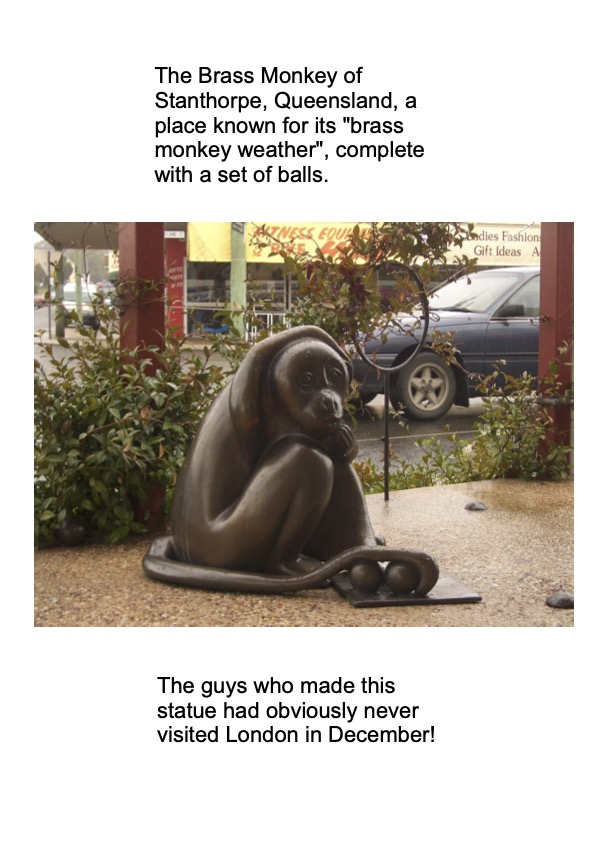
Braving The Weather
I definitely want and need to get out and about today. For the last couple of days I’ve been stuck at home. The snow was so thick and the air so cold that I didn’t want to risk going out in my powerchair. Apart from the obvious risk of slipping and skidding on ice, if I allow the controller to get damp it completely screws the controller. That, as well as the fact that I really don’t like getting cold, meant that I’ve spent the last two days entirely in my flat. I suppose it wasn’t that bad: I caught up with a lot of Netflix and Youtube, as well as beginning a piece of writing which may become a blog entry, but could develop into something longer. Yet there’s only so much you can do in an eight by twenty metre flat; and, you know me, I like to get out and about. Today, then, a trundle, albeit probably a short one, is definitely on the agenda.
I can’t help thinking about the history of disability though. After all, this was only two days stuck at home, during which time I had full access to the Internet, Youtube, streaming services etc. as well as to Facebook, through which I could contact my PAs, parents or anyone I wanted. The history of disability is replete with stories of people who were not so fortunate: of people who were locked away for years in institutions, being treated as infants, having absolutely no independence or freedom. While I got slightly bored these last couple of days, I knew full well that if I really, really wanted to, I could risk the weather and go for a walk, so it’s just a matter of keeping things in perspective.
All being well then, today I’ll almost certainly be going out. It might be bloody cold, and driving my powerchair might be interesting, but there are far worse things to deal with. In a way, I must go out because others could not. And besides, I really need some shopping.
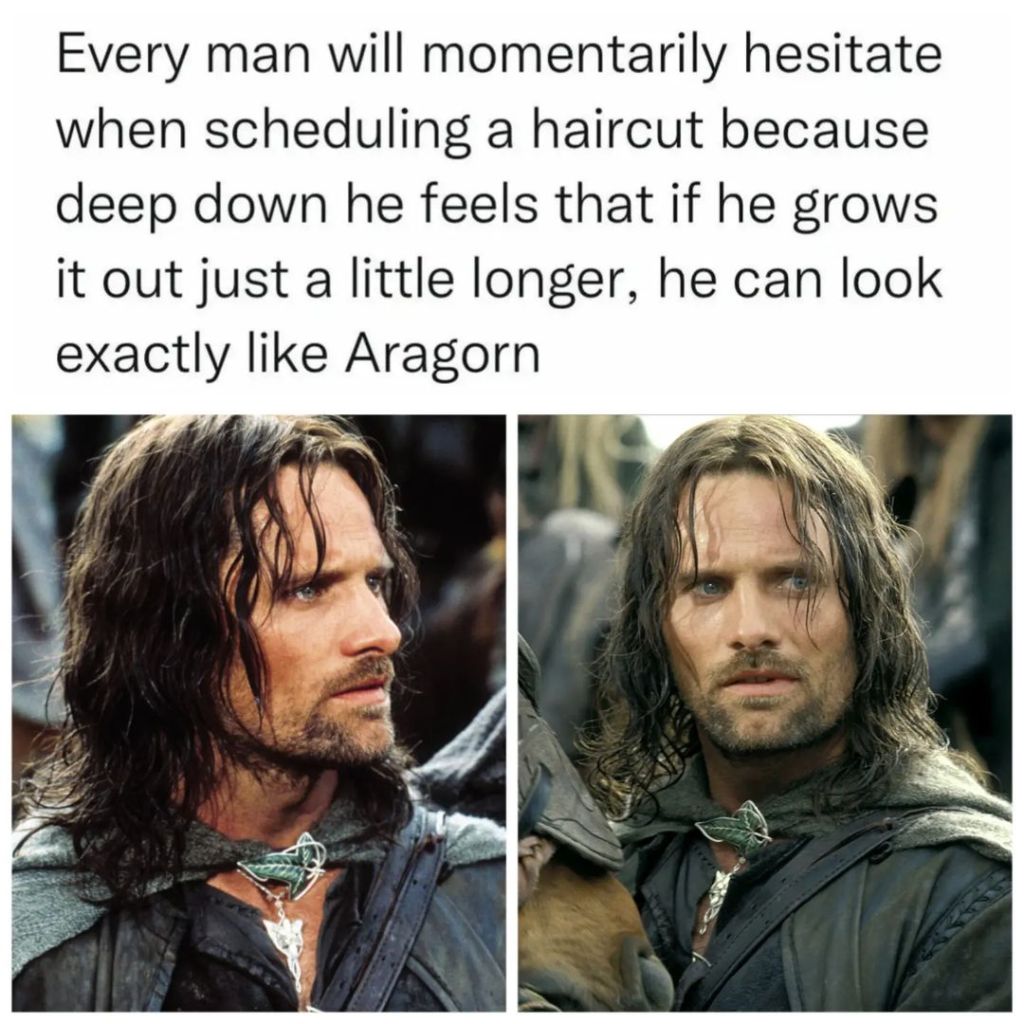
Why I Haven’t Been to the Barbers
This is another reason why I haven’t been to the barbers in about eight months.
Orion Splashes Down Safely.
Just to follow up on this entry, the good news is that NASA’s Orion capsule splashed down safely in the Pacific a few minutes ago. “The American space agency Nasa has brought home its next-generation astronaut ship after a near-26-day mission to orbit the Moon.The Orion capsule splashed down in the Pacific Ocean after a fiery re-entry into Earth’s atmosphere and a descent that was further slowed by parachutes.” As I said a few weeks ago, this is something I’ll be keeping a very close eye on: I find the prospect of humanity returning to the moon hugely exciting, so you can expect plenty more entries like this to come. It’s far more interesting than football, anyway.
Oh Well
I realise that I said yesterday that I would probably blog about my reaction to last night’s match today, but I don’t think there’s much I can say. Like most English people who watched the match, it’s fair to say I’m pretty miffed about the result. As usual I got rather worked up last night: there were at least two or three dodgy referee decisions which didn’t go England’s way, prompting me to accuse the ‘cheese-eating surrender-monkeys‘ of cheating on Facebook. But at the end of the day it’s only a game, and we’ll have another chance in four years or so.
Come On England!
I suppose it’s fair to say that I’m not that much of a football guy. I think I’ve written on here before about how I’m more into cricket, and watching long, slow matches on warm summer afternoons. However, I defy anyone not to be caught up in the current excitement of the world cup. I have, of course, been watching England’s matches in Qatar, and although I’m no pundit, it actually looks like they’re in quite good form: a lot of people are saying, albeit slightly cautiously, that this could be the year that England’s mens football team actually win something. I’m thus as excited as anyone about tonight’s game against France. No doubt it’ll be tight and nail-biting, but we might just do it. I better not go so far as to predict a score, but you’ll probably be reading my reaction to the result – euphoria or fury – here tomorrow. Come on England!
Ian Hislop Reviews 2022
It’s slightly on the long side, but if you want to see Ian Hislop sum up and analyse what has been an utterly chaotic year in politics, I certainly think this is worth watching. While Hislop plays it for laughs to a certain extent, I think what he has to say about things like the monarchy and Russia is increasingly salient.
Idea For A Protest
I was just thinking about my debacle at Goodge Street last week, and had a crazy idea which may in fact be brilliant. The problem last week was that I got off the train at the wrong tube station, and was completely stuck on the platform. (I don’t know how those guys managed to lift my powerchair off the train, but anyway.) My idea now is to repeat that experience, and turn it into some kind of protest. Far too few of London’s tube stations are, like Goodge Street, totally inaccessible: no doubt the appearance of wheelchair and powerchair users on the platforms of such stations would really hammer that home to TFL. If I got off at such stations, accidentally on purpose, stranding myself and giving TFL problems to sort out, perhaps they would at last get their fingers out of their arses and do something about the inaccessibility issue. No doubt I would have a few dramatic afternoons and late evenings, but I think it would be worth it.
Could the new King meet the new Bond?
I’m sure we can all remember when Daniel Craig was introduced as the new James Bond: EON obviously tried to pull off a bit of a stunt by having Craig boated up the Thames by marines, but it didn’t really achieve the iconic look they were after. It struck everyone as rather lame, although it was forgotten about as soon as Craig started to play Bond properly. The question now, however, is how might the next 007 actor be introduced to us? Could the producers attempt a similar headline-grabbing stunt, and if they do, what might it look like?
I began to wonder about this earlier: ten years ago we saw Craig as Bond escort the then queen to the Olympic opening ceremony; could it be time for a sequel to that? Wouldn’t it be cool if we were all introduced to the new Bond actor as Bond is introduced to the new king? Of course, it could be naff again, but it could also be quite awesome.
It could be said that Happy And Glorious set all of this in motion. By having Queen Elizabeth interact with one fictional character, the door was opened to the possibility of any member of the royal family being depicted as interacting with any other fictional character. After all, I would certainly argue that we would never have seen the queen sharing marmalade sandwiches with Paddington Bear if she hadn’t first parachuted out of a helicopter with James Bond.
As far fetched as this idea of mine may seem, I nonetheless think it is a possibility; the barriers between fiction and reality are becoming ever more blurred, especially when it comes to concepts like royalty. How incredible would it be to see the new King meet the new Bond? Just imagine the scene: King Charles is, say, eating his dinner. He asks a waiter to come over and asks for a drink. Asked what he would like, he thinks for a moment, and then says that he fancies some kind of cocktail. The man serving the king replies that he would recommend a martini. Charles replies “Excellent idea, how do you like yours?” Only for the sharply suited man to reply, “Well sir, I prefer mine shaken, but not stirred.” Cue the music.
The Brexit Timeline
How about this for a timeline of Brexit?
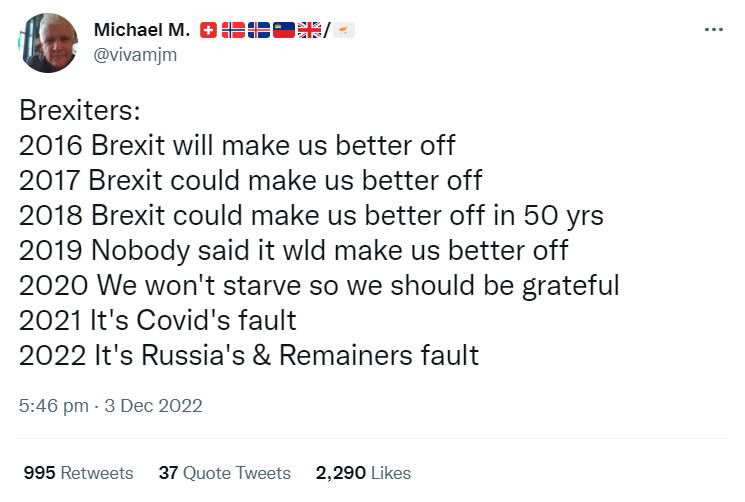
Seems fairly accurate to me.
The Rise Of The American Christian Far Right
I would defy any rational, thinking person to watch this Youtube video by Barbera Plett Usher and not be disturbed, or even frightened. I don’t want to say too much about it for fear of winding myself up, but it’s a twenty-five minute exploration of Christian Nationalism in America. Frankly, as someone concerned with religion, power, and religious interference in politics, it is very uncomfortable viewing indeed: so-called pastors are going in front of audiences of hundreds or even thousands, and actively brainwashing people with homophobic, racist, anti-vaccination bullshit, justified through the claim that they are speaking for God. Watching clips of such people speaking just now was truly frightening: under any other circumstances, I honestly think they would be either ignored as the fascist nutters they are, or sectioned as being mentally ill; but, justifying their bile with Christianity, they are allowed to speak, spouting more and more hatred, and claiming that they are being persecuted by those of us who realise what they are trying to do. Most worryingly, this is becoming more and more prevalent in the US, buoyed by the midterm elections and the desire to see Trump return to office. If this film is a realistic indicator of the political state of affairs in America, I think it’s very worrying indeed.
Rob Burrow to read Bedtime Story
I wouldn’t be a very good disability-related blogger if I didn’t say anything about this. “Former Rugby League player Rob Burrow has recorded a CBeebies Bedtime Story to broadcast on the International Day of Persons with Disabilities.[today] The former Leeds Rhinos player, who lives with motor neurone disease (MND), used an eye-controlled computer to read the story.” As an AAC user, of course I think this is fantastic news. It seems like people who use alternative forms of communication are slowly getting a bigger and bigger profile, and having someone like Burrow read the Bedtime Story, like so many megastars before him, can only help that. Surely this is a good sign that AAC is becoming more and more ‘normal’.
Making Sure I could Get Home
I can be a silly, irrational sod sometimes, or perhaps I have too much time on my hands, but today I felt that I needed to exorcise the demons of yesterday. The fact that I wasn’t able to get myself back from Battersea without trouble and without help bugged me. All the tube stations on my route home had been marked as accessible, so it shouldn’t have been a problem to get myself home. Just to make absolutely sure, this afternoon I took another trip to the power station and back. I got the bus to Woolwich and then the Lizzie Line to Tottenham Court Road; then I found my way to the Northern Line, making sure I found the right spot on the platform. In the end it wasn’t a problem , and I was in Battersea in less than an hour. Then, after an hour or so exploring Battersea and it’s very pretty riverside park, I made exactly the same trip home, all without a problem.
The fact remains, though, that I shouldn’t have had a problem yesterday: I shouldn’t need to be careful about which train carriage I get on, or which stations I can use. They should all be accessible. Of course I know the issue is the older lines and stations: the newer lines, such as the Jubilee Line, DLR and Elizabeth Line are perfectly fine for the most part. It’s the older Victorian lines in central London which are the issue. As I wrote here, before it does anything else, before it starts work on any other major projects, London should update all its existing tube stations to make them more accessible. That’s obviously more easily said than done given how much work certain stations would require, and would probably cost more than putting on another Olympics, but the fact that so much of London’s public transport system remains totally inaccessible for people like me is completely unfair. While there’s no denying that an incredible amount of progress has already been made in the last two or three decades, as I found yesterday with my impromptu visit to Goodge Street, London has a vast amount of work still to do on this front. If it’s city council really cared about those of it’s citizens who use wheelchairs, surely before starting any other infrastructure projects, it would make sure what already exists is accessible to all.
Going Back to Battersea
I just got in from a bit of an adventurous afternoon, and I write that in both a good and bad sense. You might remember that a few weeks ago I blogged about visiting Battersea. It was my first time there, and I was quite taken with the area. So much so that I determined to go back soon to explore it properly. This morning, lying in bed before I got up, I was wondering what to do with the day: trundling around east London is fun, but sometimes I fancy a change. I wondered if I could get to Battersea again.
At about midday, then, I set out. My initial plan was to catch the usual bus to North Greenwich and then take the Jubilee Line from there. On the bus, however, I was struck by a far more interesting idea: I remembered that both North Greenwich and Battersea have Thames Clipper ports, so perhaps I could get the boat there. I didn’t hold out that much hope of a direct connection, but thought it was worth asking.
That, then, is what I did. Getting off the bus I popped down to the great river Thames, and to my surprise was told that there was indeed a clipper service straight to Battersea, and that it would arrive in twenty minutes. The afternoon had suddenly become rather fun.
The boat which arrived was one of the smaller ones in the fleet, but I nonetheless was able to get on quite easily. I then sat back and relaxed, watching the city float by on either bank. It took over an hour to get to Battersea, but I wasn’t in any hurry. The clipper, I decided, was much more fun than the tube. I was even told that there was a bar, although it wasn’t the time to buy anything from it. Of all London’s forms of public transport, this was one of my favourites.
At about three I found myself in Battersea. That didn’t leave me much time to explore, but I was already pleased with what I had established. As I had found a few weeks ago, Battersea is one of those incredible areas of London which doesn’t seem like anywhere else; a gentrified, cosmopolitan splurge of redeveloped money which makes you wonder how it was all paid for. I looked around the shopping arcade for about an hour or so, before starting to think about getting home.
That was when the fun began. As the boat had taken so long, I thought it would be wiser to take the tube back. I didn’t remember it being very difficult: I knew there was a way, but couldn’t remember exactly what it was. I found my way to the nearby tube station on the northern Line. The station was perfectly accessible, and I saw the link would take me up to Tottenham Court Road, which was also marked as accessible. From there I saw I could get the Elisabeth Line to Woolwich, and getting home wouldn’t be a problem.
Perhaps I misread the tube map or perhaps it simply lied, because when the train got to Tottenham Court Road I soon saw that there was no way on earth that I was going to be able to get my powerchair off the train. I panicked as the doors shut; I was suddenly in trouble. The next stop, somewhere called Goodge Street, wasn’t any better, but at that point my fellow passengers could see I was fretting and offered to lift me and my chair onto the platform. I said ‘yes’: it was either that or ending up zark knows where.
Once on the rather blustery platform, someone kindly offered to press the button to get assistance for me. I soon realised that Goodge Street was one of those stations badly in need of renovation – there wasn’t a ramp or lift in sight. Without help I would be very, very stuck. Fortunately the assistance guys didn’t take long to come, yet were at a bit of a loss about what to do. There weren’t any ramps at the station. After a lot of head-scratching though, they radioed someone at Euston and asked them to bring a ramp from there.
About half an hour later and feeling rather irritated,, I was back on my way. It turned out that Tottenham Court Road did have a level-access platform for the Northern Line after all, but you have to sit in the right train carriage – something that should have been a lot clearer. Going via the shop, I got home about an hour ago. What had started off as quite a cool day had turned into a bit of a disaster, but I suppose all’s well that ends well. At the – literal – end of the day I got home in one piece, and days like these really teach me about getting around the metropolis. While there’s still so much work to do to make the public transport system totally accessible, I nonetheless always seem to be able to get to where I’m going, be it via bus, tube or boat. Mind you, from now on, I must remember to sit in the right train carriage.
Matt’s Bus Law
Today I’d like to suggest the following as one of the unbreakable underlying laws governing the universe, like gravity, magnetism or Tory stupidity. Matt’s bus law: when you’re waiting for a bus but it never comes. You wait and wait and wait, telling yourself that it could arrive at any moment. Then, the moment you decide to go and find another bus stop or another route to wherever you want to go, the bus arrives. Apparently your decision to leave the stop made the bus come, almost as if your presence there was somehow actively preventing the bus from arriving. Then, as soon as you realise your mistake and start to go back to the bus stop, the bus moves on. A variant of Sod’s Law, only far more annoying.
Marigolds
I think I’m going to nickname my personal assistant Serkan grandma. That’s not because he looks anything like my late grandmother, or has fallen into the habit of randomly tearing my glasses off my face to clean them. I’ve started to call Serkan Grandma because I bought him a pair of Marigold gloves today. Even now, the person that I associate most with marigolds is my grandma: when I was growing up she was almost always wearing them, and seemed very fond of them. She was quite a quirky, unique person who had so many odd little attributes, from always wearing rubber gloves to constantly whistling strange, unrecognisable songs. I still miss her.
This morning though, I was watching Serkan put on a pair of disposable rubber gloves to do some cleaning. It occurred to me that marigolds would be so much better, and decided to buy him a pair or two. At least then we can wash and reuse them, rather than throwing endless pairs of disposable gloves into the bin. Yet, almost automatically, the memory of my grandma came instantly to mind, as if it reignited one of those unbreakable childhood associations. It’s just an odd little connection really, probably hardly worth noting, as long as Serkan doesn’t start insisting on cleaning my glasses when they aren’t dirty or whistling tunes nobody else knows.
Hydrogen-Powered Jet Engines
As soon as I saw this technology-related news earlier I knew it was too terrific for me not to blog about. Rolls-Royce has started trials of a Jet engine which runs on hydrogen rather than jet fuel. I know that doesn’t have anything to do with the kind of things I usually blog about, but I’m just as concerned about the environment as anyone else. If we can get our aircraft running on hydrogen instead of fossil fuels, I think it would be a huge step forward. Even I know that all you need to make hydrogen is some clean water and an electric current, and the only kind of exhaust you get is water. Thus if we can find a safe renewable source of electricity – and we already have plenty of those – surely this is a huge step forward, particularly given how much jet aircraft currently contribute to climate change. Of course, this research is still in it’s early stages, and the boffins still have a great many questions to answer, but I think this sounds very promising indeed.
Going Too Far
I can be a bit of a prick sometimes. The entry I posted here earlier today was completely misjudged. I initially intended it as an in-depth follow-up review of Whose Voice Is It Anyway, but I ended up letting loose, going too far and being unnecessarily critical. Rereading it just now, it was appalling. At the end of the day, Katie Caryer’s film is a good, solid piece of art which I had no right to be so mean about. I have therefore deleted the entry, and I apologise for any hurt or offence caused.
This War Must Stop
There may be a tendency to zone out after a while when we hear news of the war in Ukraine, but I think things like this really put what Russia is doing there into perspective.
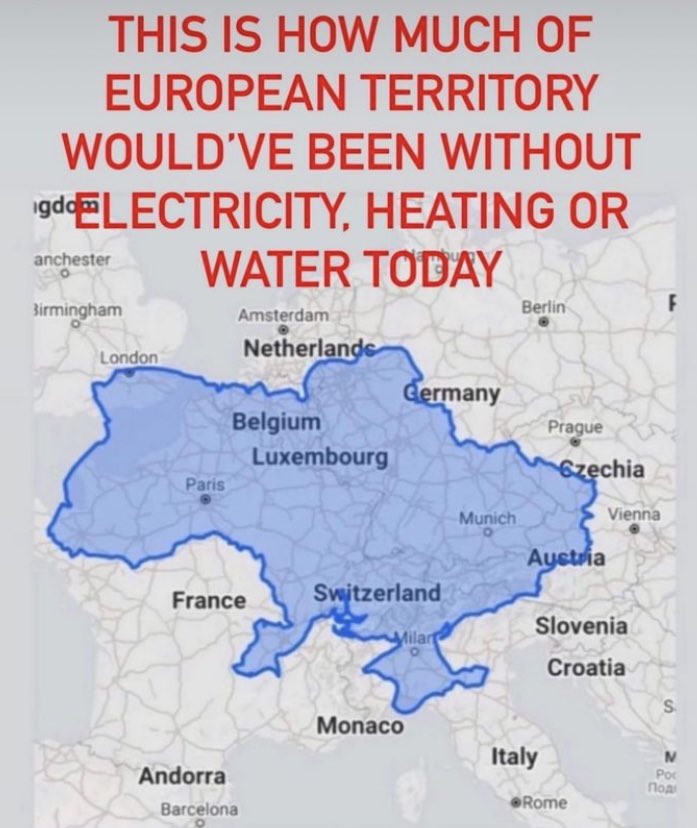
This cannot continue. Russia’s illegal war must be stopped.
Three Sports, One Name
I know I shouldn’t simply direct people to random Youtube videos on here, but I’ve recently been wondering why the sport we call football here in the UK and the one they call football in America share the same name, and whether they share their origins. I just tapped ‘American football history’ into Youtube and found this succinct little explanation. Together with Rugby, it seems that they do indeed come from the same, fairly ancient place, the sport most of the world knows as football, but split about 160 years ago. When Rugby split from Football/soccer in 1863, it became popular in America, where they then went on to adapt it to form their own sport. Technically, it should have been known as American Rugby, or by it’s alternative name, Gridiron, but Americans insist on calling it football, causing endless confusion across the globe. That’s why we have three very different sports, all sharing the same name. Just a tidbit of random trivia for a Friday afternoon.
Crips In Space
I really need to flag this exciting, space-related news up today. Paralympic sprinter John McFall has been chosen as the first disabled astronaut by the European Space Agency. He lost his lower leg in a motorbike accident when he was nineteen. I think this is great news, and quite a huge step forward for disability representation. At last, people with disabilities are seen as just as capable of participating in the exploration of space as anyone else. Who knows where this will lead: maybe one day people like me will be able to go into orbit too! (mind you, given how I drive my powerchair sometimes, letting me control a multi-billion-dollar rocket may not be a good idea).
David Baddiel is Normal
I just rewatched a piece of television which I find extremely problematic. It’s the kind of problematic TV which I feel compelled to write something on here about, but don’t want to say much for fear of upsetting anyone or stepping into a political minefield. Jews Don’t Count by David Baddiel was broadcast by Channel Four a couple of days ago, and to be honest it rather wound me up. It’s not that I disagree with everything Baddiel says in it; there is no doubt that Jewish people are an oppressed minority who have been treated despicably over the centuries. It’s just the way in which Baddiel seems very enthusiastic indeed to emphasise his Jewishness, as well as to differentiate between Jewish and ‘white’ people puts a nasty taste in my mouth: he seems very keen to label himself, to distance himself from being straight, white, male and able-bodied. Baddiel seems to want to be seen as ‘other’ when the fact remains that he will not have experienced a fraction of the discrimination someone with a physical disability or someone with black skin have had to put up with all our lives.
As I understand it, while it has cultural aspects, Jewishness is a religion: like Christianity or Islam, it is a set of myths one can believe in or not. Thus, unlike having Cerebral Palsy, you can consciously choose to define yourself as Jewish or not. I cannot one day decide not to have CP. The same goes for christianity or islam: they are all sets of iconography which you can choose to observe or not regardless of ones skin colour, sexuality or physical ability. Yet Baddiel somehow claims to be both Jewish and an atheist; he wants Judaism to be seen not as a religion but as a race, and something inherently different from being ‘white’. Putting aside the fact that the concept of race is biologically baseless, I really dislike how keen he seemed to classify himself as other, as if being a straight, white, able-bodied man wasn’t cool any more; it’s far more politically and culturally fashionable these days to be a member of an oppressed, sidelined minority. A guy like Baddiel, however, won’t have faced a fraction of the discrimination disabled guys like myself, gay guys like my pal Serkan or immigrants like my friend Dom have to put up with on a daily basis, so this political stunt, in emphasising an aspect of himself which he could easily keep hidden and which nobody gives a fuck about anyway, seems highly misplaced.
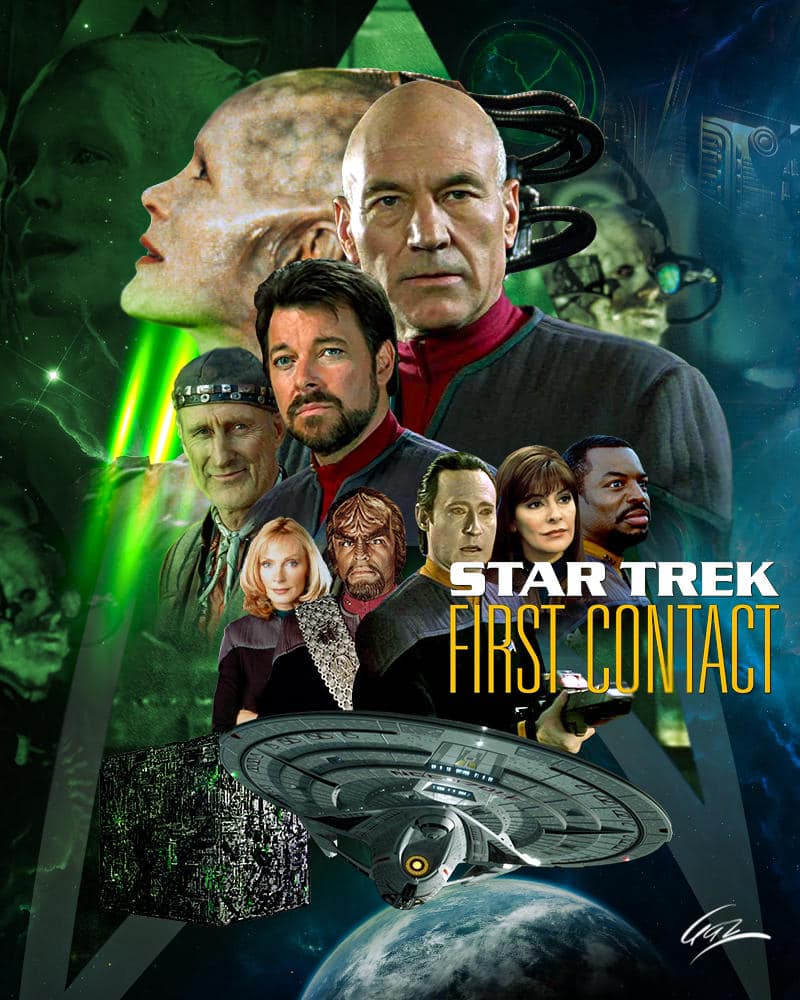
First Contact 26 Years On
I know I’m a day late, but I think I need to point out that yesterday saw the twenty-sixth anniversary of the release of Star Trek First Contact, the film I wrote the most about in my MA and still one of my favourite films. I still remember going to see it with my family in Stoke: I seem to recall that we weren’t that impressed, although I was really taken with one specific scene…
Undeserved Global Attention
I wouldn’t really call myself a sports fan. Of course, I enjoy the occasional cricket or football match, but I’ve never been into sports to the extent that I’m into cultural things such as James Bond, Star Trek and the work of Tolkien. I do, however, have a great fascination with sport on a cultural level, as a cultural phenomenon: Sports events have a great, and probably unique, capacity to bring people together. People from all over the world converge onto one spot to support the team or athletes representing their country. The world’s media joins them at such events, so that for a time it seems that the entire world’s attention is focussed onto one geographic spot. This gives places the chance to show them selves to humanity, giving them the opportunity to step onto the world’s stage and big itself up. What interests me is how places use that opportunity to present itself to the world. London had it’s turn with the 2012 Olympics, and we’re currently seeing it happen in Qatar.
In hosting the World Cup, Qatar has the opportunity to hold the World’s attention. By selecting Qatar to host it, FIFA effectively awarded the tiny Middle-Eastern state a form of recognition it probably craved. It’s like when a city is chosen to host the Olympics: in a way it becomes a ‘world city’, a global big-shot. That’s what interests me so much about such decisions: they carry a lot of power, and can say a lot about which places are doing well, or are in the global good books. By giving the world cup to Qatar, however, FIFA has given it a type of global green light; it has given a tiny country with some completely anachronistic human rights laws the okay to behave in front of the world as if it was any other modern, progressive, liberal state. It can perform it’s opening and closing ceremonies for us while brushing the fact that it still has the death penalty and totally regressive LGBTQ laws to one side. It has been asked to join the club of advanced, tolerant democracies which are capable of hosting such events as if the fact that it is a tiny dictatorship doesn’t matter.
To be honest that appalls me, and I can’t help but smell the acrid whiff of corruption behind this selection. FIFA obviously want us to forget about politics and just concentrate on the ball-kicking; yet I don’t think you can disentangle one from the other. By making Qatar the temporary centre of the world’s attention, Football’s governing body implicitly also gave it the world’s approval. While it could be argued that we should respect the views of people in other places and not force our values onto others, I cannot approve of a theocratic dictatorship with utterly abhorrent human rights laws; surely some values must be universal when it comes to global events. Frankly, part of me seriously thinks that the English team should not be there, as we are just implying that we believe such countries have just as much right to global centre stage as anywhere else. While admittedly I’ll probably watch England’s matches just as I watched their match earlier, it will be with a very nasty taste in my mouth. Sport may have a great ability to bring the world together, but as when Berlin hosted the 1936 Olympics, that ability can be usurped and bent towards something far more insidious.
Time For A Funnier Bond
Massive Bond fan that I am, I’m keeping a very close eye on the speculation over who will next play 007. If you ask me, Daniel Craig left two very big shoes to fill: at least four of his five Bond films were smash hits, and his cold, brutal interpretation of the character has surely left a lasting impression on the series. His was the 007 to outplay Le Chiffre, and the one who went rogue and take M to Skyfall. Arguably most stunning of all, Craig’s was the Bond who escorted the late queen to the 2012 Olympic opening ceremony, surely securing the phenomenal position of the Bond franchise in our culture. After Craig, it would be harder than ever to argue that the Bond films are just another bit of popular culture; they are very much part of British national identity. How, then, could any actor pick up the baton from him?
Whoever the producers select, they will come under massive media scrutiny. They will have been asked to portray a character who has been part of our culture for over sixty years and to carry on the legacy of twenty-five films and the six actors before them. Frankly given the cultural footprint that the Bond franchise now has, it would be an impossible task; the pressure would be unbearable.
How could anyone possibly follow Craig without being compared to him? It was bad enough when Craig took over from Brosnan. Whoever is chosen, they will be expected to stun us in the way Craig did in Casino Royale. Everyone will be looking forward to being reacquainted with an icon who, by then, we would not have seen for a while, and expecting them to do great, great things. I fear the expectation will be so immense, largely thanks to Craig, that whoever they choose is almost automatically doomed to fail.
There is, however, a solution which quite a few people are now pointing out: Bonds tone needs to change. To avoid any comparison, positive or negative, with Daniel Craig’s Bond films, there needs to be a complete break from them. The franchise needs to be reset, which means any new films have to be totally different from what went before. Whoever next plays Bond needs to give a completely different performance to Craig: where Craig’s 007 was a cold, brutal government assassin, perhaps we now need to see a more jovial, lighter, more humorous character. After all, as I found when I watched the series in order, portrayals of Bond have always changed – it’s one of the things which makes the series so interesting.
Thus if Craig’s Bond can be best paired with Connery’s or Dalton’s, what we need to see now is a return to Roger Moore’s. His was the camp Bond; the Bond of the raised eyebrow and witty one liner. The Bond who inspired Austin Powers rather than the one who gave rise to Jason Bourne. As explained very well in this Den Of Geek article, ”James Bond needs to have fun again” with lots of weird gadgets and contrived, totally unrealistic plots.
I must admit that at first I did not like this idea. I come to Bond from a pretty straight place: to me, he’s a cold, brutal government assassin capable of awesome things and who always gets his way. Nobody – absolutely nobody – does it better. Thus when I came to Moore’s films, I didn’t like them one bit: the character he was playing didn’t seem to have anything to do with the one created by Fleming. The 007 I knew did not make jokes or do circus tricks. To be honest I thought Moore was just using the figure of James Bond to project his own persona onto. Yet as time went on I realised that James Bond is just as open to interpretation and reinterpretation as anything else – that’s why he’s so interesting, and why he has endured. After Craig perhaps we need another reinterpretation, another reset. Casting a similar actor would probably feel like ”more of the same”, or like the producers had just opted to keep using their tried and tested formula. We now need something lighter, which doesn’t take itself too seriously. With the world as it currently is, we all know we could do with a bit of fun right now.
Nasa expects humans to live on the Moon this decade
I just checked the BBC news website, saw this and instantly decided it needed flagging up here. People could be actually living on the moon within the next ten years. “Humans could stay on the Moon for lengthy periods during this decade, a Nasa official has told the BBC. Howard Hu, who leads the Orion lunar spacecraft programme for the agency, said habitats would be needed to support scientific missions.” I honestly find that jaw-dropping: to think that within ten years people could be living on the moon is incredible. Stuff usually only found in science fiction has become reality. This sort of stuff fills me with excitement, and I can’t wait to see if it actually happens.
Tax not Charity
I didn’t watch much TV last night, but if I had been I wouldn’t have been watching Children In Need

Children need to be supported properly, and the best, most efficient way to do so is through the state, not via nauseating television campaigns asking people for money they might not really have.
Whose Voice Is It Anyway?
Today I have something very interesting indeed to flag up. I came across this short film yesterday, but wasn’t quite sure what to think about it. Having just rewatched it though, I think it’s safe to say that it is actually quite bold and brave. It stars my old friend/associate Katie Caryer playing two different people, who both have Cerebral Palsy. Both aged forty, one is a pampered, closeted woman who is highly infantilised and treated like a child by her parents; while the other woman is depicted as rebellious, independent, and fond of drinking and partying with friends. Thus we are quite nicely shown two completely opposite perceptions of disability: all too often I experience being spoken down to like a child, as though people assume I have the mental aptitude of a child; yet in reality I am a guy with a MA who enjoys a beer in a pub and James Bond films. So I really think Caryer’s film says something which needed to be said quite well. At just five minutes it’s only short, but is very well made thanks to Channel Four. Through it’s use of a rather unsubtle juxtaposition, it articulates a reality which guys like me face all the time: the mismatch between how people see us – as mentally incapable overgrown children who need to be spoken down to – and the complex, mature, fully formed people we actually are.
Sam’s Accent
I just have another question to post here today: The Beeb for some reason chose to base it’s coverage of the autumn statement in Gloucester this morning, so there were quite a few people on breakfast TV speaking with West Country accents. It automatically reminded me of the character Samwise in The Lord of the Rings. When he was reading the book to me and my brothers as children, my dad always gave Sam a West Country accent. I think it really suited the character. Interestingly, when Peter Jackson’s film adaptations were made about ten years later, the actor playing Sam, Sean Austin, also gave him a west Country accent, despite being from New York. Thus I can’t help wondering: did Tolkien ever state what sort of accent Sam had? We know he based the character on the down to earth men he met in the trenches of World War One, but did he ever note anything about his accent? As I say, the rural, down-to-earth inflexion seems to suit him; and the coincidence between my Dad’s childhood reading and the accent used by Austin, perhaps most memorably in this scene, is enough to arouse my curiosity.
The Launch Of Artemis
I haven’t been sleeping that well recently and got up ridiculously early this morning, for me at least. I’m now very pleased that I was though, because I turned the news on just in time to watch the Artemis launch. It cheered me up instantly: today marks the beginning of humanity’s return to the moon! Being into space exploration, it thrills me to see that sort of thing. It is an initial, unmanned mission, but All being well, it won’t be long before we’re watching people walk on the moon for the first time in over sixty years (although we can already expect fools to start saying it didn’t actually happen pretty soon afterwards). I find the prospect of that thrilling, as well of the prospect of humanity one day going even further, perhaps to Mars. Today thus marks the start of something awesome, and I’m glad I was up in time to see it.
Trying To Help
Today being the last reasonably nice day for a while apparently, I decided to take one of my favourite walks along the river Lee from Canning Town to the Olympic park. As I’ve said before, it’s a lovely trundle along a well maintained path. I wasn’t going very fast and took several detours to explore various places, so it took a couple of hours for me to get up there. My plan was to then take the tube back from Stratford. However, crossing the bridge to get to the station, I passed the man I wrote about a few days ago in this entry. At first I thought I would ignore him and press on, but as luck would have it, a couple of policemen were walking past at the same time.
On the spur of the moment I decided to stop them. I explained that I didn’t have a problem, but rather would be grateful if they could ask the man nearby if he knew about the support he was probably entitled to. The cops seemed to think it was a good idea, and obliged.
The conversation they had with the man didn’t get very far: he didn’t seem very communicative. Five minutes later I was on my way again. Yet I’m glad I tried; I’m glad I took the opportunity to resolve something which had been bugging me. Who knows whether what I did earlier is going to make a difference to the man, or even if he had any interest in being helped to begin with. I suppose the best case scenario is that those policemen will now put him into contact with social services, who could find him a home etc. Perhaps I should have said nothing, kept to myself and carried on my way, but I needed to make sure that the man knew he is entitled to the help I am. I will probably never know whether I made any difference at all, but at least I tried.
 The Ill-Informed Ramblings of a Cripple