Just before getting up just now, I was mulling over the possibility that we’ll see a new James Bond actor announced any time soon, and whether any forthcoming Bond film made in the near future would need to deal with Russia’s illegal invasion of Ukraine. I decided that the producer’s wouldn’t want to, which is probably one of the reasons why EON seem to have put 007 on the back burner. But I just turned my computer on to find this pretty cool news. It may not answer the Bond question directly, but the fact that Pinewood Studios is getting a massive redevelopment and expansion may be another contributory factor. “Pinewood Studios, near Iver Heath in Buckinghamshire, submitted plans for a 1.4m sq ft (130,064 sq m) expansion to build 21 new stages, a training hub and a publicly accessible nature reserve….Pinewood Group said the expansion would make it the “biggest studio complex in the world” and create 8,000 jobs.” Of course, this is outstanding news for the British Film Industry, as well as a sign of it’s current good health. Pinewood is a truly legendary place to film buffs and cinephiles, and to hear that it’s going to get even bigger, assuming these plans get the right approval, makes me eager to see what cinematic wonders come out of there next. This may mean we have to wait a bit longer before we see the next Bond film, but I suspect it will be worth it.
Troll Alert
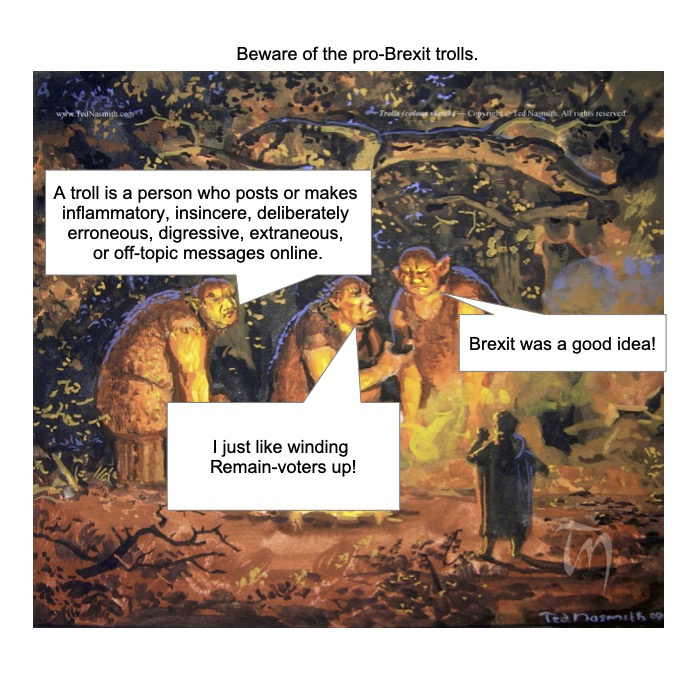
Frankly, this problem seems to be getting worse as the catastrophe of Brexit becomes clearer and clearer.
Mistitled Facebook Pages
I realise that I’m probably overreacting, but things like this really seem to aggravate me. We all know that Facebook is now full of pages and support groups for all kinds of things, from Star Trek fan groups to groups for people with epilepsy. It’s great how it brings people with common interests together and allows us to communicate. One such page which I came across a while ago is called Cerebral Palsy and Disabilities. I’m a member of lots of similar groups for the disability community on Facebook, so naturally I joined it. The thing is, it wasn’t actually a group, but turned out to be a page set up and ran by a young woman with CP in America. Only she could contribute to the page. It was the classic con trick where something is misnamed to draw people to it.
I suppose I should just let things like this slide, but it sort of feels like the girl behind this page has taken it upon herself to speak for everyone with cerebral palsy. By giving her Facebook page that title, does she not cast herself as the only person with cp, kind of like setting up a page called Star Trek fans but only it’s owner could contribute? She claims it is a support page for disabled people, but seems to use it entirely for self promotion, often posting pictures of herself in her wheelchair.
I hope I’ve made it clear why this gets to me, but I don’t want to be spoken for. She could have given her page many other titles, but by naming it after a disability she shares with many other people, she frames herself as speaking for everyone with that disability. I could have just dropped the matter, but what makes things worse is the fact that she has started to post nauseating memes about things like disabled children being angels and so on – things I, as a disabled man, find actively insulting.
On top of that, even though I have asked the young woman repeatedly to retitle her page, she blatantly, arrogantly refuses to do so. I know I’m one disabled person – ‘a cripple’ – of many; but if I had titled my blog something like ‘The Cerebral Palsy Hub’ and tried to speak for the entire CP community, as well as just using the page to promote myself, people would rightly tell me not to be so presumptive. By giving her personal page the title she has, not only does this young woman draw people in on a false premise, but she presumes to speak for an entire community when she has no right to do so. Am I wrong to be so agitated over this?
Justice
I realise that not everyone will get this, particularly if you haven’t watched the early episodes of Star Trek The Next Generation, but I must say that, while it isn’t unproblematic, this certainly strikes a chord. Sometimes you just have to do what you know is right.
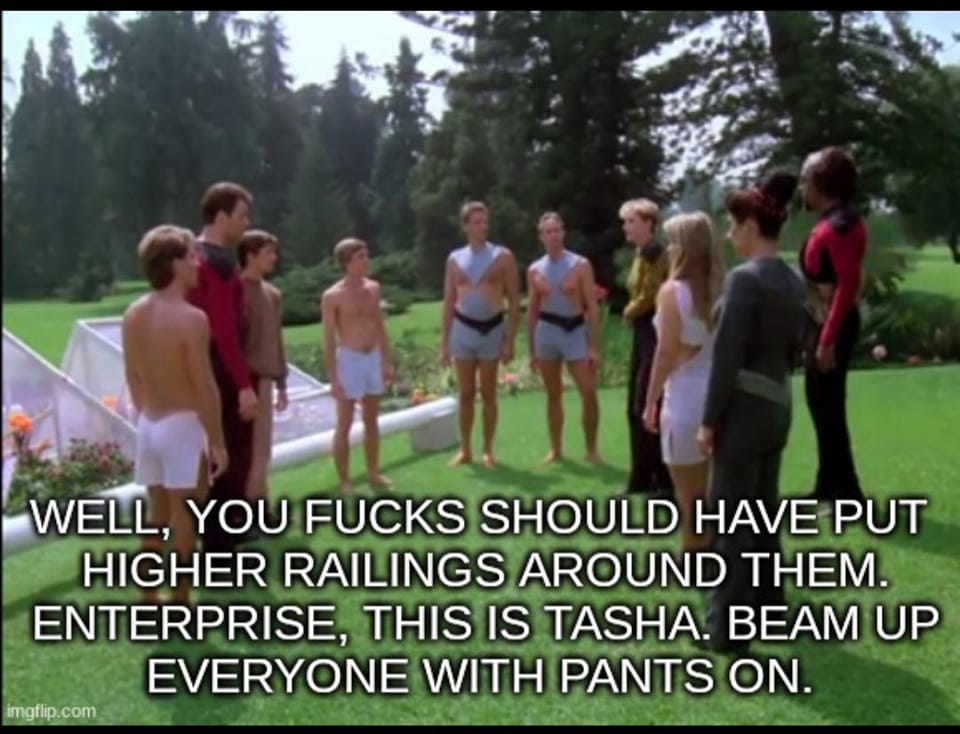
See Star Trek TNG Season 1 Episode 8, Justice
The Secret Meeting
I’m not sure whether to see the meeting reported here as a good sign or not. “An extraordinary cross-party summit bringing together leading leavers and remainers – including Michael Gove and senior members of Keir Starmer’s shadow cabinet – has been held in high secrecy to address the failings of Brexit and how to remedy them in the national interest.” On one hand, we can take the fact that MPs are beginning to have such meetings as a sign that, on some level, they all know that Brexit was a catastrophic mistake which should never have been made. On the other hand, the Guardian article also reports hardline Outists such as Michael Gove, one of the chairs of the meeting, will never openly admit that Brexit was a mistake, and that the possibility of rejoining the EU was not discussed. “The summit papers referred to the need to move on from ‘the current mix of antagonism and nostalgia to excitement about what the future could bring for the UK and for Europe’… For those such as Gove who campaigned to leave the EU, there is also a clear interest in ensuring Brexit is not viewed as a failure over the long term.” In other words, p’tahks like Gove wanted the meeting to be about dressing Brexit up as some kind of success, so that they don’t have to admit their lies have done almost irreparable damage to the UK’s global standing.
That’s what frustrates me: every sensible, rational person can see that Brexit was an act of idiocy, that the 2016 referendum was ‘won’ based on lies, and that the only way out of this calamity would be to rejoin the EU as soon as possible. Yet because that would cost the careers and reputations of powerful politicians like Gove, they will never allow that truth to be openly admitted. They will argue black is white that Brexit was somehow good for the country, and try to shut those of us who still oppose Brexit as ‘antagonistic’. Well, I say it’s high time we got a grip, called the Outists to account and started the journey back into the EU. While the fact that they are having meetings like this is a sign that, deep down, they know the reality of Brexit, it’s time that they were forced to openly admit that they deliberately mislead the country into voting for something manifestly counter to it’s best interests.
Robots Looking For Life-Forms
I just watched quite an interesting segment on the Laura Kuennesberg program about artificial intelligence, and how it is now being used in natural disasters. Apparently robots, combined with satellite imagery and mapping, are now increasingly being used to locate survivors of things like earthquakes. Of course this is vitally important and deadly serious, but – forgive me – as soon as they started to talk about robots scanning for life-forms, this clip popped into my head.
A Truly Nauseating Idea
Just to follow up on this entry from two days ago, it appears I’m not alone in being pessimistic about the reboot of Fawlty Towers. I just came across this Guardian article predicting the show will be an ‘anti-woke nightmare’. Broadly echoing the points I made in my entry, Stuart Heritage writes how Fawlty Towers is a ‘foundational text’ of british comedy, and to revive it is almost certainly doomed to fail. “[T]he world needs a Fawlty Towers reboot as much as it needs to be kicked down a well by a horse. Almost nothing about this news is a good idea. Where to start? There is the fact that, by Cleese’s own admission when the subject last came up in 2009, the original is held in such high regard that any attempt to follow it is almost guaranteed to be a disappointment. There is also the fact that reboots of almost everything, barring perhaps the first return of Frasier, are almost always inferior to the originals.” He goes on to explain how nothing about this idea makes sense: “Cleese won’t have the same support staff around him. Andrew Sachs is dead. Prunella Scales has long since retired on health grounds. Connie Booth – who, let’s not forget, co-created and co-wrote the whole thing – doesn’t appear to have anything to do with this new project.” I hope I’m wrong but, again, this just reeks of a right-wing zealot reviving one of his greatest hits to use as a political soapbox.
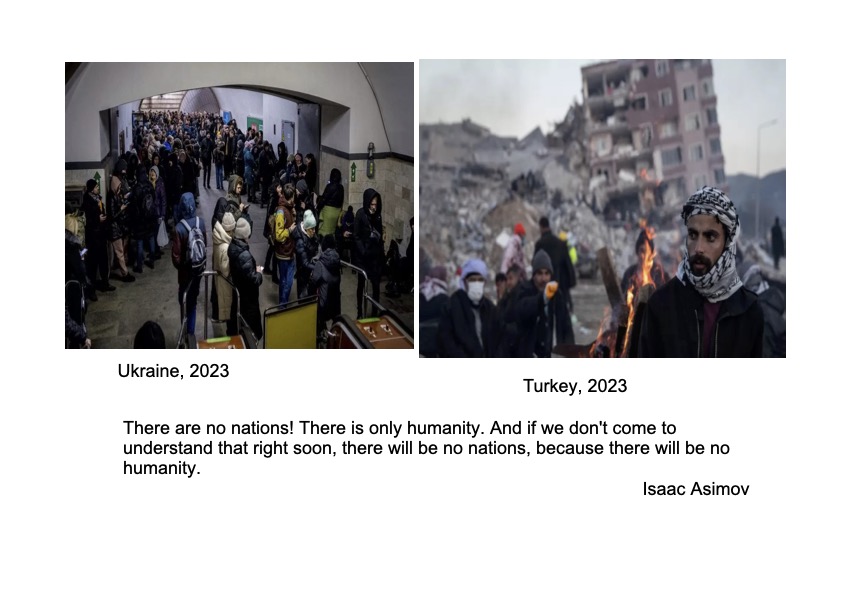
There Is Only Humanity
Lee Anderson Shouldn’t Be Anywhere Near Government
There probably comes a point in any country when it is forced to ask itself why the flying fuck it allowed certain people anywhere near it’s government. In America, the obvious example is Donald Trump: it still baffles me how any modern, educated society could allow such an obnoxious charlatan anywhere near it’s political system. Here in the UK, the two names which first spring to mind are Boris Johnson and Nigel Farage: both are repulsive, arrogant scumbags who just entered politics for their own puerile gratification. All three of these insults to humanity barely deserve to be allowed to sweep the streets, let alone help run a country.
After today I would add Lee Anderson to this list. To be honest I hadn’t heard much about him before, but when I heard this news that he wants to bring back the death penalty, he automatically struck me as abhorrent. Capital punishment has no place in any civilised society: that is as obvious and unarguable to me as the fact that the earth is a sphere. As soon as the state gives itself the right to kill people for whatever reason, as soon as judges are given the right to say who lives and who dies, we step back towards the dark ages. We should not have ignoramuses who support it anywhere near our government. He has also spewed a lot more obnoxious, right-wing crap which I don’t want to detail here. Yet, as Owen Jones explains quite thoroughly here, there is reason to see Anderson as nothing more than a troll, spewing more and more controversial bollocks just to provoke a reaction. Like Piers Moron, Anderson is trying to frame himself as some sort of champion of free speech, reviled by the so-called ‘left’ for daring to say what we want to ban or outlaw, pandering to the Sun-reading cretins desparate to get their baseless xenophobic views aired. Yet the truth is, any thinking person can see him for what he and those like him are: loudmouth luddites fit only to be ignored.
Basil’s Back
My jaw hit the floor when I turned on my computer a bit earlier to see this news. “Comedy series Fawlty Towers is set to be revived after more than 40 years. John Cleese, who played Basil Fawlty, will be returning to write and star alongside his daughter Camilla Cleese.” For a moment, it struck me as the bit of awesomeness I had been waiting for: the revival of a classic, legendary comedy series which will get us all rolling on the floor with laughter again. But the question is, will it? Is this really the time for the revival if such a comedy series, last in production over forty years ago, or should classics remain classics?
Of course, I felt a similar kind of skepticism when it was announced that Monty Python were reuniting in 2013. Lots of questions automatically cropped up, such as what format would the shows take, or over whether the Pythons would be sticking to their old classics or creating new material? In the end, those shows turned out to be a massive, massive success, and I will always count watching Monty Python Live in 2014 as one of the greatest events of my life. Yet a stage show based on TV sketches which most of the audience already know off by heart and a sitcom attempting to revive one of televisions seminal conic characters after a forty year absence are two very different things.
The new show will apparently be a continuation of the original: “The new series will explore how the cynical and sarcastic Basil navigates the modern world….The revival will also see Basil and his daughter, who he has just discovered is his, team up to run a boutique hotel.” To be honest that sounds a lot like an attempt to flog a horse which has been dead for forty years. It sounds as if Cleese and co. want to revive a tried and tested franchise which we all remember with great fondness simply to make a bit of money. Yet that is to forget that Fawlty Towers was very much of it’s time, reflecting and playing with attitudes which were prevalent in the seventies but aren’t popular today. More to the point, Basil Fawlty is a very energetic, physical character: much of the humour of the original series derives from him picking things up, throwing things around and running all over the place. John Cleese is now in his eighties, podgy and greying. For him to play Basil now would, arguably, totally miss the point of what made him so great and so memorable.
I don’t want to sound too negative here. After all, we have been in this position before: whenever we get news like this, whenever we hear of such a revival or reunion, there is always a tendency to be cautious. I was too young at the time, but I’m told that when Gene Roddenberry announced the creation of Star Trek The Next Generation, fans automatically dismissed it. TNG obviously turned out to be a great success, and eventually went on to give rise to several more Star Trek series. Yet the difference here is that, whereas TNG had a completely new cast, Cleese is attempting to revive the same characters from his original series. Moreover, the gap in time between The Original Series ending and TNG beginning was much shorter, especially if we remember that there were Star Trek Films in between.
I thus think I’m right to have rather large reservations about the return of Fawlty Towers. Could it be the return of a classic, or a pointless attempt to flog a long dead horse for money? Might this in fact be a case of a comedian with rather anachronistic views, trying to muscle his way back into the increasingly progressive political and cultural discourse, simply by bringing back a fondly remembered but very much of-it’s-time series? I suppose we won’t be able to tell until we actually see it.
Exploring the Quaggy
I had a lovely little trundle today to Lewisham and back over Blackheath. London seems to have a bit of a negative reputation as a huge urban sprawl, but when you get to know the city you realise that that is misplaced. It is a metropolis of parks, and even rivers. This afternoon I walked beside the river Quaggy as it meanders through several very well maintained parks between Eltham and Lewisham. To show you what I’m getting at, as well as to give you a glimpse of how peaceful and picturesque rivers like the Quaggy can be, I’d invite everyone to watch this lovely little John Rogers video. Broadly, it covers almost everywhere I visited today or have trundled previously, as well as being quite a fascinating exploration of many of my local parks.
Wondering About the Paris Metro
Life in London seems to have given me a peculiar interest in urban public transport systems. Combining it with my equally peculiar interest in the Olympic Games, earlier I was finding out about the Grand Paris Express project. And we thought Crossrail was ambitious: the Grand Paris Express seems to want to totally overhaul the Paris metro system, adding 200km of track and 68 new stations. Watching a few videos about it earlier though, a few thoughts and questions cropped up which could be worth posting here: Is it fair to say that it is an attempt to bring the Paris Metro system into line with other metropolitan tube systems? if so, what was it like before the Express project? How big was it compared to the London tube, and is it now bigger than the London underground? How wheelchair Accessible was it, and did it have a card system like London’s oyster card? How do the stations compare architecturally? I’ve never really explored Paris as I now do London. I can barely believe it has now been fifteen years since I visited the french capital with Charlie – it’s high time I went again. I’m curious to know whether I could use the metro as I now use the tube. And if this Express Project is an attempt to bring the metro up to scratch with other urban transport networks, what must it have been like before? Indeed, is this an example of the Olympics helping to spur on much needed urban redevelopment?
Can Victimhood be Inherited?
I heard in the news earlier today that the descendants of African slaves in the West Indies are now applying for compensation from the families of the people who owned their ancestors. I’m not sure about you, but that strikes me as a bit of a stretch. Of course, there is no denying that the African slave trade has a legacy, and its effects are still being felt. Yet surely people can’t be expected to pay for the crimes of their ancestors, and more to the point people can’t inherit the grievances done to their great, great great grandparents? I don’t want to say too much about this lest it becomes too contentious, but to be honest it whiffs of people assuming a victim status that they do not deserve just because they happen to have ancestors who were slaves. That strikes me as a bit like disabled people suing the descendants of Nazis, just because they are members of one of the minorities persecuted so savagely during the holocaust.
Paris 2024 Might Not Happen
Long term readers might remember how excited I got about the prospect of Paris hosting the 2024 Olympics. After London hosted the games in 2012, it struck my sense of fairness that Paris should become the second city to host the world’s greatest sporting and cultural event for a third time. I also thought it would be fantastic to see what a show the French capital could put on, a full century after it last hosted the games. I was therefore rather looking forward to next year, and perhaps even visiting Paris in it’s Olympic year.
However, things might have just become a little complicated. According to this BBC report from two days ago “Up to 40 countries could boycott the next Olympic Games, making the whole event pointless, said Poland’s sport and tourism minister Kamil Bortniczuk.” Apparently, the fact that the IOC is allowing Russian athletes to participate could lead to a mass boycott, including from the likes of the UK and USA. The Olympic Committee say they want Russian athletes to compete under a neutral flag, but to many even that would not be acceptable. “On Thursday, sports ministers from Latvia, Lithuania, Estonia and Poland said ‘any effort by the International Olympic Committee to bring back Russian and Belarusian athletes to compete, even under a neutral flag, should be rejected’.”
I must say I completely agree: what Russia is doing in it’s totally illegal invasion of Ukraine is disgraceful, and it deserves to be completely ostracised. But can you imagine the furore if something like this had happened in 2011, and London’s games were suddenly put in doubt? There we were, preparing to play host to the world, constructing huge stadiums and velodromes up in Stratford; what if we had suddenly been told that nobody was going to show up?
I’m probably experiencing a touch of schadenfreude here. I know how proud the french are of their capital. It is an extremely beautiful city, and they were looking forward to showing it off to the world enormously. For anyone interested in or concerned about the games, to be denied that opportunity at this late stage would be devastating. At the same time, we must show our opposition to what Russia is doing, and that includes excluding Russians from international events and competitions. The IOC, obviously worried that the games won’t go ahead next year, say that such a boycott would be contrary to the olympic charter; yet things like this are far more serious. Allowing Russians to participate under any flag would award them a legitimacy they currently do not deserve. Above all, the rest of the world must demonstrate its opposition to what Russia is doing, and if that means a mass boycott, meaning the games in Paris don’t go ahead next year, then that is what needs to happen.
No Third Visit
I would just like to draw everyone’s attention to a bit of a coincidence which struck me as truly, truly heartbreaking. As you might know I’m a huge Michael Palin fan. Last night I was rewatching the fourth episode of his New Europe series, being shown on BBC Four. First aired in 2007, New Europe has Palin exploring eastern Europe and the old Soviet Bloc. Last night’s episode was about Ukraine. About halfway through the episode, Palin notes that he had visited that area fifteen years previously in 1992’s Pole To Pole, going on to say how much it had changed since the end of communism. At that time, of course, Ukraine was looking forward to a bright, tolerant, democratic future as part of the European family. He then wonders, quite naturally, what things would be like if he was to return in another fifteen years: would he be able to meet the same people he met the first two times, and experience the same sense of optimism?
I’m not sure whether this was deliberate scheduling by the Beeb, but such a third visit, fifteen years after 2007, would have been last year. Now, of course, Ukraine is being ravaged by war; the cities Palin’s program shows us such as Lviv and Mariupol, then so open, inviting and intriguing, now appear regularly on the news, bombed beyond recognition by the Russians. Such a third visit would be impossible due to the despotic delusions of a wannabe tzar. I must admit that that strikes me as utterly heartbreaking.
Football and the Value of Money
I have just been enjoying quite a slow, leisurely morning: a much-needed shave and shower, followed by a hearty bacon sandwich. As usual, I had the TV news on in the background though, and I just caught something which struck me as utterly, utterly absurd. Amid all the doom and gloom about soaring inflation, poorly paid public sector workers and the Tories trying to block the right to strike, the sports bulletin was topped by the bewildering news that “Chelsea have signed Benfica’s Argentina midfielder Enzo Fernandez for a British record 121m euro (£107m) transfer fee.” To be honest when I heard that my jaw hit the floor and I felt instantly enraged. At a time when our teachers and nurses are struggling to get paid properly, how is it acceptable that one football club can pay another football club a significant proportion of a billion quid, simply so that a player can stop playing in one team and play in another? At the end of the day, all these men do is kick balls around pitches; they don’t construct buildings, care for anyone’s health or drive busses. Society could function perfectly well without them, so how on earth is it justifiable that they should be ‘bought’ and ‘sold’ as if they are as valuable as hospitals or schools? I vaguely remember taking this up with my PA Bill about seventeen years ago. Bill was a football coach with a background in this area. He seemed to think it was perfectly justifiable, and that football players deserved the sums they were paid because they were supposedly elite. Yet the situation has become even more obscene since then: at a time when so many people are suffering through lack of money and having to fight to be paid a decent wage, football clubs are throwing around cash like it’s confetti, or numbers on pieces of paper with no real meaning. How can we as a society put up with this?
Three Years Since Our Greatest Act Of Stupidity
Today marks three years since the UK left the EU, and needless to say I’m not celebrating. What is there to celebrate in such an anniversary? Three years since we, as a country, shot our selves in the foot by cutting ourselves off from our nearest neighbours, spaffing our right to live and work across an entire continent up the wall. Three years since we opened the door to the most perverse, selfish form of capitalism, so that, unhindered by Single Market regulation, the rich, privileged few now have free rain to manipulate and exploit the rest of us as they please. Today marks the three year anniversary of the biggest mistake this country has ever made, the consequences of which are becoming clearer by the day. Of course, being the brainwashed fools they are, the outists will try to claim that the growing problems are due to Brexit not being carried out properly; but as the reality of brexit becomes more and more undeniable, it will get harder and harder to argue that it was the right thing to do, or that rejoining the EU is not the only sensible option let to us.
The Final Trailer for Picard’s Final Season
Just putting my trekkie hat on, the latest and probably final trailer for the latest and probably final season of Star Trek Picard is now online, and can be viewed here. Loads and loads of analysis of it has already appeared online of course, dissecting it second by second. I don’t want to go that deeply into it, other than to say that it has made me very excited indeed. There is only so much you can read into a trailer anyway. I’m sure I’ve written here before how I grew up watching Star Trek, particularly Star Trek The Next Generation, so to see this crew back together, in the roles they were in thirty years ago, is very meaningful to me. Of course, there’s an element of nostalgia to it, but it will be great to see these characters, who played such a major role in my childhood and adolescence, finally getting the send-off they never really had. The season will start to stream on 16 February, giving me just over two weeks to work out how I’m going to watch it.
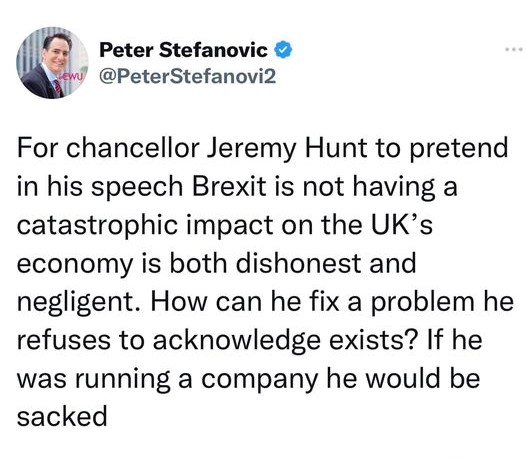
Hunt Should Be Sacked
Driving mystery Solved
I know I shouldn’t just post links to videos that I’ve just randomly come across on Youtube, but this one is rather fascinating. It puts to bed the mystery of why Brits drive on the left while French and American people etc drive on the right. The answer is more complex and interesting than you might think, actually having it’s roots, at least in part, in medieval jousting, gladiatorial combat and highway robbery.
Cripple Chicken
I think I have a new favourite sport. Of course, I’ll always have a great affinity for cricket, but that’s the preserve of long, slow, sunny afternoons. Now, though, I have thought up something new to play: cripple chicken. It’s quite a straightforward game: it is played when two people in wheelchairs approach one another from opposite directions along a narrow path. The winner is the parson who holds their course and refuses to give way. You would be surprised how often it’s played; most of the time, competitors don’t even realise they’re playing it.. I’m pleased to say I’m becoming quite good at it, especially when I play against old people driving scooters (who barely know how to drive them anyway, but that’s another entry…)
Pi Time
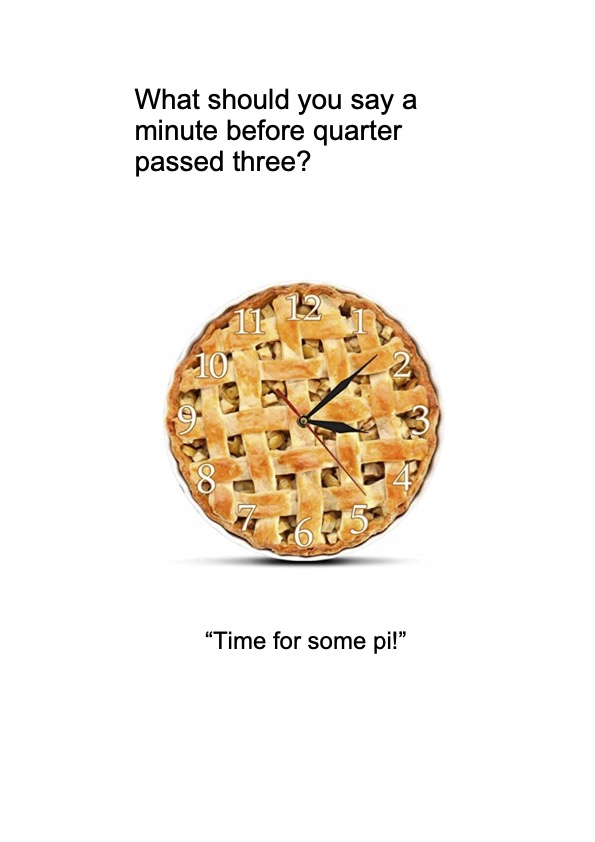
(Remind me to never try to make jokes up when I’m riding home on a bus…)
Has the north really become that bad?
I think I’ve made it clear on here over the years how much I like living in London. For the past thirteen years or so, I have lived in a vast, exciting, multicultural metropolis where you never know what will happen next. I love trundling around the city in my powerchair, getting on and off busses and tube stations pretty much at will, enjoying the culture of one of the world’s greatest cities, the same as anyone else. Having said that, I still see myself as a northerner: I grew up in a fairly small Cheshire town where pretty much nothing ever happened. I still have an affinity for the North-West, and would like, sometime soon, to pop back up there to visit – due to the pandemic and other factors, it has been a while since I went ‘home’.
I was therefore quite appalled to hear Andy Burnham, mayor of Greater Manchester, talking on BBC Breakfast TV this morning. From the way Burnham described it, it sounded like the North has fallen tragically far behind London and the South East in terms of infrastructure and public transport. He said the rail network was still victorian, with vast numbers of services being cancelled at the last minute.
As he pointed out, that will have a hugely detrimental effect on the Northern economy. If we want the the rest of the country to achieve any form of parity with London, vast amounts of money need to be redirected and invested outside the capital. As I wrote here a few days ago, this imbalance really troubles me, particularly as a disabled guy and powerchair user. I can rely on public transport to get around London quite comfortably – it isn’t perfect, but it’s slowly yet steadily getting better. From what I hear, in the North-West, I would have to wait hours for a bus to get me anywhere; then, when it arrived, it might not have a ramp, and if it did the driver would need to get out of his cab to fold it out manually. How are disabled people expected to live rich, full lives with such poor services?
I suppose I have become a bit London-centric in the last few years, but this really gets to me. I know I’m bloody lucky to live where I do. A short bus or tube ride will take me almost anywhere in this vast, labyrinthine world city. But while London is flourishing and ever bigger sums of money are being spent on it, the rest of the country is being left to go to ruin. To be honest, not having been up north for so long, I find the picture Burnham drew of the sheer disparity between the quality of services in London and the rest of the country rather difficult to believe. It bothers me to think how I would be faring had I never moved here – would I still be pretty much confined to that quiet little town in Cheshire? More to the point, when is ‘levelling up’ really going to begin, so that we start to see the kind of expensive, world-class infrastructure commonplace in London appearing elsewhere in the country?
What Did You Expect From A Tory?
You might be expecting me to write something about the Nadhim Zahawi debacle today, but all I can really say is: what do you expect? Like all Tories, Zahawi is the type of person who thinks he effectively owns the country and should be free to exploit it as he wishes. They think the rules which the rest of us live by do not and should not apply to them. Thus they try to pay as little tax as possible, preferring to horde their wealth offshore to maintain their status as the wealthy upper class elite. Far be it for them to contribute to society or the ‘greater good’, least of all institutions like the NHS. After all, they don’t personally benefit from most of the schemes and structures taxation is used to maintain, so why should they be forced to pay tax to support them? I’m thus not at all surprised that a prick like Zahawi has been caught trying to hide his wealth from the taxman. For all their talk of going into politics to serve the public, Tories just look after their selves, their family and immediate friends; the rest of us can starve for all they really care.
How Can This Be True?
Just to pick up on the issue of American gun violence again, I just heard something utterly chilling on the lunchtime news. It was so chilling that I really, really hope that either I misheard, or that it was a mistake in the report. I heard that the shooting on Saturday was the fifth mass shooting in America so far this year. How the hell can that be right? It’s only January. Surely that must be a mistake, as it’s too fucked up to be true. If anyone can clarify this for me, please do so.
It’s Cold Outside
Please tell me that this isn’t fake and actually appeared somewhere on the tube!
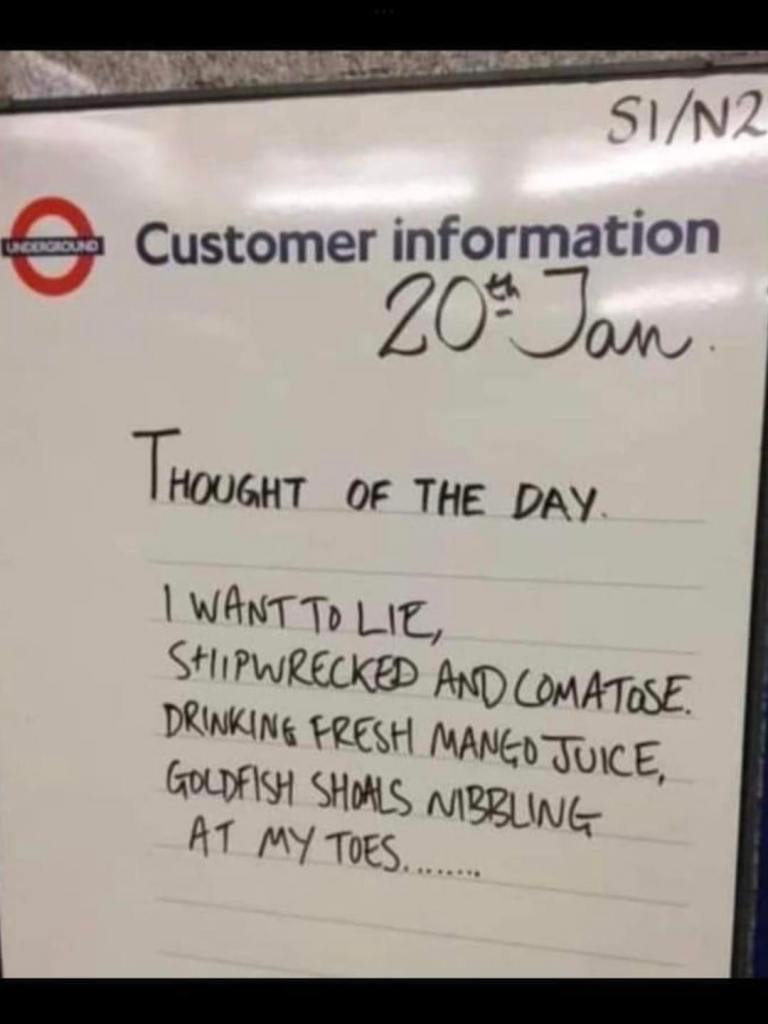
Time for a bit of this I think.
Why Won’t America Do Something About This?
Today I just want to repeat what I wrote here a couple of weeks ago, as well as quite a few times before: when oh when will America get a grip of it’s gun control issue? We’re now hearing of yet another mass shooting, this time in California. “Ten people have died following a shooting at a ballroom dance studio in the Californian city of Monterey Park, near Los Angeles, police said. Police say another 10 people are injured and the suspect remains at large.” I realise that anything I write here won’t amount to much, largely because it’s unlikely that anyone who reads my blog will be in a position to do anything about this problem; yet I feel compelled to record how staggered and bewildered I feel at this news. How can America allow this to keep happening? Every month or so it seems there is yet another mass shooting, either in a park, shop or school. It’s heartbreaking. Why won’t they do something about this?
Ah, So That’s Where It Came From
I always thought Newton was a genius…

Is Levelling Up A Joke?
We currently hear quite a bit in the news about the idea of ‘levelling up’ – the need to invest in the rest of the country to bring it more into line with London and the South-East. On the face of it, I fully support the idea: almost everywhere I go here in the east of London, I see new buildings being constructed and areas being redeveloped. It’s clear that hundreds of millions of pounds are being invested in the metropolis. Yesterday, for example, I met my parents for lunch at a lovely greek restaurant up at the Olympic Park in Stratford. Almost every time I go up there, I’m sure I find a new building being built: East Bank takes my breath away, with it’s fabulous-looking new theatres and museums. To think that less than twenty years ago that area was a forgotten, polluted wasteland really is incredible. It is now thriving with it’s huge shopping centre, olympic stadium and beautiful park laced with rivers and canals.
It’s a similar story all over London. Of course, the Elisabeth Line opened last year, the biggest, most expensive transport project in Europe. On top of that, on last night’s local news there was an item about the redevelopment of Brent Cross, yet another scheme costing billions of quid to rebuild an area of London. “One of the biggest regeneration projects in Europe, the Brent Cross Cricklewood scheme will see the comprehensive regeneration of 151 hectares to create a sustainable new town centre for Barnet and North London including substantial residential and commercial uses.” To be honest when I heard that, it struck me that it made ‘levelling up’ a bit of a joke: do we see construction projects like this anywhere else in the country? Are there the forests of cranes we find towering over London, towering over Manchester, Liverpool or Newcastle? How can anyone take the idea of ‘levelling up’ seriously if London is still getting all the biggest, most expensive projects? From what my parents told me yesterday, the rest of the country, especially small towns, is dying through lack of investment. I find this imbalance very troubling: for all this talk of ‘levelling up’, London still seems to be getting all the good stuff while the rest of the country is left to rot.
Pulp Fiction In Space?
Just to update this rather old entry, I just came across this rather intriguing Esquire article on the possibility of Quentin Tarantino directing a Star Trek film. In it, Tarantino comments ” f I’m going to do it, then I’m going to do it my way. If you’ve seen my nine movies, you kind of know my way is an R-rated way and a way that is without certain restrictions” He goes on to say that there’s a chance he could turn out to make ‘Pulp Fiction in space. While the idea that the great director could get behind a camera for a Star Trek film has been knocking around the ether for a while, I think it still has legs. Indeed, a new director taking it in a new edgier, grittier direction could be just what the franchise needs.
So It Begins
We all ought to prepare ourselves to watch our human and consumer rights ebb away. The Tories have now started to strip away EU laws and regulations. ” Under government proposals, thousands of [EU-era] laws are due to expire automatically after December unless specifically kept or replaced.” Although they claim that things like workers rights will be protected, it is blatantly obvious that this was what Brexit was about all along: the sapping away of our rights to turn the country into an exploitative, capitalist hell. “The government says this process is an opportunity to make regulations more business-friendly, and rejects the suggestion that environmental or employment protections will be watered down.” But that’s clearly bull, as the watering down of such “protections” in order to make the UK more “business-friendly” is what Brexit has always been about from it’s very beginning. Outists were always moaning about how European human rights laws got in the way of them making money, and now they have been set free to dominate, persecute and exploit those less privileged than they are all they wish. In all seriousness I dread to think where this may end.
Stomach-Churning Hypocrisy
I’m still absolutely furious with Nicola Sturgeon. I just watched the lunchtime news, and the sheer audacity of the hypocritical bitch was stomach-churning. She is now accusing the UK government of “stoking a culture war” and causing division when it is mind-numbingly obvious that that is what she is trying to do. As I wrote yesterday, Sturgeon and the SNP brought their Transgender Rights bill up knowing full well the UK parliament would have issues with it, knowing full well it would be very problematic when it came to cross-border issues. That is the only reason the SNP drafted this bill: in reality it hass nothing to do with the rights of transgender people and everything to do with re-erecting ancient, outdated borders. If Sturgeon cared as much about trans rights as she claimed, she would have brought it to the whole UK parliament so trans people across the UK could benefit; but it’s obvious that, for all her liberal-open minded pretences, Sturgeon just cares about herself and her nationalistic thirst for power. She is just as much an arrogant disgrace to humankind as Farage. Watching her speak, pretending to be nice, tolerant and friendly when in reality she is a manipulative nationalistic cow who would screw most of us for her own ends, accusing others of fermenting division and rivalry she herself is knowingly stoking, really boils my blood.
Trans Rights or Fermenting Division?
I was just watching the BBC evening news, and it would seem a massive political can of worms has just been opened, one which covers two issues I feel very strongly about. The UK government has this evening acted to block the Scottish gender bill. Of course, the Scottish parliament wanted to make the laws around transitioning between genders more lenient: they wanted to lower the age at which one can transition from eighteen to sixteen, and make it so you no longer need a diagnosis of gender dysphoria to transition.
This is a very complex, thorny issue; one which I don’t feel like going into fully tonight. Of course, I wholeheartedly support trans rights. Surely everyone has a right to live however they wish. Yet as I explain here, I think that must come with a few caveats, especially when it comes to concepts like gender. Gender Dysphoria is a real condition and nobody has a right to cast doubt on that. But the key term there is ‘condition’, one which should require a proper medical or psychological diagnosis. If one is no longer necessary, I worry that people will begin to treat gender, being transgender and transitioning much more flippantly, as if it was something one could choose more or less to do on a whim, rather than the intensely uncomfortable often traumatic experience many transgender people currently go through. To a certain extent I think loosening the rules like the Scottish government proposes actually insults transgender people, as it makes transitioning a far less fundamental, life-changing decision, and treats what trans people go through far more flippantly than it deserves.
Thus, as much as it pains me to admit it, I actually side with the UK government (Tories) on this; they were right to block the Scots on this. This is something we need to be very cautious about and to treat with the upmost respect. It would also have opened up a minefield when it came to questions over who is which gender on which side of the border. But did Sturgeon and the SNP know that though, and is it what they were planning? Did they know this change in the law would cause so much trouble? Were they planning on it being blocked in Westminster? They obviously know how socially cautious the Tories usually are upon such matters; they also knew what a minefield it would open up. If that is true, then this bill had nothing to do with transgender rights or liberalising rules, and everything to do with fermenting division between Scotland and the rest of the UK. Now Sturgeon can turn to the Scottish people and say “They blocked our laws! Independence now!” She is effectively using the lives and rights of transgender people to achieve her own nationalist goals, something which I find utterly, utterly disgusting.
Shame On Braverman
I defy any thinking, politically conscious person to watch this Owen Jones video bringing to light just how despicable and heartless the Home Secretary Suella Braverman is, and not think the bitch should be instantly removed from office. I know I shouldn’t just flag Youtube videos up like this, but I think what Jones says is very, very important. Braverman and the Tories have began to deliberately dehumanise migrants: They are trying to set up a narrative that there is some kind of army of illegal immigrants coming to invade the country. To hear Braverman’s comments as she responds to a holocaust survivor who points out that they too would have been sent back to the Nazis under the new rules is utterly chilling. What they are doing in their ‘war or immigration’ is no less cruel and inhumane than what fascists, imperialists and autocrats have done for centuries. For anyone interested in UK politics who wants to see the Tories for who they really are, watching this video is essential.
A New Low For Saturday Evenings
I didn’t think I would post an entry today, but I just watched the first fifteen minutes of Michael McIntyre’s Big Show and suddenly felt compelled to say something. I had seen it advertised a few days ago and thought it looked interesting. Would somebody please explain to me why something so awful, so childish, so base is doing on British television, much less being screened as the highlight of bbc one’s Saturday evening schedule. In the quarter of an hour I saw, McIntyre had ‘borrowed’ some dude’s mobile phone and was going through it, embarrassing him in front of the entire nation. It was somehow supposed to be funny – McIntyre and his audience seemed to find it hilarious – but all I could do was cringe, before getting up out of my chair and turning the shit off. If this is the height of mainstream mass entertainment in the UK, then surely we have reached a new low.
The Local Shop
I just got some good news and some rather disappointing news. I now live in a set of three rows of freshly built flats, with two short roads separating each row. It is the type of residential construction which is now appearing all over London: compact, yet pleasantly communal. Each row has about sixteen flats, eight side by side and on two floors. At the end of one row, in the corner opposite to my flat, a space was left for a shop: rather than putting another flat there, the guys in charge decided to use it as a commercial space. It has never been used since I moved here though, and has been empty for months.
However, it now looks like the shop is finally about to open. People have been working on it for weeks, and each time I have rolled past it has looked more and more shop-like. This afternoon, coming back from a trundle, I noticed new signs had been put up saying that the store will open soon, and will sell groceries and basic products, including beer and wine. When I read that I automatically became more enthusiastic – it would make getting hold of my evening libations much easier. I then decided to take a closer look, and for the first time was able to look into the forthcoming shop.
To my total disappointment, I saw that, not only was the place tiny, but there were small flights of steps everywhere. It was only a quick glance, but from the looks of it, there’s no way I’ll be able to get in there. It’s a shame because I thought all new retail outlets were supposed to be wheelchair accessible. I found that very disheartening, and would have hoped that the people behind a new build like this, especially Greenwich council, would have been more thoughtful.
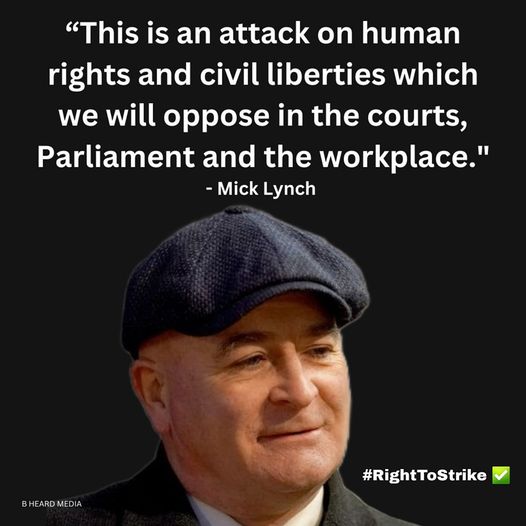
Spot On Mick
If working people, particularly in the public sector, do not have the right to strike, or if their strikes are rendered effectively moot by the need to carry on working anyway through ‘minimum service’ obligations, then they are rendered voiceless. Surely workers have rights which need to be defended. If we don’t, then what rights could the Tories take from us next?
The Ireland Solution Is Obvious
Needless to say I’m still incandescent with rage over Brexit and all the barely literate halfwits who still support it. It is now putting peace in Northern Ireland at risk, something thousands of people had to negotiate for years for, ending a conflict which had cost thousands of lives. That fact alone should be enough to make any sensible person realise that leaving the EU was a total mistake, but to hear the Outist Imbeciles talk, it’s all the European Union’s fault for being belligerent and not letting them have their cake and eat it. When the issue was being discussed on Newsnight last night, I was literally shaking with fury: ‘Baroness’ Kate Hoey was trying to pin the problems on the EU, trying to con the public into directing our anger at Europe when it should be directed wholly and only at Brexiteers like her. We all knew that this would be a problem; we were warned that we would have to make peace in Northern Ireland all over again if the UK voted to Leave; so to hear those moronic enough to still support Brexit try to argue that this isn’t their fault really, really takes the piss.
The solution to the Northern Ireland issue is obvious. Leaving the EU means a trade border either in the Irish sea or on the island of Ireland. Neither is acceptable. The most logical thing to do is to abandon Brexit altogether, rejoin our neighbours and forget the stupidity ever happened. That’s the only way peace can be saved, and peace must surely come first. Of course, Outists like Hoey will never accept that because now they have their narrow-minded nationalistic way, their freedom to persecute and dominate those less privileged than they are, they won’t give it up. But if you ask me such people are fit only to be put into asylums and told to draw pictures; they shouldn’t be anywhere near the government of this country. Through their arrogance and stupidity, they have put the peace process under threat, and are now trying to blame someone else for it. That’s what makes me angry. It’s time to get a grip, ignore idiots like Hoey, and reversed Brexit.
Small Steps Into The Final Frontier
I know I’m not anyone’s primary source of news, so by the time you read this, you’ll know what happened with last night’s launch. I just want to say how disappointed I am, and to commiserate everyone involved. However, this obviously isn’t the end of the story, but the beginning of it. Last night’s launch may have been a failure, but as people are already saying, there are many more such launches yet to come, not only from Cornwall but from other new space ports around the country. That’s what is so exciting: we are seeing the birth of UK space exploration; the first small steps into the final frontier. We are joining America, Europe, Russia and China in the exploration of space, and I can’t wait to see what happens next.
The First Ever UK Space Launch
I can’t help finding this news very, very exciting. “The first ever orbital space launch from British soil is getting ready to blast off. Monday’s mission will see a repurposed 747 jumbo jet release a rocket over the Atlantic to take nine satellites high above the Earth…. If it succeeds, it will be a major milestone for UK space, marking the birth of a home-grown launch industry.” While it is being done by Virgin – say what you will about Richard Branson and his cunning stunts – if this works it will surely open a new chapter in space exploration, not just for the UK but also in terms of ways to launch rockets and satellites.
Video of the launch will hopefully be online by tomorrow morning – it should be quite spectacular.

