Should Alarm Bells Be Ringing?

No doubt we’re all watching the news coming from Ukraine with absolute horror. Open warfare has returned to Europe for the first time in seventy years, with one country illegally occupying another. The way in which Putin is behaving is stomach-churning, and you would have hoped humanity would have outgrown this sort of despotic crap years ago. Indeed, organisations like the European Union were created precisely to prevent things like this from happening.

Yet that is why Putin made sure Brexit happened, or at least was a major player in underpinning the Leave campaign. He knew he would need to weaken the EU before he could proceed with his imperialistic plans, and tricking the UK into leaving was a major part of that. Others have explained the links between Farage and Putin better than I can; but now that I come to think about it, the conspiracist bullshit Lyn used to listen to around the time of the Brexit Referendum was clearly payed for by Russia. They used to spout all sorts of nonsense about how nasty and oppressive the EU was, but also about how the so-called mainstream media had brainwashed us all into hating Russia, as if it was some kind of benevolent victim rather than an imperialist dictatorship. The emphasis these ‘theorists’ put on Russia’s supposed victimisation combined with how uncritical they were of Russia made the link undeniable.

I don’t know how widespread these nutcases were listened to, but they were obviously being funded by Russia. If they could catch the attention of someone like Lyn, who knows who else was listening to them; and who knows what impact they had on the result of the 2016 referendum? Might other ‘influencers’, such as journalists, also have been in Russia’s pay too? If I’m right, a lot of quite naive people were tricked into voting for something manifestly against their best interests, by people in the pay of an imperial dictatorship. After all, Putin seems very fond of using dubious referendae to get his way: maybe what just happened in Eastern Ukraine should ring a few alarm bells here in the UK. Brexit weakened the EU, opening the door, one way or another, to the madness we’re now witnessing.
Busses, Prams and Dogs

Today I came across something which irritates me even more than prams taking up the wheelchair space on a bus, or people perfectly able to climb stairs using lifts: dogs in prams occupying the bus wheelchair space! Would you believe prams – or, rather, things that look like prams but are just boxes with wheels and a handle bar – are now being made specifically for small dogs, presumably so that their owners can pretend their pets are akin to human children. One or two times now, I’ve seen their owners push them onto busses and into the wheelchair space. While I can just about accept buggies for babies might sometimes need a bus wheelchair space, I have to say being prevented from travelling for the sake of a dog, as almost happened earlier today, would really really take the piss.

Should Anyone Have Helped?

I don’t have much experience with mental illness, especially severe mental illness, but I just got in from a bus ride to Woolwich where there was a person with clear mental health issues on the bus. From where I was sat their gender was not clear, but they were obviously very upset about something, talking noisily and erratically to themselves.  I can’t help wondering whether anyone should have done something. My fellow passengers left the person alone, but should they have interfered? Had the person had any other kind of disability and been so obviously in trouble, I would hope that they would have been helped. If it was me, say, and my powerchair had broken, I would obviously be grateful for assistance. While the person wasn’t causing any trouble or threatening anyone, perhaps one of my fellow passengers, or even the driver, should just have gone up to them and asked if they were okay. What is the right thing to do in such situations?

Can I Call Myself A Writer?

I’m very proud of my blog: I’m proud that I’ve now kept it up so long, and that I have managed to update it so regularly. As a writer, I see it as my primary output. Yet, recently, the fact that I have never had anything published has been getting to me a bit: to legitimately call myself a writer, surely I have to have had something printed, published and on book shelves. The fact that I don’t kind of upsets me: does it mean that I am a failure as a writer?

Yet we all know how competitive the publishing industry is. These days, everyone sees their self as a writer vying to get published; everyone sees them self as the next JK Rowling. To be honest, knowing how fickle the publishing industry is has put me off. While I have written a few things of just about printable length, the fact is I’ve not even tried sending them to publishers for fear of rejection. Perhaps it’s an issue of confidence, but I don’t feel good enough.

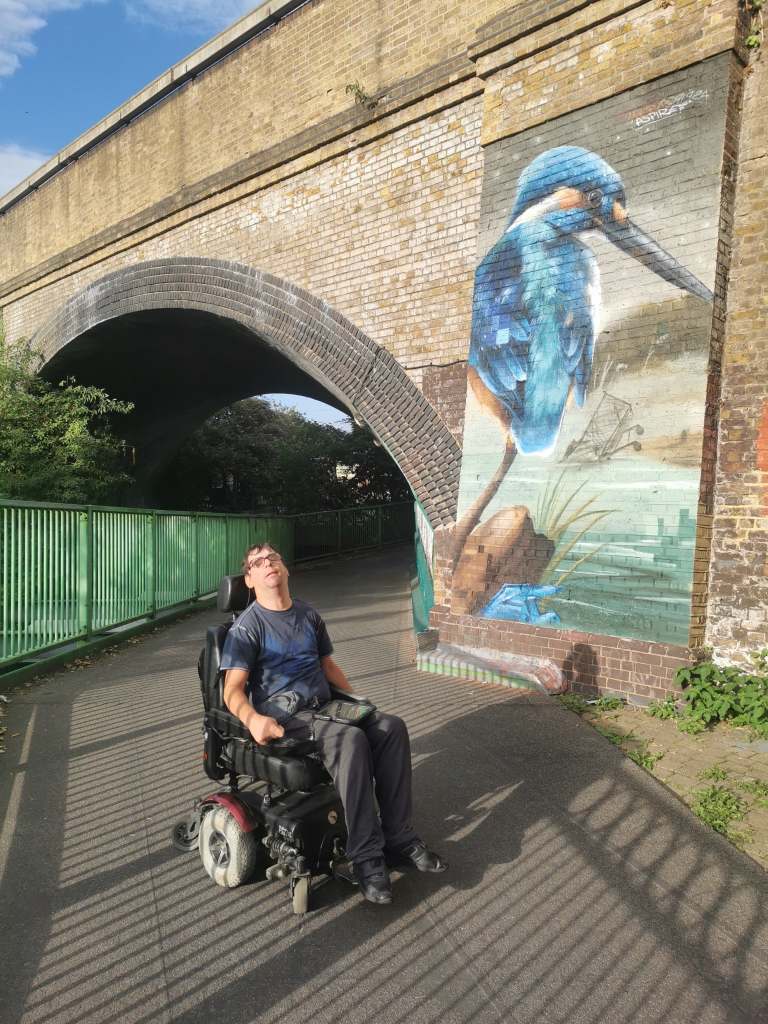
Besides, the fact is that the only reason anyone might need to have something published is for people to buy it and thus to make money, and, without wanting to go into detail, I am financially secure. Revenue is not the reason I write: I write primarily in order to convey my thoughts and feelings to the wider world. I think it’s important that I tell everyone what life is like for a man with Cerebral Palsy living more or less alone in South London. To serve that purpose, I think a blog is ideal: here I can express myself daily, articulating my thoughts and experiences in short, quick bursts which might otherwise be forgotten. I know my entries aren’t often very long, but anything longer would be less direct and risk getting bogged down.

Can I call myself a writer without having anything published? I think I can – I certainly call myself a blogger. The fact that I haven’t had anything pass a publisher’s scrutiny is still a bit of a point of shame for me though. A few years ago, my friend from university, Alex McMillan, sent me a copy of his first published text, a 250 page book called A Working Class Hero, and part of me feels embarrassed that I haven’t followed him into print. Yet I keep telling myself that that doesn’t mean I’m a failure as a writer. Here, on my weblog, is where I write; it’s where my writing can be read, daily, by just about the entire online world. It might not be writing in the traditional sense: it might not be very long, have had much editing, or gained a publisher’s approval. Yet, through it, I can tell the world who I am: I am a writer.

Four Bus Fails

I’m seriously considering writing a very angry letter to TFL this evening. I’ll probably always remember today as the day I spent well over half an hour waiting for a bus. I’d been having quite a pleasant afternoon up until that point, going up to Stratford and trundling along the regents canal. It’s a route I’ve taken a few times before, and have grown fond of.  When I got as far as Camden, though, it was approaching time to head home, so I found the nearest bus stop, intending to get a bus down to a Jubilee Line tube station. 

Ordinarily that wouldn’t have been an issue, but today it seemed no bus was going to let me on. The first bus had a pram in the wheelchair space: that got to me slightly, but I let it slide. The driver assured me that another bus would be along soon. He was quite right, but when the second bus came the ramp turned out to be broken and wouldn’t extend. The poor driver spent about fifteen minutes trying to get it to work, during which time the other passengers on the bus were getting increasingly Impatient. In the end I suppose he did the only really fair thing that he could do: he gave up with the ramp and drove off, leaving me to wait for the next bus again.

Needless to say, by then I was getting rather irritated. My temper became considerably shorter, however, when I saw a mum approaching the bus stop I was at with a pram, clearly wanting to get on the same bus I did. Let’s just say, her body language made her intent clear, and I wasn’t happy about it. If she nicked my spot on the next bus, all hell would have broken loose.

As it turned out, neither of us were able to get onto the next bus as it was already occupied by a lady in a scooter. I know I can’t really complain about that, although a small grumpy part of me thinks old people who use scooters shouldn’t qualify for the bus wheelchair space because they played no part in the decades long campaign to get busses accessible. Either way I was then left to wait again.

By then I had been sitting at the same bus stop for about half an hour. Heads were going to roll for this, I told myself. Then, when the next bus appeared about five minutes later, would you believe it there were two prams in the wheelchair space. Fortunately at that point my luck changed though. The driver of this bus had presumably been told what had happened with the last three, as he told the mums with the prams to get off and leave the space for me. I always feel slightly guilty when that happens, but the rules are the rules, and that space was very hard won indeed.

I just got home tired and rather hungry. An afternoon which started off as quite a nice trundle turned out to be something of an ordeal. In my twelve years living in London, I’ve never had so much trouble with the busses. They usually work quite seamlessly, yet today, perhaps because of where I was in central London, nothing seemed to go right. I suppose it has to be expected from time to time; but being unable to get on bus after bus, four in a row, really does get to you.

Star Trek Projects Which Might Have Been

Just to put my Trekkie hat on, I think I need to flag this Looper article up. It’s a fairly interesting discussion of the many proposed Star Trek projects which never got off the drawing board. There have been quite a few throughout Star Trek’s long history, including an idea for a ‘Captain Worf’ series, which I think may have been cool. But the one which really caught my eye – and indeed prompted me to write this entry – was the proposal for a Star Trek/Dr. Who crossover, where the Doctor lands the Tardis on the bridge of the Enterprise (NX 01). Russel T. Davies was apparently very enthusiastic about it, but Enterprise was cancelled before the idea could get off the ground.

I think that is such a shame. It could have been awesome: two of the greatest science fiction franchises coming together in a jaw-dropping crossover. It could well have been one of those epic cultural moments which get me so excited. The idea isn’t quite dead, however, as the article notes: “These days, “Star Trek” is back on TV with multiple streaming series in production, while the modern “Doctor Who” will return for a 14th season in 2023. Former showrunner Davies is even returning, so with both shows undergoing a renaissance, perhaps there’s still a chance he’ll dust off his old proposal and make the dream crossover a reality.” If that ever happens, it’ll certainly be jaw-dropping.

Canary Wharf Questions

I just got back from a good long trundle. Serkan wanted to mop the floor, meaning it was a good idea for me to leave my flat for a while. I headed over to the Isle of Dogs today. I’ve been going there quite a bit lately. I find it remarkable: it’s like a fragment of Manhattan which has been scooped up and brought over the Atlantic to be plonked down in east east London. It feels so full of energy and dynamism, quite different to anywhere else I know. The area is still very much a building site though, and has been for as long as I have known it. Between every existing skyscraper it seems like a new one is being built. There are obviously colossal amounts of money going into that part of London.

Yet from this, two questions occur to me: firstly, is this all about to change? Regardless of what the Tories claim or try to achieve with their ridiculous budgets, it’s clear that the uk is going through a massive period of economic decline.  Brexit has cut us off from our closest neighbours and London is not the capitalist powerhouse it once was. Outside of Europe we can no longer attract foreign business to invest in the country as we once did. We may still have the big glamorous buildings, but pretty soon I fear  they will be standing empty. And are all the new skyscrapers being built in some weird effort to deny our new reality?

The second question which occurs to me when I think about Canary Wharf is: what about elsewhere? If so much money is going into building up the Isle of Dogs – not to say London in general – are other parts of the country getting the same treatment? Does anywhere else in Britain look like Canary Wharf, with it’s sparkling skyscrapers and ultra expensive-looking hotels? If not, something extremely concerning is up with the UK economy. It’s clear vast amounts of money are being spent in London, not only on building new skyscrapers but also on other infrastructure, such as Crossrail. Of course, without such investment and infrastructure, there’s no way a guy like me could live successfully in a metropolis as big as this. But are other parts of the country being left behind? London seems to have become a big, self-important, global city while everywhere else seems to have been forgotten about. Do we see the same sort of massive construction projects in Manchester, Birmingham or Liverpool that I see all over London? If we don’t, then the disparity between London and the rest of the country has grown to a frankly quite frightening level.

Trump or Father Jack

Apparently this is about Donald Trump and the scary cult-like following he seems to be generating, but when I first saw it, I was sure it was a picture of Father Jack from Father Ted.

I’m sure you can see the resemblance, although I’m not sure who would be worse as president of the United States: A loud, obnoxious, womanising alcoholic, or Father Jack.

The Need to Cling to Nonsense

I have recently been watching YouTube videos about flat Earthism, or rather, videos refuting it. Staggeringly, the number of people who seem to genuinely believe that the Earth is a flat disk in space rather than a globe seems to be growing, particularly in America. The arguments such people are making are becoming so bizarre and far fetched that it’s enough to make me start to suspect that it’s all a giant hoax: everyone knows the Earth is spherical, but people are claiming otherwise in an attempt too stand out and get attention, or to appear to be breaking away from mainstream thought. The problem for them is, now they’ve started heading down that path there’s no turning back, as the moment they admit that it was all a big game and that they know full well that the Earth is a sphere, they would lose all credibility and become the laughing stocks of the internet.

It seems to me that that makes it the perfect analogy for Brexit. Brexiteers know full well how stupid it was to leave the EU; the carnage it is wringing in the UK economy is now becoming clearer by the week. Yet they are now so far down the path everyone else warned against taking that they can’t admit they were wrong. It’s a problem especially for the tory party: desperate to retain whatever credibility they have left, they are trying to maintain the delusion that Brexit will somehow be good for the UK economy, against all evidence or logic. The moment they admit what they must, as intelligent people capable of reading the newspapers, realise to be the truth, their careers as politicians would be over.

Thus in both we see the same absurdity; the same urgency to cling to ideas which everyone else knows is Idiocy. I know these examples – UK politics and nutcases on YouTube – are quite disparate, but it seems to me that both boil down to the same urgent, desperate need to maintain a narrative that everyone else can see is utter gibberish. In both cases, as reality becomes clearer and clearer to the rest of us, their arguments against it become more and more ridiculous. I thus think it’s fair to say one is just as absurd and moronic as the other.

At least the tories haven’t started to talk nonsense about global floods, aliens or reptiles….yet!

The End Of An Era

I think it’s fair to say yesterday was a bit of a tough day for us all. I watched the state funeral here at home, of course. Dom was here with me, and he suggested that, after the main body of the service, we go up and take a walk along the South Bank. I was against the idea at first – the thought of going anywhere near central London yesterday seemed ridiculous – but as the morning wore on I warmed to the idea.

We got to Waterloo at about half two. I had never seen anything quite like it: the city felt very different yesterday to how it usually feels; there was none of the bustle or commotion of a twenty-first century metropolis; everything seemed far more subdued. By then they were starting to tidy up, so I could tell something big and important had just happened. Walking eastwards along the Thames, the pubs were beginning to fill, but everyone seemed a bit quieter, as if you could tell it was not a day for partying.

And I suppose it wasn’t. Yesterday the country bid a loving farewell to our longest reigning monarch, someone who had always seemed to be there. Someone who had appeared on TV every christmas day throughout my entire life; someone who seemed as much a part of the national fabric as cricket, pubs and Bond films. The realisation that she isn’t there any more is an odd one, as if something you had simply assumed to be constant and immovable has suddenly vanished, to be replaced with something new and oddly different.

I had a lot of respect for the Queen; I think, deep down, everyone did. Yet we are all now adapting to having a new face where hers once was: one which, perhaps, does not hold the same gravitas. While I doubt much will change in our everyday lives, who knows what this new era will bring: a shift in attitudes towards the monarchy, perhaps, or perhaps people will become slightly more withdrawn. Of course the pubs will still open, cricket matches will still be played and new Bond films will (eventually) be made. Yet, on some level, after yesterday things won’t quite feel the same.

What To Write?

I’m really struggling to decide what to write here tonight. What do you say on the eve of the funeral of one’s head of state – a person who has been a part of the national narrative for longer than most people can remember? Do you write something about them? If so, what? How could anyone summarise the mixed emotions you feel towards a person who was, at one and the same time, a maternal figure of stability for the entire nation and an undemocratic anachronism binding us to a bloody imperial past? Or do you choose to write about something completely different? If so, you risk coming across as disrespectful. You could opt not to write anything at all; but then you would feel the need to write something tomorrow, on the day of the funeral, and repeat the whole dilemma. Thus I’ll just say that I hope everyone is safe and well tonight. Whatever your stance on the monarchy, tomorrow will probably be a tough day – funerals usually are. We all grew up with the queen simply ‘there’; now that she isn’t, we must take it in our stride.

The World’s Longest Conga Line

Pardon my cynicism and facetiousness, but I genuinely find it hard to understand why so many people are queuing for so long just for a brief glimpse of a coffin. I mean no disrespect to the former queen, but thousands of people are currently waiting for over twelve hours just to look at a box. I can frankly think of much better things to do with my time, and better ways to pay tribute to a dead monarch. It isn’t as if they are going to have any form of interaction or conversation with anyone once they get to the front of the queue. Having said that, at least London can now claim the record for the world’s longest conga line.

Jean-Luc Godard

The truth is that I never got into the French New Wave. That probably sounds like an outrageous confession from a self-professed cinephile, but the combination of the complex, fragmented narratives with subtitles meant I could never follow New Wave films. I think I’ve described the problem I have with subtitles on here before: the first few minutes might be okay, but then my head starts to move around so much that I can’t keep up with reading, and eventually I loose track of the film. This, combined with the very cerebral style of New Wave films, meant that I never got into them. That’s why I have hesitated about saying anything here about the death of Jean-Luc Godard a couple of days ago. Yet I know full well how influential Godard was. Without his mould-breaking films, Hollywood would probably still be stuck in the studio system, churning out more or less the same films again and again. Godard and his New Wave colleagues showed the world how much potential cinema has, influencing anyone from  Al Pacino, Robert De Niro and Quentin Tarantino.to Peter Jackson. Thus while I’m rather embarrassed about not understanding his films, I still recognise what a phenomenal director Godard was, and know how much he will be missed.

Why Do I Keep Falling For The Bait?

Why oh why can’t I help myself falling for their bait? It happened again today: from time to time, I pass groups of kids – usually boys – who think it’s funny to taunt and mock me. They obviously do it to get a reaction, and I know I should just ignore them, but for some reason I can’t help shouting back. I feel insulted that I should be the butt of their childish jokes, when I have achieved more than they probably ever will. Today, for example, I was passing the small park at the bottom of my road when a group of three lads decided it was funny to make grunting noises at me and doing grotesque impressions of people with learning difficulties. That instantly pissed me off: I am proud of who I am and what I have achieved, and refused to be laughed at by some degenerate piece of shit probably bunking off school. Yet when I tried to shout back to tell them to stop, it only made things worse, leading me to get even more angry. Then, when I began to type a message for them into my Ipad, they scarpered.

I know I should just ignore it, and that reacting to them only encourages their mockery. Part of me is frustrated with myself for not being able to just let it slide: why do I keep falling for their bait like a particularly stupid fish? Yet my pride demands that I stick up for myself, and to try to put these uneducated little shits in their place, even though I know that trying to do so just makes things worse.

A Successful Screening

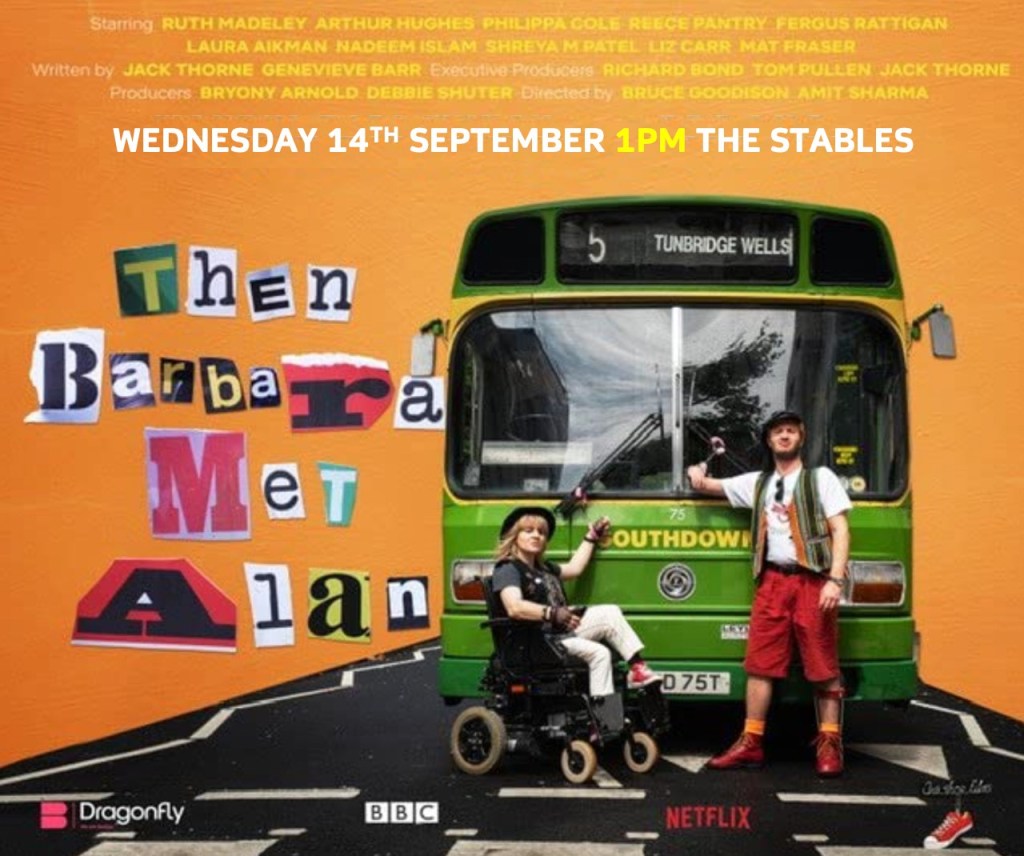
I just got the bus back from this afternoon’s screening in Charlton. I’m pleased to say it went very well, and with about six people in attendance, apparently had one of the biggest audiences of this years screenings. Yet the fact remains that I wouldn’t have been able to get onto the bus, there or back, had it not been for the very events depicted in Then Barbara Met Alan. Without the establishment of the Direct Action Network and the disability rights movement, I simply would not be living the life I now lead. Busses would still be inaccessible, and most public places would still be totally out of bounds for people like me. That’s why it was so imperative for me to have the film screened in public. It may have only been a small screening in a quiet corner of south London, but in a way it was also a celebration of how far disability rights have come over the last thirty years, as well as a commemoration of how we got here. And by the same token, it was an affirmation of how far we still have yet to go: after all, if the fight was over and every (physical or metaphorical) flight of stairs had been turned into a ramp, then we wouldn’t still need to screen films like Then Barbara Met Alan.

Screening Tomorrow

Some readers may have raised an eyebrow at the fact that my last two or three entries weren’t about the queen’s death, and that I’ve basically continued to waffle away as usual. This is because I personally don’t think such events, however significant or sad, should disrupt ordinary life. Life goes on, and we can’t allow ourselves to get too wound up with grief, or allow an event which, at the end of the day, has no direct effect on our daily lives, to get in the way of our day-to-day activity. To that end, I’d like to flag up that I will be introducing a screening of Then Barbera Met Alan tomorrow afternoon at The Stables in Charlton, as part of the Charlton and Woolwich Free Film Festival. As short as it is, and although anyone can watch it whenever they want online, it seems a very important film to me in terms of disability history: at last the history of the disability rights movement is starting to be told. I really wanted to give it a proper, public screening, and the local film festival gave me an opportunity to do so. To be honest I’m glad the event wasn’t cancelled under the current circumstances. If you can make it to Charlton tomorrow, it would be fantastic to see you there.

A Star Named Earandil

As both a huge fan of Tolkien and someone fascinated by the exploration of space, today I have no choice but to flag this up*. Scientists working with the Hubble Space Telescope have chosen to name a newly-discovered star after the character Earandel. “A team of researchers led by Brian Welch, an astrophysicist at Johns Hopkins University in Baltimore, announced …. that, with observations from Hubble, they have discovered the most distant single star ever before seen. And, while the star’s technical designation is WHL0137-LS, they gave it a much catchier name: Earendel.” Earandel, of course, was a great half-elven mariner from the first age of Middle-Earth who sailed to Valinor, carrying a star “across the sky.”

“In Old English, Earendel is a personal name, but it also can mean ‘the morning star’ or ‘the dawn.’ In the Lord of the Rings, Eärendil is a half-elven character who travels the seas carrying a jewel, a ‘Silmaril,’ called the morning star.“ I find that wonderfully poetic, I must say: a star so distant and ancient now has the name of a wanderer who is himself distant and ancient.

*The story apparently came out in march, but I somehow only came across it today.

Ten Years Since the Paralympic Closing Ceremony

I just checked my blog archive, and was bewildered to see that it is now ten years (and a day) since I posted this entry. Ten years since the 2012 Paralympic closing ceremony; ten years since London played host to the world; ten years since Lyn and the Paraorchestra played alongside Coldplay on an evening I will never forget. Of course, I won’t even try to go into everything which has happened since then: so many wonderful, happy memories, but so many painful ones too. Above all, I still miss Lyn, without whom I would never have had such experiences.

In fact, Mitch, John Dom and I were all up at a small free music festival on the Greenwich Peninsula this weekend, enjoying the first live music I had seen in zark knows how long. Yesterday afternoon, sat alongside my friends in a dark, cavernous hall lit only with spotlights and throbbing to wonderful rhythms, I turned to John and typed “Lyn would have loved this” into my Ipad.

“I was just thinking exactly the same thing.” John replied. So much may have happened over the last ten years, but Lyn would have been the first to point out that there are always even greater things yet to come..

The Usurpation of Death

The sudden talk of a state funeral got me thinking yesterday: Whenever anyone dies, why does religion automatically get involved? Following any death there is always a funeral held in and conducted by a church. Of course the argument is that religion gives people comfort, as well as hope that the person who has died might still exist in the afterlife. Yet it seems to me that this is just using death to keep us all addicted to religion. I’ve written before about how I think religion is just a form of social control: by exploiting the despair brought about by the death of someone you love, those who espouse religious dogma keep us dependent upon it. Thus the comfort funerals claim to bring merely feed into that social control and exploitation. Religions like Christianity just use death to keep people tied to their dogma, allowing those who espouse it to continue to control society, and indeed reinforce it’s hold. As someone who has now lost so many friends, this seems rather perverse, and in fact quite sickening.

Queen Elisabeth II

Yesterday evening I stood to attention. I was alone in my flat: I had just got in from having a beer with Dom in Kidbrooke, and had just turned the TV on. Earlier in the day, of course, I had seen the reports of the queen’s deteriorating health, and was eager for an update. It was 6.30, and almost as soon as I had turned it on the news broke away and started to play the National Anthem. I could tell what had happened.

I stood up straight. I’m not really a patriot, of course, but when I was young I used to go to the scouts, where I was taught to salute the Union Jack and stand for the National Anthem. I hadn’t done either since then, but yesterday evening I felt compelled to. Elisabeth II, our country’s longest reigning monarch, had passed away. As many are now saying, for seventy years she had been a constant in an ever-changing world; most of us can’t remember a time when she wasn’t the queen. She was crowned before either of my parents were born.

I find that quite, quite amazing. Say what you will about monarchy, the Queen deserved our respect: she was a kind of mother-figure for us all. Now she is gone, it feels like the country is suddenly in a state of flux, as if part of the firm bedrock upon which society is built has suddenly crumbled away and nobody knows what will happen next. Of course, life will go on. For most of us, life will go on: I’ll soon have my coffee and breakfast, and life will continue as normal. Yet a figure which had always been there throughout our lives now isn’t, leaving a strange absence which you can’t help feeling, like when one of your grandparents, who you rarely met but who you nonetheless feel attached to, dies.

I think the best thing I can do is direct everyone here, to a BBC retrospective film about the Queen’s long, remarkable reign, and wish you all a good day.

An Early Christmas Present Request

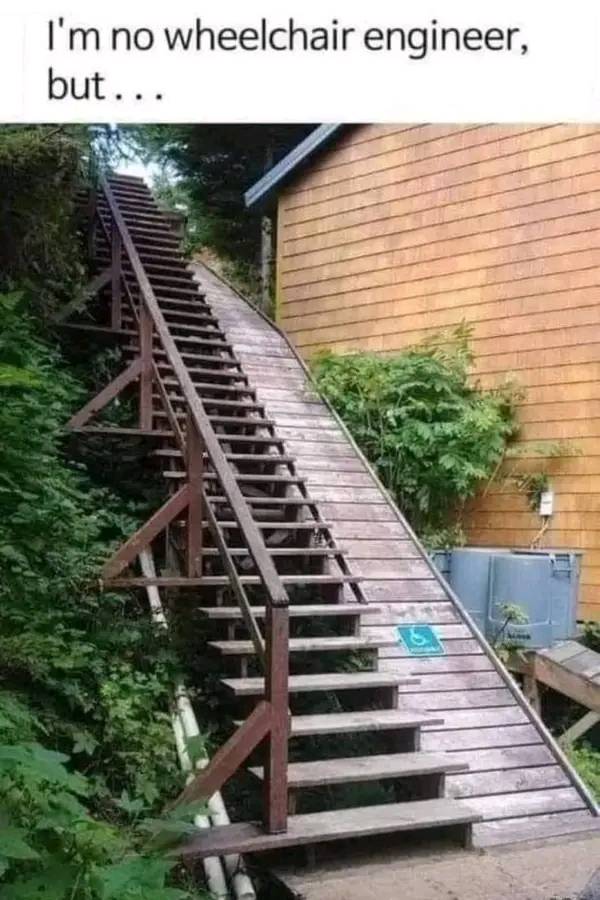
Today I just have a request. It might be slightly early, but today I decided what I would like for Christmas. Is it possible for anyone to have a T-shirt made for me? I’d like a black one with the words “Use The Zarking* Stairs!” clearly printed on its front. I could then wear it whenever I go to somewhere like Stratford. I’m fed up with people who are perfectly able to use stairs using the lifts in such places. It seems so selfish and has really started to wind me up. If lifts are overused, they are more likely to break down, so if it was up to me I would frankly make lifts strictly wheelchair user only, (with perhaps a few exceptions). If I had a t-shirt at least I could get my message across easily, helping me resist the urge to start shouting furiously at people. Mind you, a similar shirt about prams taking up the wheelchair space on busses would also be helpful, but then the obvious problem is that I would want to keep swapping shirts depending on my current situation.

*Or any other suitable expletive.

I Give Truss A Year At Most

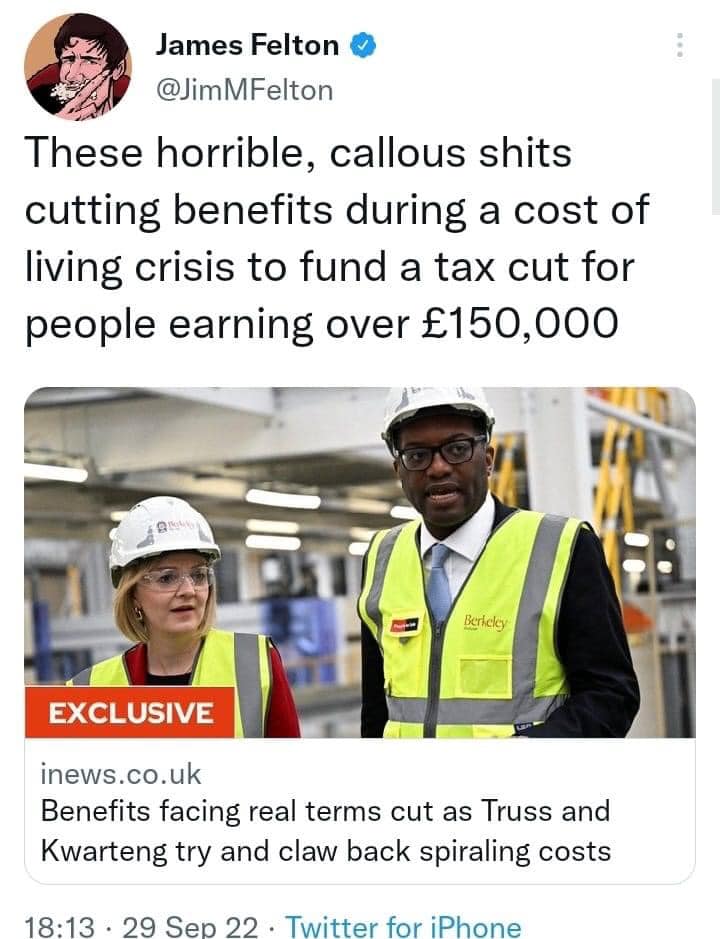
I don’t really want to comment too much on the political situation this evening, simply for fear of whipping myself into a hate-laced meringue of bile and dribble; yet I must say that our new Prime Minister already has my absolute ire. You wouldn’t have thought it possible, but if anything Liz Truss seems to be even more of a charlatan than her predecessor, a man who this morning tried to claim credit for a vaccine rollout delivered by a health service that his party is manifestly opposed to, and for a brexit which has resulted in one of the biggest catastrophes in this country’s history. Now, however, we have to put up with the even more perverse charade of watching this Lib-Dem turned Thatcherite, Remainer turned hardline Brexiteer try to cast herself as the new Iron Lady. If Truss really backs low tax, free market capitalism as fervently as she claims, I’d now be very worried indeed about the future of public institutions like the NHS. Fortunately, she’s so obviously such a lightweight, and the situation the country is in is so unremittingly dire, that I give her a year in office at most.

Nirvana Baby Gets Nothing

Just to follow up this entry from last August, the beeb is now reporting that “A US judge has dismissed a man’s latest lawsuit against Nirvana over the band’s iconic 1991 album cover which showed him naked as a baby.” The judge apparently ruled that Spencer Eden was too late in trying to sue the band for sexual abuse, but “The Los Angeles judge ruled on Friday that Mr Elden lodged his case well beyond the 10-year statute of limitations.” It’s blatantly obvious that he was only trying to exploit the fact that he just happened to once appear on an iconic album cover, and as such was trying to grab money without doing anything for it, while claiming some kind of victimhood. It’s an example of the egocentric, ultra-opportunistic mindset which now seems endemic in America, Donald Trump arguably being it’s prime embodiment.

Finding the Royal Albert Hall

Yesterday I went on one of my long, exploratory walks. This might sound a bit weird, but you could say I’m a fan of the jubilee line. Whenever I never to go anywhere, I just get on a bus to North Greenwich and head into the metropolis. Most major destinations are accessible from the jubilee line, from the Olympic park at Stratford to the Houses of Parliament at Westminster to Wembley stadium. And now Crossrail is open, to get on that I just have to go one stop to Canary Wharf. For the most part it’s all cool and accessible.

Yet, frustratingly, there are still many places in the metropolis which aren’t so easy for me to reach. It’s Proms season, so a few days ago I began to wonder how I would get to the Royal Albert Hall if I wanted to. The nearest tube station to it is South Kensington on the District Line, but that isn’t marked as accessible, and is in fact quite a walk from the hall itself. It struck me as odd that such a notable landmark would be so cut off from the public transport network, when so much progress has been made in modernising it and making London easier to get around.

Yesterday afternoon, then, I decided to see whether I could get to the Albert Hall and back. To be honest I didn’t go there directly: first I took the Elizabeth Line to Tottenham Court Road and then had one of my exploratory trundles around that area. My initial plan had been to look around that area for a bit before finding my way to Westminster and heading home from there. I wanted to see a bit more of the parks in that area too before the weather starts to turn.

However at one point I found myself in Kensington, where I started to see signs for the Royal Albert Hall. That, of course, made me curious so I decided to follow them. That is quite a strange area, full of high end shops and expensive hotels, but without much really going on. To put that another way, I didn’t see anything which would make me want to go back there. When I reached the Hall itself, I was struck by how outdated the area seemed, as if it hadn’t changed much from its Victorian heyday.

By then, the afternoon was starting to drag on, and I was getting hungry. My first line of enquiry was to find the tube station to see whether it could perhaps be updated and made accessible. Yet reaching it I realised that there was no chance of that happening: the station is surrounded by museums on both sides, and has very old looking steps to get down into it. To be honest seeing that was quite disappointing. For such a major cultural venue, you would hope that the Albert Hall would be served by a modern, accessible tube station. After all, I’ll never forget watching the Cat Empire there with Charlotte and James, and hopefully I’ll be going to many more concerts and events there in the years to come.

I then set off to see about busses: were there any bus routes which would take me directly to a jubilee line station? Unfortunately this turned out to be as woeful as the tube: in stark contrast to, say, the o2 which has it’s own dedicated bus station, I found myself having to go quite a way to find the nearest bus stop, and even then I had to ask a volunteer to guide me to the correct one. Fortunately, using his mobile phone he found me a direct bus to Green Park, from where I was able to get a Jubilee Line train back to North Greenwich.

I still think London is a great, great city, yet it still has a long way to go in terms of accessibility. I can get around some areas of it perfectly well; but others, like the area I explored yesterday, are in urgent need of updating. While the Albert Hall is a grand, beautiful building, it’s also a fragment of a very wheelchair unfriendly past: looking around it yesterday I realised that there was no way I could get into it alone, even if we put aside the issues I had getting there and back. That strikes me as such a shame given that so much of the rest of London and it’s public transport system are now accessible. This city has come so far in terms of accessibility, but it still has a long, long way to go.

The Obvious Subject(s)

As a (partly) political blogger, I suppose the subject of my entry this evening must be obvious. But to be honest, I only managed to watch one episode of Rings of Power this morning, and I don’t think I ought to comment on it until I’ve seen a bit more, just to be fair.

As for the other obvious topic, why should I say anything about an election so few of us have a vote in, between two candidates who both refuse to admit that Brexit is a major cause of this country’s increasingly catastrophic problems?