I was just watching the local BBC London news, when this story pricked my attention. “A teenage boy from London has become one of the first in the world to be treated with a new brain device. Surgeons at the Evelina Children’s Hospital hope it will help Sean Igbokwe deal with the uncontrolled movements caused by his cerebral palsy.” The device apparently works like a car gearbox, helping to filter unneeded brain signals. Not that I think CP necessarily needs a ‘cure’ – I’m perfectly happy as I am, thankyou very much – but I can’t help thinking this is very exciting news. No doubt it will improve the lives of many people with severe CP. Mind you, I can’t help thinking that cybernetic devices like this are just another step closer to humanity becoming the Borg.
Concerning Signs?
You can probably tell from my last couple of entries that I haven’t been having the best week. To cheer myself up, this afternoon I took myself on one of my favourite walks along the regents canal. It’s a long, quiet walk across the north of London, through fascinating suburbs like Camden, towards the city centre. It was exactly what I needed. One of the things I noticed, though, was the number of Palestinian flags which have appeared: I saw them all over the place, stuck to lamp posts and fences. I also saw things like “Free Palestine” and “Free Gaza” scrawled everywhere. I don’t know how significant this is: obviously it’s a response to what is happening in the Middle East, but I really hope it’s not a symptom of something more ominous and intolerant.
Mountains and Molehills

Having calmed down and cheered up a bit since yesterday, I was inspired to make this.
I really should just chill out sometimes. Everything turned out to be perfectly all right in the end!
Not A Good Day
I really don’t want to go into detail about this, but I have a knack of screwing things up and making things worse when I’m trying to help people. From time to time, I get these big, bold ideas about how to make a situation better, so I set off with resolve. But in the end it turns out that I misunderstood things, got the wrong end of the stick and should just have stayed at home. I’m afraid today was such a day: we don’t need to go into detail, but I set off thinking I could do something to resolve a situation, but came home feeling dejected and useless, and afraid I’ve made things even worse.
Does anyone else have such days, or is it just me?
Steve Shives on Star Ratings
I think I really need to flag this Steve Shives video up today, as it’s one of the most articulate and interesting pieces of analysis I’ve found on Youtube in a while. In it, Shives starts to explore star ratings and how, in reacting to anything both online and off, we’re now encourage to give five star ratings to anything we encounter. Such ratings have become a kind of currency: particularly in America, people now feel socially obliged to give the highest rating to everything whether they liked it or not, rather like tipping. As Shives says, such ratings have thus become meaningless in assessing how good something is.
This can be applied to anything, including film of course. These days, films are often assessed and compared via the number of stars they have, especially online. Numerous film review websites use such ratings to rank films currently in cinemas. The problem is, such stars are usually not awarded using any objective criteria. Shives has an issue with the principal that someone can actively dislike a film, but still award it five stars for various other reasons – perhaps to keep a particular actor or director high in the rankings. Yet that reminds me of my work on cinephilia: should we try to judge films based on some form of objective criteria, or should we go with our subjective opinions, or try to use both? If we rank films based on a set of externally mandated criteria, then in theory it would be possible to award a film a maximum rating, even though a reviewer may dislike the film overall. Yet would that not still make a nonsense of such ratings? Doesn’t a reviewer, by definition, have to like a film to award it a maximum score?
I’m still intrigued by all this. Shives goes into far more detail in his film, and it’s well worth watching. It’s a great example of how articulate and nuanced this form of online video discourse is becoming, seemingly picking up upon debates found in film journals, and taking them in fascinating new directions
Cheerful Road Crossings
Something rather odd happened earlier. It was only a fleeting event, but it struck me as so strange that it was worth noting here. I was out and about again, crossing Shooters Hill road. When I cross roads in my powerchair, I use zebra crossings where I can. When I do, I have a habit of waving to the waiting drivers in thanks as I cross. I know they are legally supposed to stop when they see people waiting at zebra crossings, but it just seems friendly to recognise their gesture. I just raise my left hand and nod towards the waiting drivers. Mind you, I usually have the cloth I wipe away my dribble with in that hand, so it probably looks like I’m waving it at them.
Crossing Shooters Hill earlier, everything had gone as it usually does: two cars had stopped, I’d crossed and waved. I was about to continue my journey, though, when all of a sudden a strange man came up to me and cried “Wow! That was the most cheerful crossing I’ve ever seen!” before continuing on his way. I don’t know whether it was cheerful or not, but it certainly struck me as an odd thing to hear when you’re crossing the road.
What The World Does Not Need
I just came across this on my Facebook feed. I find it staggering I must say, not only because Johnson spouted such utter rubbish - Trump belongs in jail, and the fact that America could even consider electing the charlatan again is frankly bewildering – but also because he has the gall and temerity to assume anyone still takes his opinions seriously. The world could really do without either of these jumped up, arrogant fraudsters.

Kids Are Getting Worse
These days just the sight of two or three school age kids when I’m out and about makes me worry. I think I’ve described here before how, when I’m out and about in my powerchair, I now become tense whenever I see kids, bracing myself for them to say something. It’s happening more and more: they shout things like ‘Spazz’ or ‘Timmy!’ as I roll past them, trying to provoke me into reacting. Then, when I confront them about it, they suddenly become defensive, acting hurt, as if I’m the one who wronged them by making false accusations. It happened a couple of days ago, and again as I was coming home this afternoon.
I have had enough of it. How is such behaviour in any way acceptable? If these kids mocked and teased a member of any other social or ethnic minority, they would quickly find themselves in deep trouble – and rightly so. Why, then, should I put up with it? Why should I tolerate being the butt of some little squirt’s joke? I’m proud of who I am and what I have achieved; so to have a schoolchild laugh at me, as though they somehow have the authority to lord it over me just because I have CP, makes my blood boil with rage.
Yet I don’t know what to do. I’m pretty sure they just do it to guys like me, as if we are ‘easy targets’. When I try to confront them about it, either they try to deny they ever said anything, or attempt me to provoke me even further. And on the rare occasions when I’ve managed to report this behaviour to an authority figure such as a teacher, the kids have denied it and said I was making it up, as if I didn’t know what I was talking about.
It is incredibly frustrating. As I say, it appears to be getting worse. I suspect these kids have been emboldened by what they’ve seen on social media, and think it looks big, cool or whatever to mock people like me. Thus the fact that I can’t do anything about it or tell them to stop, together with the fact that it doesn’t happen to anyone else, also makes me feel very alienated.
We Should Help These People, Not Deport Them
I want the UK to be an open, tolerant, culturally diverse country: I passionately believe we should be welcoming people here from across the world. I relish the fact that, here in London, I can trundle up to Woolwich market and find people from all kinds of exotic, wonderful places, interacting with one another. More personally, I am the grandson of Greek immigrants who came to the UK from Cyprus around eighty years ago. Immigration is a country’s lifeblood, without which it would culturally stagnate.
However, there is no denying that people should come here safely. Irrespective of how you feel about migration, people should not be forced to cross the English Channel in small boats. It is simply too dangerous. As others are pointing out, they are often trafficked by gangs, forced to take the risky crossing out of sheer desperation. Surely we, as a civilised, compassionate country, should not allow that to continue.
Yet the answer is obviously not just to threaten to deport these people to Rwanda. These immigrants are desperate; they want to come here as a place of safety. If we really were a civilised nation, we would be trying to ensure they have a safe, secure way to get here, before ensuring that they all have safe, secure homes. We would also be breaking up the vile gangs who trafficked them in the first place.
Instead, the heartless, brainless charlatans currently governing the country just want to send these immigrants elsewhere. The Tories don’t care about these desperate people: they just want to make a show of turning them away, in an effort to appease the knuckle-dragging xenophobes whose votes they want. They can’t honestly think that people who will do anything to reach the UK would have second thoughts about crossing the channel, simply because they might be sent to Rwanda. The government doesn’t care about international law, cultural diversity, tolerance, or even human compassion; they just want to look tough and strong by turning their back on people looking for help. I find it gut-wretchingly abominable: how can we, as a civilised, tolerant, enlightened society, continue to allow these charlatans to speak for us.
Poor Things
I just got home from the cinema, and for the second time in a week I find myself wondering what on earth I just saw. John and I went to see Poor Things. From the trailers I had kind of assumed that it may be about mental illness or learning difficulties, which is why I wanted to watch it. Yet what J and I just saw was far more complex and interesting than a simple allegory: by turns it was hilarious and horrific; as shocking as it was charming. It was bizarre and surreal, even fairly obscene, but also humane and very lovable. It owes as much to Mary Shelly as it does to Monty Python. I’ll not try to write a complete review of it yet because I wouldn’t know where to begin; but I can only say I was absolutely fascinated, and that Poor Things is the best film I’ve seen in a very long time.
A Perfectly Normal but Very Special Lunch
In a way I don’t have anything to note here today. It has just been a normal day, in which I didn’t do anything most people would consider unusual. After breakfast I took myself up to Stratford to have lunch with my parents. There is a lovely Greek restaurant we like to go to there.
For most adults, meeting your mum and dad for lunch isn’t really something to write about: it’s a nice family event, but nothing special enough to blog about. At the same time, to me, in a way it was very special indeed. When I was growing up, I could never have imagined that I would be living by myself in the east of London: if someone had told my fourteen year old self that I would one day be trundling around the capital and meeting my parents for lunch, I would never have believed them. The idea that I could be so independent, so free, so normal would have seemed absurd. I always assumed that I would just keep living with my parents, relying on them, perpetuating my childhood for as long as possible.
That was a comforting thought: back then, the idea of ever living on my own made me feel so insecure. Yet I now find myself wishing that I could go back and tell myself that everything would be fine: that one day I would be living in my own flat, just like everyone else; that I would be travelling around London, just like everyone else. That rather than living with my parents, depending upon them, I would one day be meeting them for lunch, just like every other independent, middle-aged adult eager to catch up with the mother and father he loves so dearly. Because ultimately, I am just like everyone else.
There was a time, when I was growing up, when the thought of ever leaving the security of my family home seemed so absurd and frightening: things like riding busses, going shopping on my own, even communicating with people and telling them what I wanted, was something other people – normal people – did. Yet now, largely thanks to my communication aid and powerchair, they are as normal to me as they are to everyone else. Thus I live in this beguiling, labyrinthine, amazing world city, something I would never have once thought possible. The thought that I have come so far from the insecure child I once was, dreading the idea of even staying a single night away from home, fills me with an unimaginable pride and strength. That’s why meeting my parents for lunch today was so special, even if it was perfectly normal at the same time.
This Is Obvious, Really
Two Exhibitions In One Day
Yesterday was a very cool day, although, if I’m honest, there isn’t too much for me to note on here. Watching TV yesterday morning, I got wind that there was a big drag queen convention somewhere in London. Naturally that made me curious, so I thought I’d look it up to see where it was. It turned out it was at the Excel Centre, just over the river, so after breakfast I headed over there.
I didn’t know what to expect, or even whether I’d be let in given I didn’t have a ticket. However, getting there I found there were two conventions happening simultaneously at the Excel: Rupaul’s drag con and MegaCon Live, a huge exhibition of popular culture. Both interested me so I decided to check both out. Without going into detail, I’m getting rather good at blagging my way into events which I don’t have a ticket for.
The rest of my afternoon was spent switching between two of the massive exhibition halls of the Excel Centre. There was so much to see in both: I’ve never seen so many guys wearing ridiculously high heels, or so much manga. It struck me as an incredible celebration of two subcultures, both rather different, but both incredibly vibrant. There was so much to see; so many stalls, all packed with weird, wonderful things, from both the worlds of pop culture and crossdressing. Once again I was reminded why I love London: where else can you find people in Bo Peep costumes sharing coffee with guys dressed as Batman? The highlight of my day, though, was catching up with Davina De Campo. She’s now a famous drag queen, but I know her from uni. When she was just called Owen, she was a year above me at MMU, and I remember her wearing all kinds of crazy things at the Wednesday night discos – rather like me. It was good to catch up with her and reminisce, however briefly.
I love this city. It is a place where you never know what is going to happen. I woke up yesterday thinking it would be just a humdrum Saturday, but it turned out to be deliciously vibrant and packed with culture. While it might not quite have involved one of my big, primary obsessions - I will always cherish the memory of going to Destination Star Trek at the Excel Centre in 2014 – nonetheless I got to see some truly awesome things and meet some incredible people. Surely that is what life in this great world city is about.
Wonka – WTF?
I just got back from the cinema. I had initially headed there to watch Poor Things, having seen Mark Kermode’s review of it this morning and grown intrigued. However, it wasn’t going to begin for a couple of hours, so I thought I would check out Wonka instead. I had heard a lot about it, and it is a film I had been intending to watch for weeks. The simple fact that it purported to be a contemporary retelling of a classic children’s film from the sixties pricked my curiosity. However, now that I have seen it, I must say I find myself totally bemused: it is utterly bizarre, as if film as an artform has at last lost it’s mind completely and thrown any sense of reality out the window.
I know that, as a kid’s film, you shouldn’t try to read too much into it; yet I’m at a complete loss to say what Wonka is actually about. By turns it can be read as a tribute to the original Charlie And The Chocolate Factory; an absurd psychedelic children’s romp involving policemen who were dressed as French gendarmes but spoke with thick New York accents; or an allegory for the mafia and illegal drugs cartels. Indeed, the film itself could even probably be read as some kind of drug trip, it was so full of bizarre iconography. Above all, as I trundled home for the cinema, the question bugging me the most was, how the zark did Hugh Grant get cast as an Oompa Loompa?!
It was an inane, absurd piece of post-classical American film attempting to cash in on the sixty year old original; yet, forgive me, but I couldn’t help liking it.
Data, What is This?
As both a Star Trek and Red Dwarf fan, I couldn’t help chuckling when I saw this nifty crossover earlier.
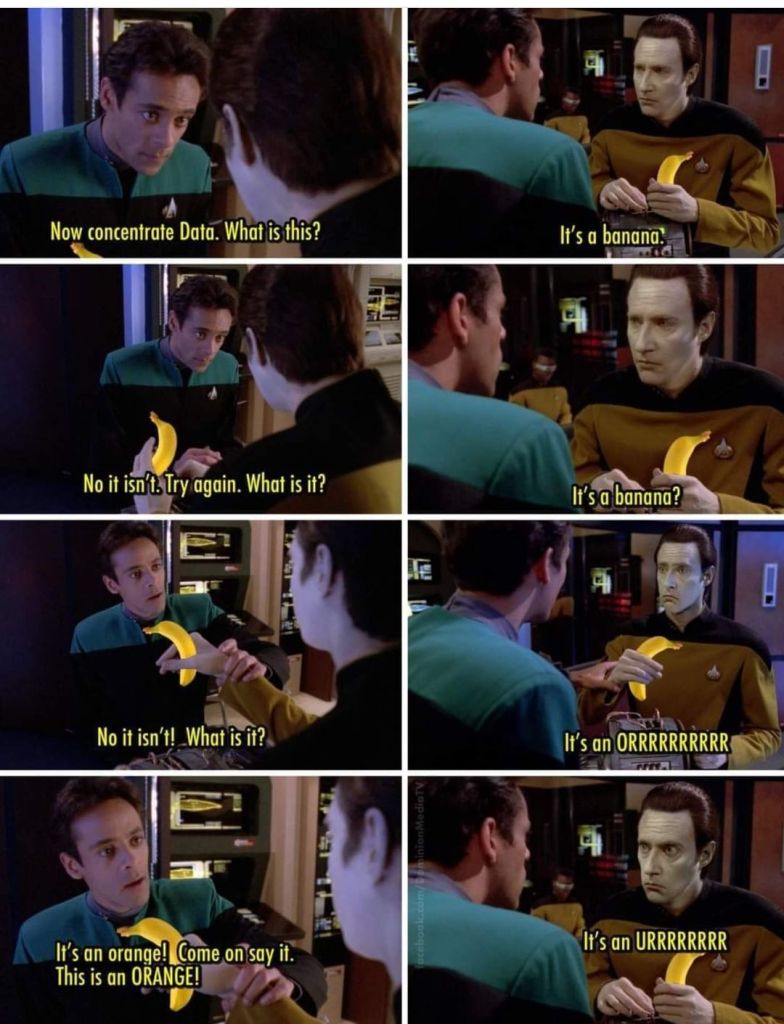
Just for reference, you might want to check this out.
Socks Are Now Easier Than MAs
It’s getting easier and easier to put my socks on. I think I’ve mentioned here before how Serkan currently takes Wednesday mornings off, so I don’t have my usual morning support. It’s not an issue: I just slowly get myself dressed and take myself up to Costa in Eltham. I’ve been able to put my own clothes on since I was little, but I’ve always struggled with my socks. They are so awkward and fiddly. I’ve developed a technique of sitting in my armchair, leaning forward and trying to hook them over my toes, but it’s kind of like a cowboy trying to lasso a rabid cow! I often grumble to myself that writing my Masters thesis was easier. However, it must be said that I now don’t find it anywhere near as difficult as I once did: it just needs me to relax and open the hole of the sock nice and wide. I have now got the whole process down to under ten minutes, which, believe me, is quite an achievement. What once took me about seven or eight attempts for each foot now only needs two or three. And I suppose that’s an attitude which you can apply to anything: you can do anything you put your mind to, from putting your socks on to getting a Masters, if you just keep going.
Is ITV Playing Into Tory Hands?
It’s looking more and more likely that I’ll check out Mr Bates vs the Post Office soon. On the whole I tend to avoid ITV in favour of the Beeb, mostly because I don’t like sitting through adverts. Yet so much is now being said about the Post Office scandal that I probably better see what all the fuss is about. I’d assumed it was just a pretty average TV drama about some sort of historic social scandal, and nothing very interesting; yet now the government has got involved, maybe it’s worth a look.
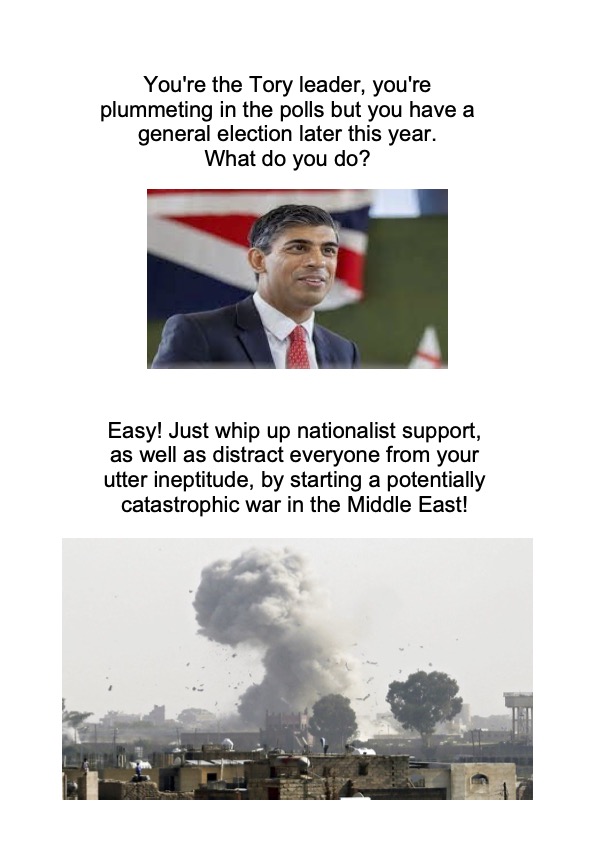
Mind you, you have to raise an eyebrow at the timing of all of this: the Tories were plummeting in the polls, but all of a sudden ITV has gifted them this scandal which they can be seen to sort out. The drama is said to highlight a huge travesty of justice, one which would be bound to play on the national consciousness, just in time for the Tories to step in and be seen to bring those responsible to justice. Forgive my cynicism, but have ITV just played right into Tory hands?
Anyway, before I can comment any more, I better go watch the program.
Rainman – Where Do I Even Begin?
The truth is I’ve been putting this entry off for a couple of days, trying to summon the intellectual energy to give the subject the weight it deserves. Unfortunately, I’m not sure that energy is going to arrive, so I think I better just bite the bullet and start writing. Four or five days ago, Rainman aired on BBC2. I watched it on Iplayer the next day, and it instantly struck me that it necessitated a fulsome analysis from someone familiar with the contemporary disability rights discourse. The problem was, I wasn’t sure I was the right cripple for the job: as familiar with concepts like the Social Model as I am, I’m not convinced that I’m up to the task of applying them to Rainman to the extent that a proper review/analysis/reading would require. And rather than confining my thoughts to a blog entry, such an analysis would need to be far longer and more substantial.
When you begin to look at it, Rainman is a very problematic film. It is a depiction of a man with severe Autism (played, it must be noted, by a nondisabled actor) being kidnapped from the institution where he lived and then exploited by his estranged able-bodied brother. Much of this interaction and exploitation is played for comic effect: the ‘quirks’ caused by Raymond’s disability are depicted as humorous; the way his brother Charlie uses him to get an advantage at gambling is not frowned upon or criticised in the film but are portrayed as a highlight. And at the end of the film, in spite of this exploitation, the two are seen to come together in fraternal love, as if Charles hadn’t spent most of the film trying to con Raymond out of half of his inheritance or using him to gamble, but had treated his brother respectfully.
Of course, I know Rainman is forty years old, and was made before disability rights was really a thing. But I nonetheless don’t know where to begin unpacking this film. How can depicting autism, or any disability, in this way be seen as acceptable? As audience members we’re meant to laugh at how one character treats his disabled brother; then, at the end of the film, we’re supposed to find pathos in the way the one brother learns to accept the other, as if he hadn’t just been a complete bastard to his autistic sibling.
The film left a very nasty taste in my mouth, it must be said. It struck me as very uncritical, as the exploitation of disabled people was just water off a duck’s back. I know I ought to go far, far deeper in analysing Rainman, but first I want to see whether anyone else has written anything about it from a contemporary disability rights perspective. What was humorous or lighthearted forty years ago is far more problematic today. Yet if that is the case, why are films like this still being aired on TV today?
A Star Trek Picard Film Is In The Works
I’m suddenly rather excited, having just come across the best bit of news I’ve seen in a while. Last year, when the third season of Star Trek Picard ended, like many I assumed that that would be the last we’d see of Picard and the old Next Generation crew. However, I just got wind that a Picard film is in the works: Patrick Stewart himself has said that a script is ‘being written’. Of course, at this stage there are no details, and as usual there is already a lot of online speculation about what shape this film might take, which I’m not going to get into. Yet, as a Star Trek fan, this is very exciting: we haven’t seen Picard and crew on the big screen since Nemesis in 2002, so if they could have one last big cinematic outing, perhaps even returning to the glorious heights of First Contact, it could well be awesome.
A Must Watch
I know I said I’d try to avoid blogging about what is currently happening in Israel, for fear of getting embroiled in a political minefield, but I really think this video is an important watch. It’s an interview between Owen Jones and Andrew Feinstein, a Jewish journalist from South Africa, in which they explore the parallels between how Israel treats Palestinians and South African Apartheid. They go into quite extensive detail, but I think it helps to put what we are currently watching in the Middle East into context, as well as making the issues at hand absolutely clear for anyone even remotely concerned about social justice. I’m not going to try to summarise what they say here, other than to say that it is thorough, qualified, balanced and absolutely chilling.
Margaret Hathaway
I just turned on my computer to see some very sad news. The Ex Pupils and Staff Facebook page for my old special school is reporting that Margaret Hathaway sadly passed away over Christmas. Mrs. Hathaway was one of my very first teachers at Hebden Green. I must only have been four or five when I started going to the nursery department there. I still remember her class quite vividly, and how every day started with drawing pictures. Above all, Margaret Hathaway was an extremely dedicated teacher who must have worked at Hebden Green for well over thirty years, educating hundreds of children with special needs. She will be greatly missed.
The Elephant In Starmer’s Room
I watched Sir Kier Starmer’s speech earlier, and I must admit I found it refreshingly honest. Unlike most politicians these days, particularly Tories, Starmer seemed approachable and trustable. Yet it must be said, Brexit was notable in it’s absence: Starmer didn’t mention the crime of 2016 once, like some colossal elephant in the room. The damage our withdrawal from the EU is doing is becoming clearer and clearer, so much so that any honest opposition MP should surely be talking about reversing it.
Indeed, John flagged this Reuters article up for me earlier: it was little noted in the mainstream press, but the country has now scrapped the cap on banker’s bonuses which the EU put in place. So while the rest of us are struggling to get by in the cost of living crisis, these super-rich, arrogant bankers are now free to award their selves obscene pay rises, despite doing essentially nothing for the wider community. I find that utterly perverse, although it was what Brexit was about all along: a right wing ploy to unleash the most sickening form of capitalism loose on the country.
If the Labour leader really cared about social justice as much as he says he does, surely such things are what he would be drawing our attention to.
Spot On, Frank
I’ve been saying something similar all my life.

…Well, at least since I first pulled on a pink tutu.
When Bus Ramps Fail
After today I now firmly believe that all London busses should have auxiliary manual wheelchair ramps, of the kind dad used to use to load my powerchair into the back of our MPV. Of course, automatic bus ramps are wonderful, and I love being able to get on and off busses sleekly and quickly. Most of the time they work without a problem. However, when they don’t work there ought to be a backup system.
I went up to North Greenwich earlier today. Ironically enough I was heading for the TFL offices there to ask about a completely unrelated issue. The trip had started ordinarily enough: as usual I had caught the bus there. But when the time came for me to get off the bus, after the driver had let everyone else off first, the ramp stopped working. It would go out as normal, but then automatically shoot back in as though it had encountered something unexpected. Of course, this was not the first time I had seen this happen; the driver usually just has to reposition the bus slightly to get the ramp to stay out. But when he tried that, it still wouldn’t work. He tried over and over, but the ramp kept darting back in.
I must have been there for at least twenty minutes or half an hour, unable to get off the bus. In the end, the staff had to break the glass of a special compartment, in order to get to the emergency ramp tool. Yet it struck me that it would have just been been so much easier if somewhere on the bus, behind the driver’s cabin perhaps, there was an emergency manual ramp which the driver could get out, unfold and let me off the bus. Luckily busses terminate at North Greenwich, so nobody else was on the bus when this happened, and there were other TFL staff around. Yet I dread to think what things would have been like if the bus was on it’s way to somewhere, and a bus full of commuters was waiting for me to get off. As I say, automatic bus ramps are great, but experiences like this clearly demonstrate that there needs to be a back up.
Shut Up Welby, Again
I just saw in the morning news that Justin Welby has been making pronouncements about british politics: in a new year’s address, he called on politicians to treat one another humanely and to “treat political opponents as human beings”. I’m sorry, but I have to say things like this really, really piss me off. As I wrote here, Welby is a man who nobody voted for, whose only authority stems from an ancient, anachronistic belief system; yet he claims a right to speak on national TV and radio, and to tell politicians how to act like some sage old wizard who we should all venerate. That strikes me as obscene. After all, if everyone saw the set of myths which Welby and religious figures like him derive their authority from as the baseless hogwash they are, he would just be ignored like every other lunatic spouting nonsense about their imaginary friends.
Instead, because religion, and christianity in particular, still has so much of a hold over our culture, primarily because the church won’t allow us to call it out as the nonsense it is, such men can tell others what to think and how to act, including our politicians. That strikes me as both extremely arrogant and undemocratic: surely in any modern democracy, political authority should stem from the population, not religion. Welby and preachers like him (note that I refuse to use their self-proclaimed religious titles) have no right to make judgements and pronouncements about politics, and such pronouncements certainly shouldn’t be aired on the morning news.
Blimey, barely a morning into the year and I’m already ranting about politics.
2023
I think the highlight of my year must obviously be my trip to Spain and Morocco with John a couple of months ago. Overall it has been a quiet, subdued year for me: I’ve just kept myself busy trundling around East London, doing a bit of writing and keeping my blog updated. There were no epic gigs or concerts to recall this year. The Morocco trip, though, was the stand-out point: I’ll never forget exploring those North African cities with their fascinating medinas and insane traffic, not to mention places like Ronda and Casablanca. Such trips – going out and exploring this awesome world – are surely what life is about.
Mind you, I must say that another personal highlight of 2023 was becoming an uncle for the third time. I haven’t actually met my newborn nephew Elias yet; that’s something I really want to do as soon as possible in 2024. Indeed, truth be told, it feels like an age since me, my parents and my brothers with their young families all got together. I think the pandemic, as well as various other factors like schools and geography, just got in the way. Well, I think we’ll certainly have to put that right in the new year: I have nieces and nephews to get to know!
Take That Paris!
As long term readers have probably gathered, I adore London: as far as I am concerned, it is pretty much the greatest city on Earth. However, it seems I’m not alone in thinking that. I just came across this Time Out article. “London has been crowned the best city in Europe for 2023. Resonance Consultancy, publisher of the Best Cities named the UK capital as the superior city in Europe, placing us higher than Paris, Barcelona and Zurich.” It goes on ” The firm looked at the 100 best cities in Europe to visit or live in in 2023, considering several factors. It took into account attractions, diversity, the environment, employment levels and even Instagram hashtags and TripAdvisor reviews.” Needless to say, I couldn’t agree more: while London isn’t without it’s problems, having lived here for almost fourteen years I have come to know it’s culture and diversity; it’s charming little parks and rivers; it’s mighty stadia and arenas. It’s a place where anything is possible, and the potential for awesomeness is truly infinite. I’m glad to now see that I’m not the only person to think that.
A Definition of Home
I suppose there are many ways you can define ‘home’ or say whether an area has started to feel homelike. I think I just came across one which, for me personally, really fits the bill: the point at which the people around me not only begin to know me by name, but have started to understand my speech. I just got in from a nice, long walk along the Regent’s canal. On my way home I knew I needed to get three or four things, so I popped into my local Tesco Express, as I often do. The staff there now know me quite well, as I have been a regular customer for four years. As usual, I went in and parked by the tills to wait for a member of staff to become available to help me.
Soon enough, a guy came and together we went around the shop collecting what I needed. The task was going well and didn’t take long, the only slight delay being when I needed to decide whether or not to buy beer, but I chose not to tonight. However, sitting at the tills, after I had payed and my shopping had been packed in my bag, I suddenly remembered that I also needed bleach.
“Bleach!” I yelled, waving my hands in exasperation. To my great surprise and relief, the fellow helping me knew exactly what the problem was and what I needed.
“Do you need bleach too?” he asked. I nodded, and a few moments later the problem had been solved, a bottle of bleach in my bag with my other stuff. It was only a small, trivial incident I know, but I left the shop reflecting upon how such things make me feel welcome and at home. The staff in that Tesco store now know me quite well, enough to greet me by name and understand my speech. Having gone through life struggling to get people to understand how I speak, surely that would be enough to put anyone at ease.
Returning to the Cafe in the Park
At one point while I was staying with my parents, Dad recounted to the rest of the family how, two years when I was living with Lyn in Charlton, the guys at the Charlton Park Cafe , the Old Cottage Coffee Shop, had very kindly cooked Christmas lunch and delivered it to us. That was a wonderful gesture of course, and Dad’s mentioning of it naturally got me reflecting on the fact that it had been so long – years, in fact – since I’d been to that sweet little cafe. There was the fact I moved to Eltham, plus the pandemic meant I fell out of the habit. But I think the biggest issue which prevented me from drinking my coffees there was the fact that they started serving in paper cups rather than solid china ones, which meant I could knock my drink over too easily. It was a shame, because it was a great little cafe owned and frequented by some wonderful people. At one point I used to spend entire afternoons there.
I was thinking about it this morning. Dad mentioning it reminded me how kind those people were, so short of anywhere else to go, I thought I’d head over there just to say ‘Hi’ and get back into contact. Charlton isn’t that far from my flat, and I go through Charlton Park fairly regularly, yet I never stop at the cafe. This morning, though, I made a point of doing so.
Going into the cafe, I was pleased to see it was just as I remembered it, with dozens of paintings on the walls, flyers about local activities on the notice board and a rich smell of coffee. I spoke to Mimi, one of the owners: she seemed happy to see me back. However, I explained my problem with the paper cups, and she said they still used them, unfortunately. They are too light and tip over too easily, which can be fairly hazardous when they have a load of hot coffee inside. I’m not sure I can see a solution, apart from taking my own mug.
Nonetheless I now intend to start going their quite regularly again, especially when Spring comes. The last few years have taught me how important friendships are, and maintaining contact with people: it is far too easy to loose touch with guys you were once fairly close to, and before you know it, before you even realise what you had, they’re gone for good. I remember that cafe being a happy, jovial, social place where everyone met up; it would be good to experience some of that again.
Tube Rides Between Londons
For what it’s worth, I spent a nice, quiet Christmas Day with my parents., cousins and their children. I don’t really have much to report, other than it was one of those lovely family Christmas days like I had growing up. In fact since I didn’t have my Neater Eater so Mum was feeding me, it even felt slightly like I had stepped back into childhood.
I’m back at home now though, having taken the tube train across this sprawling metropolis like so many other Londoners. It’s almost like taking a tube ride between my first London and my third. Just as I find great comfort in knowing that I can always go back to that old family house if I need to, I set great strength in knowing that I am capable of getting around one of the world’s greatest cities pretty much alone. My family gave me a lot of support when I was growing up, and it still does: that support has ranged from giving me outstanding Christmas lunches to encouraging me through university.
Without such support I doubt I would be where I am today, an accomplished blogger, writer and filmmaker living alone in south east London. I wonder how I would have reacted if someone had told my ten year old self, or even the insecure young boy who still crawled over the floors of the old family house which I just returned from, how things were going to turn out.
Floors I Remember Crawling Over
I’m sat in a room whose floor I have vivid memories of crawling over. I have returned to a house in north west London which I have visited since infancy: a house which my family has owned since the sixties. A lot has changed, of course: my grandparents are no longer with us, and the place has been extended and renovated and redecorated. Yet these rooms have somehow kept the same aura.
Much of my family is here including my Brazilian cousins and their young children. The three kids are about eight or ten, and still fairly uncertain and clinging to their parents. The strange thing is, I remember doing exactly the same thing in these very rooms. Whenever we visited this house every few months during my childhood, I remember feeling similarly uncertain, with the adults all talking together about things I didn’t understand. The strange thing is, I am now one of the adults, talking about complex, boring adult things.
Time is time, unstoppable and relentless. Things will always change. I now walk across a floor I remember crawling on, having come across the city from my own flat on the other side of the city. Yet, somehow, something is the same; something about this house has a timelessness to it. It is still the house where my family comes to meet, to get together and enjoy one another’s company. Entering earlier I came through the same front door which I was once helped through as an infant; and I felt exactly the same feeling of warmth and welcome today that I felt as a child.
Merry Christmas Everyone
I have blogged about my views on religion before and I don’t think I need to again go into how oppressive and repugnant I find it as a sociopolitical phenomenon. However, I don’t think that should stop me saying here today that I hope the next few days are very enjoyable for everyone. Part of me is worried that, just by saying that, I’m playing into the religious narrative and reinforcing it’s control; yet, at the end of the day, Christmas is about getting together with family and friends, enjoying each other’s company, exchanging gifts and chilling out. In that case, I have nothing against it. After all, the pagan midwinter festival which the event we call Christmas essentially stems from has more or less nothing to do with a religious or cultural leader living in the Middle East two thousand years ago.
I’m going to visit my parents tomorrow and staying with them until Boxing Day, so mine should be a Christmas like the ones I had growing up. I’m really looking forward to it, and especially enjoying one of my mum’s Christmas lunches. Thus, putting all my concerns about social control aside, let me just wish everyone reading this a merry Christmas and a wonderful new year.
Audible Memes
I just came across this meme on facebook, and instantly felt rather old. It took me right back to my teenage years and 486 and Pentium computers. Yet, interestingly, as one comment put it, “I can hear this image!”

Why Lord Of The Rings Will Never Be Equalled
Although the dude narrating it sounds a tad reactionary at times, railing against concepts like ‘inclusion’, I think this is worth a watch. It’s a bit of Youtube analysis explaining why we are unlikely to see anything as revolutionary or phenomenal, culturally speaking, as Peter Jackson’s adaptation of The Lord of the Rings again. His argument is that, twenty years on from LOTR hitting our screens, cinema has become so artistically timid and ‘wishy-washy’, no-one will be bold enough to create anything as mould-breaking as Jackson was almost 25 years ago. I certainly see his point: film has grown so bogged down with franchises and derivative commercial pap that no director will be as brave enough as PJ was to go against the grain. LOTR was, and still is, a stand-out work of art. I had been a fan of Tolkien since Dad read the books to me as a boy; to see those stories translated onto the big screen was phenomenal in a way which I think can rarely be matched. It’s also good to see film and cultural analysis on Youtube has reached this depth, with content creators on the web now generating things just as sophisticated as anything you’ll read in a paper or journal.
The Unloosable Baseball Cap
Something happened this afternoon which I think I need to record here. It was one of those happenstance events which, although unconsequencial in the grand scheme of things, just makes life slightly brighter. I was out on my trundle over on the Isle of Dogs, following the river round. I was feeling slightly sorry for myself, not having slept well last night. All of a sudden a huge gust of wind rose up and blew my baseball cap off. It landed on the other side of a fence on an old dock, and of course I assumed I had lost it. I could see the cap, but there was no way I would be able to retrieve it. It was a shame, because I had had the cap two or three years, and it always seemed to come back to me whenever it blew away.
I was on the verge of turning my back on it and carrying on my walk, though, when a man came walking along the road. He said Hi in a friendly tone, so I greeted him in return, gesturing toward the lost cap. He instantly realised what had happened, of course, and to my great astonishment and gratitude offered to retrieve it for me.
A couple of minutes later I had my cap back, amazed that I hadn’t lost it after all: The cap had proven itself unloosable once again. More to the point, I was once more in awe of the kindness of a total stranger, who had gone out of his way to help me. I offered to buy him a beer in thanks, but he said he needed to take the parcel he was carrying to the post office, so we parted ways. It was just one of those lucky little events which might not really be worth recording, except that it made me feel so fortunate and instantly brightened my day.
What Both these P’tahks are Thinking

*The Batazoids are a telepathic humanoid civilisation from Star Trek.
Rewatching Being James Bond
It’s a wet, grey, Tuesday afternoon, so I just rewatched Being James Bond, a 45 minute documentary about Daniel Craig’s tenure playing James Bond. I’ve watched it before, of course, but not for a while. Craig is obviously the most recent actor to play Bond, and the documentary makes it clear what an impact he had on the series: when he was first cast, everyone dismissed him as completely unsuitable. As the program shows quite well, however, the doubters were shut up as soon as Casino Royale came out in 2006; and over the next five films, Craig made a deep impact on the role. He made 007 more human, but no less suave, sophisticated and awesome. In fact I’d go as far as to say that Craig left two shoes to fill which are bigger than ever, given the impact his five films made, socially and culturally, on the Bond franchise.
The obvious question that leaves is, how can those shoes be filled? Craig left Bond in a more prominent cultural position than ever; his five films were smash hits, with everyone just about loosing their heads every time a new one came out. Moreover, how can Craig possibly be followed, given the depth and humanity he brought to the role? Here we have an actor who was almost totally unheard of, who everyone completely dismissed when he was first cast, yet who blew everyone out of the park and contributed five of the greatest films of the Bond series. That is not to dismiss the five great actors who preceded Craig, but he secured James Bond films position as a cinematic franchise culturally unlike any other. Whoever is cast their task is going to be impossible given the expectations everyone now has.
Mind you, the fact that it will have been so long since the last film was released won’t help that. No Time To Die hit screens in 2021, and we haven’t heard anything about the future of the franchise or who’ll next play Bond yet, so it will probably be ’25 or ’26 by the next time we see a new Bond film. By then, expectations are going to be almost insurmountable, with everyone remembering the legacy of Craig and expecting something just as good or possibly even greater. Frankly I don’t see how any actor is going to live up to that, which probably explains why the producers are taking so much time in casting someone.
I am still a huge Bond fan, of course. I love the entire series and all six actors to play him. They all brought something slightly different to the role, but as I once wrote here, I think Daniel Craig is my favourite, given he played Bond as the flawed, three dimensional character most akin to the one Ian Fleming created. The problem is, I don’t see where the franchise can be taken from here, the impact Craig had on it was so massive. As I touched upon here a while ago, one option is to take the franchise in a different direction, perhaps by reintroducing a lighter, more comic, Roger Moore-esque tone. Either way Craig has left a huge cultural opening which someone will have to fill. I’m sure it will be, sooner or later – James Bond always returns - but whoever is selected faces a truly unenviable task.
Why London Won’t get a Second Dome
Just as a brief update on this entry from a couple of weeks ago, I can now see why Sadiq Kahn vetoed the construction of a whacking great illuminated arena up in Stratford. I just thought I’d google it to see if there were any developments in that story, and found this Evening Standard article. The thing would have been a bloody great health risk which would have spread light pollution for miles and made the whole area uninhabitable. Even more pressingly, there was a risk of the sphere triggering epileptic seizures. I can now easily see why the plans were rejected: what might look cool in Las Vegas, surrounded by the deserts of Nevada, does not necessarily suit suburban London.
Even so, I’m still curious about what will be done with that crumbling car park.
Parks I Can’t Get Into
I was out and about again yesterday. I thought I’d head in a direction I hadn’t been before, so I took myself east from Eltham along Shooters Hill. That whole area is crammed with lovely little parks and patches of ancient woodland. About halfway through my trundle though, I came across a wide open piece of grassland called East Wickham Open Space: from the outside it looked lovely, with lots of well maintained paths leading across it. The problem was I couldn’t get onto it, because the entrance I’d come across was blocked by a gate which I couldn’t get through in my powerchair. I thought I’d go round and looked for another way in, but they were all blocked by the same kind of gate. They’re obviously intended to prevent cyclists going through at speed, but if you’re a wheelchair user there is no way you can get through, especially if you’re in a large cumbersome powerchair, and especially if you don’t have anyone with you to help. It almost felt like guys like me had been deliberately prevented from entering.
I must say I was rather disappointed. The park looked quite lovely, but for all the progress London has made towards accessibility recently, it seems that there are still parts of the metropolis which we wheelchair users still can’t get to.
A Well Deserved Award
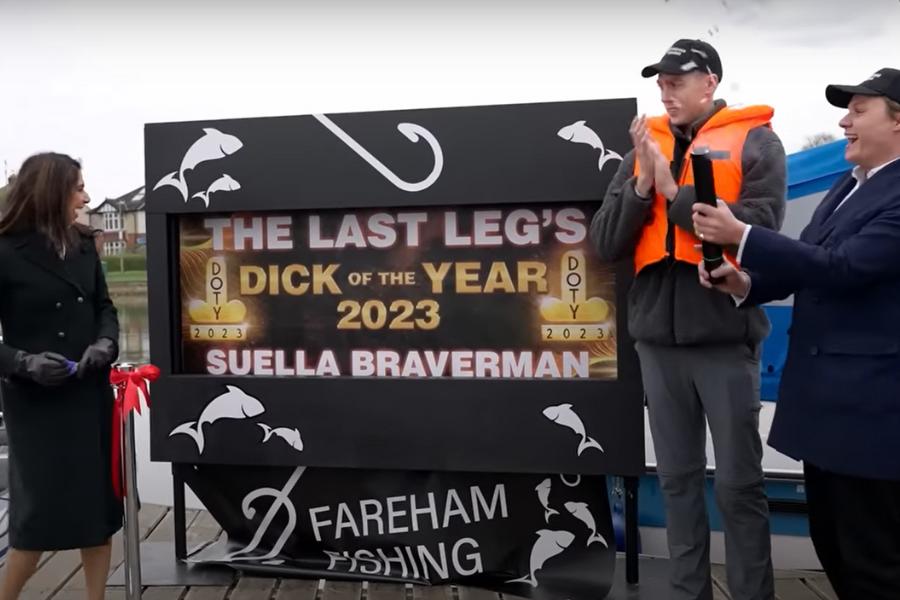
There is really only one place I can direct everyone today, and that’s here, to last nights episode of The Last Leg. To be honest, I didn’t watch it when it aired live last night, but just caught up with it. I had seen something this morning on Facebook about Suella Braverman getting an award for Dick Of The Year on the show, and knew I had to check it out. Having just done so, I can confirm it is absolute gold: the cruel cow is duped into thinking she is opening some sort of yaght club, and it isn’t until the very last moment that she realises she’s been royally had, and has been called out on national TV. Qa’pla Channel Four! Qa’pla!
 The Ill-Informed Ramblings of a Cripple