There are few men left in the world one can call great; few truly amazing people, leading remarkable lives. There are no Churchils or Hemingways – no men who, for all their flaws, captivate, fascinate and inspire. Perhaps their era is simply passed. Yet, there is one left: one man as great as any of history. David Attenborough inspires and fascinates me, as he does most people. It was great to see him back on tv last night. I find it remarkable how, even after sixty years on tv, he still presents the best things on the box. To me, he is a comforting, reassuring constant; a (grand)father figure, who, no matter where I am, I’ll always be able to find. Long may that continue.
Month: January 2015
Hawking gets everywhere
Stephen Hawking appears to be getting everywhere these days. First he appears on star trek; then he took centre stage at London’s paralympic opening ceremony. He has been on the Simpsons, the big bang theory, and, my personal favourite, Monty python live. There has very recently been a film released about him, my response to which can be read here; and now I hear he just filmed a sketch alongside David Walliams and Katherine Tate for comic relief. He is currently everywhere you look. I am in two minds about this: while it is great to have such a high profile disabled person out there, it could get too much, go too far and start looking like self-publicity. The professor seems to be currently being wheeled out at every opportunity, like some symbol or totem of human greatness. Yet he is not a symbol but a man, and should be seen as any other human. Besides, what with all these media appearances, it’s a wonder the dude has time to do any physics research.
Defending Katie Price
I would count myself a negligent blogger if I didn’t direct you to this fascinating and wise Guardian article. It defends the right of Katie Price to have services for her severely disabled son paid for by the state. People have apparently been up in arms on social media about it, screaming their tiny little brains out that Price can afford to pay for such things herself. Yet, as the article points out, the point of the welfare system etc is that it is universal, there for all; as soon as we start begrudging it to certain people, we start down a path that ends in it’s complete collapse. Thus, the way in which everyone is now lining up to lambast price is symptomatic of a culture we’ve been lead into: a culture which scapegoats those who rely on benefits as scroungers and shirkers. In other words, Price is being used as a tool with which to make public enemies of those who cannot defend themselves. It’s the old ‘divide and rule’ ploy, and is indeed precisely what the nazis did in scapegoating minorities. Kate Price’s right to state help for her son must therefore be defended. After all, she presumably pays high-rate tax; if she contributes to the economy that way, she has the same right to state help as any other member of society.
One thing about WW2 history which puzzles me
In all the current talk of the holocaust, I need to get off my chest that there is one thing that still puzzles me. If the nazis believed that what they were doing was right, why did they go to so much effort to hide it. I am not trying to deny that they are guilty of the crimes they are accused of – only a complete fool would attempt to do so – but it strikes me as odd that they would try to hide their crimes. To them, they were acting justly; they believed they were a master race trying to purify humanity. Why would they care what others thought? To A Nazi, only nazi opinions matter. Yet hiding their actions, not recording their murderous actions, implies they knew others would think what they were doing was wrong, and cared about what they thought. Why would a master race, arrogantly considering itself above all others, feel the need to hide its actions from those it considered inferior? Surely it would want to record what it saw as its glorious actions for posterity.
Restraining myself during PMQs
I did it! For the first time in a long while, I just sat through an entire prime ministers question time without shouting at the TV. It’s not that I didn’t want to – once again we had to endure the sickening sight of CaMoron refusing to answer for his misdeeds – but last week I got so agitated that Lyn told me off. ”Do you mind?” She said ”I’m eating!” This week, then, I made an effort to restrain myself, and apart from a yelp or two I think I succeeded. Yet it nevertheless demonstrates how frustrated I am with politics right now: so what, for instance, if Miliband said he wants to ‘weaponise’ the NHS? It is a major issue, and the Tories need to be held to account for the damage their top-down reorganisation has done to it. Labour has every right to use it as a subject with which to attack the current government.
There are ninety-nine days until we hopefully get rid of the Tories, lowering taxes while people starve; 99 days which can’t pass soon enough.
did DPAC go too far today?
Today, as we all know, marks seventy years since the liberation of the extermination camp at Aushvits. DPAC had a protest up at westminster o coincide with it, their aim being to draw parallels between what the NAZIs did and what our current government is doing, with it’s rather fascist-sounding ‘back to work scheme’ and so on. I was going to go, but left it too late to leave. Truth be told, though, I was in two minds as much as I hate this tory government, it left a bad taste in my mouth. I can’t help thinking the protesters were using probably the most barbaric event in history for their own ends; almost usurping the suffering of others. Moreover, as vile as they are, the tories don’t deserve to be compared to the Nazis. While people are suffering and indeed dying under the tories, what is happening does not constitute the methodical extermination of an entire people. It was a bad move on our part, and probably made ‘us’ look childish, as much as I sympathise with the sentiment behind it.
Greek questions
As a blogger, political commentator and leftie, part of me knows I shoul write something about the Greek election. Of course I can quite understand why the Greek people voted as they did; truth be told I would probably have voted the same way. The Greeks were desparate, feeling humiliated – of course they elected someone who promised to solve their problems. Yet part of me can’t help thinking they have simply elected a con man claiming to have a magic wand. If Greece were to unilaterally refuse to pay its debts, chaos would ensue: for one it would set a dangerous precedent other endebted nations would be tempted to follow; for another, how would we make up the cash we are owed, having effectively been robbed by Greece. It would probably make matters worse for the rest of us, so, oddly, I find myself siding with those demanding the Greeks continue to pay, even though I know it means they continue to suffer,
an embryonic possibility
Today I received some awesome news. To be more specific, I got an email regarding something which has the potential to become awesome. It is very early days, and might yet come to nothing, so I better not go into detail, save to say that it regards my academic life. A lot of talking must happen before anything becomes concrete.
However, it was an email with an embryonic possibility, which, hopeless optimist that I am, has me very excited indeed. Watch this space. [spastic squeal of glee!]
Naming my slow but sturdy vessel
I still haven’t given my new wheelchair a name, despite having it for over a year. The truth is, I had not warmed to it: compared to my old chairs, it is slow and unwieldy. In my internal monologue, I thought of it as sapoc, or slow-ass piece of crap. Today, though, I went on one of my long walks. Slow as it was, the chair kept its end up, performed admirably, and earned my respect. I resolved that it needs a name. The question is, what to call it? My previous chairs, defiant and bat’leth, had Star Trek related names, but I thus far can’t think of a name for this slow but sturdy vessel. Any ideas?
Being treated like something dirty
I am suddenly very angry indeed. I was just at my building society getting money. I wear a bumbag with my wallet in, and invite people to get out and put in money as and when needed. The last couple of times I have noticed that the staff at the bank have taken to putting on plastic gloves when I come in. While I understand the need for hygene, I find it utterly condescending and insulting. It looks like they think I am dirty or contagious. I was so upset that I asked to speak to the manager, but she batted me away with the usual condescending bullshit. Think they were right if you must, but I will not be treated like something dirty.
Almost walking out of the theory of everything
I am just on my way back from watching A Theory of Everything. I had been in two minds about going to see it, given its controversial use of a non disabled actor playing a disabled man. Yet, having touched upon cosmology in my recent conversations with Lyn, I thought I would go see it. Now that I have, however, the actor has become the least of my concerns.
I have never felt so torn about a film. At the same time it struck me as a delicate portrait of one of my heroes, and a piece of pity porn of such enormity that it made me want to vomit. At times the emphasis on disability and pity became so gratuitous that I almost walked out; the lingering shots of Hawking struggling to get up and down stairs as his condition worsened being a notable example. It was so cloying and cliche that, at points, I despaired the film had ever been made. Things were redeemed, though, when upon receiving his first communication aid, they remarked with disgust at hawking now having an American accent. There were also a few good shots of Cambridge, including a couple of the quad where this piece of Hawking-related awesomeness was probably filmed.
The various controversies surrounding him aside, hawking has long been one of my heroes. Yet this film has me torn in two, and, I must say, extremely perturbed. Part of me is glad it was made, yet another part deeply objects to it’s pitying, wallowing, anti-disability overtones.
Politics and reptiles
I find myself growing uneasy at a number of people I’ve encountered who, like me, seem pretty cynical about the current state of things, but who take that cynicism too far. Take this catchy tune, for example. Much of what they say I agree with; but then they go on about ”the new world order”, ”reptillians” and so on. I see no evidence for any such conspiracy. Also, tellingly, they lump taxation in with their otherwise left-sounding list of grievances. When I heard that I smelled a rat: either they are right wing trying to hijack the concerns of the left, or they are just politically naive, rebelling because they think it’s cool but lacking any true understanding. People like these, influenced by p’tahks like David Ilke, thinking they’re being profound but not actually helping. The higher reality they keep asking the rest of us to wake up to boils down to neoliberal greed, and they don’t even realise they’re the ones being manipulated. I suppose it is symptomatic of much bigger issues: political dissatisfaction, lack of true understanding and engagement, and a type of naivete.
insulting displays of pure hypocrisy.
It’s the beeb’s democracy day, commemorating the seven hundredth anniversary of the signing of Magna Carta. They had Douglas Carswell on earlier, and I have never seen a more insulting display of pure hypocrisy. Carswell was purporting to stand up for plurality of opinion, freedom of expression, dissemination of democratic power, and most of the things I usually go for. Yet anyone with a functioning brain could tell he was saying things we wanted to hear. This was coming from a member of a party which, if or when it is elected, will destroy the bridges to Europe, revoke just about all of our human rights, suppress any and all minorities, and more than likely suspend democracy and install Farage as a permanent overlord (‘Fhurer’ would probably sound too germanic). Thus for Carswell to pretend to be a champion of democracy flies in the face of everything he and his party actually stands for. It really got my goat. Just as hypocritical, though, was CaMoron tweeting about today being Martin Luthor-King day, and about being ‘inspired’. What a fucking cheek! Dr. King would be appalled at what the Tories are doing, persecuting the defenceless and cutting tax for the rich while millions starve.
Being sure of the past
This will again probably sound a bit silly, but recently I’ve been pondering the fact that, given I do not have a photo of me meeting Patrick Stewart, how do I know it really happened? How can I confirm it actually occurred? My memory could be playing tricks on me. Of course, we all know that, if push came to shove, I could look up the member of staff at the Excel centre who helped me, who could confirm my experience; and it is very unlikely that my brain is playing tricks. Why should I be concerned that my brain might be tricking me over this particular event, when there is a long list of other events of which I have memories but no pictures, simply because it is so important to me? Yet, when you think about it, this is an interesting question. Barthes said that the photo has a unique ability to verify the past, to say ”only and for certain what has been” – although I suppose even that is no longer strictly true these days; so, without a photo, how can we be sure something happened? This is what interests me about historiography, which I began to write about the other day: the idea that history is a discourse open to change and debate. I have a vivd memory; I have several other photographs placing me at the event; but how can I be absolutely sure I met Sir Patrick Stewart without direct photographic evidence? The only possible solution, I suppose, is to endeavour to meet him again!
lee m’s birthday
I was suddenly just thrown into one of my funks. Lee Mayer’s family keep his facebook page open, and it reminded me that he’d be 31 today. The fact of his death still gets to me: he, like my other friends lost, deserved a long, full life; I still feel white hot rage at the injustice of it. Yet I also know I can’t let myself get too down about it. The last year, for instance, truly was a great one – hey, I met Patrick stewart ffs! – and have a feeling this coming year could be even better. Plus I just stumbled over quite an amusing article debating what music the beeb should play if and when the apocalypse comes. Their answer? What else but this! Very Mayer! Short of the world ending, then, I have much to be cheerful about, and quit a bit to keep me busy, even if such thoughts will still just hit me, as they hit everyone, from time to time.
Barness Campbell on assisted dying.
Loathe though I am to link to anything in the Daily Mail, I’d just like to flag up this excellent speech to the house of lords by baroness Cambell. She raises many questions about the Assisted Dying Bill. Why I try to stay away from the subject, Cambell makes many points which I definitely agree with. People with disabilities, including those with ‘terminal conditions’, need assistance to live, not die. Having seen my mates with muscular dystrophy fight so hard to enjoy their lives to the last, I know what she is talking about.
‘Did I writte that?
This will probably make me sound rather daft, but these days I keep going back to my masters thesis and wondering ‘did I write that’. At 40,000 words, it is the longest thing I have ever written, and I suppose part of me is surprised I was capable of it. Thinking about it, of course, I’m sure I did: when it was being written, nobody saw it but me, Esther, my tutors and my parents, and they would not have added to it. I also recall writing every sentence, every paragraph. I know I’m just being paranoid, doubting my own abilities. I think it also shows how proud I am of it. Mind you, reading it, I come across so many typos I know only I could have written it.
disability, learning disability and historiography
Inspired by yesterday’s event, this morning I jotted the following paragraphs down. It’s early days yet, and at the mo I’m just playing around with ideas, but I have a feeling this could evolve into something quite major. I must admit I’m fascinated…
Let us start by noting that the term ‘history’ is here used to mean not ‘the past’, but the discourse of history: the collection of documents and artefacts through which we can build up an idea of what happened before the present moment. History is therefore not absolute but open to interpretation, depending on how one views or sees the evidence at hand. It also follows that one can only know something happened or existed in the past if it is recorded; great things may have happened before now which we are oblivious to, simply because they were not recorded. Thus we have historiography: the philosophical dimension of history, or the analysis of history as a discourse.
What, then, of those who exist outside of that discourse, who cannot access the means through which one is usually recorded? Many people with disabilities, both learning and physical, cannot express themselves in the Symbolic as easily as others might. Unable to tell their stories, they for the most part exist outside of history, ignored by the mainstream. Often they are shut away in institutions. Their historiography is therefore quite problematic: we know they existed, but how can they reclaim their history?
Precious freedom
This time yesterday I was up in London roaming the capital like anyone else. I was absolutely free. Today sees me at a university event about the history of people with learning disabilities; about how to create an archive of the experiences and stories of people which would otherwise be lost to time. There are a range of exhibits on display, one of which tells how the old institution inmates used to create songs as a form of rebellion and escape, rather like the African slave spirituals of old. I was just listening to some, and now feel haunted and angry: they were prisoners serving life without parole, having committed no crime other than to be born different. The contrast with my own life, free to roam, free to come and go, free to blog, free to be subversive, disturbs me. Maybe I shouldn’t, but I sort of feel guilty. My freedom is indeed precious.
Trip to South Kensington
I am just on my way home from South Kensington. I thought it might be worth coming up to london’s French district to try to get a copy of Charlie Hebdo and to show my solidarity with our french brothers. Besides I had never been to that part of London before and fancied a bit of exploring. Getting there was easy enough bus, tube, bus – although I made the mistake of not parking in the right tube carriage to get off at Green Park, as not all the platform is raised there. Predictably, of course, nowhere was selling Charlie Hebdo – it comes out here on friday apparently – but I enjoyed the trip, got to see the French part of london, and currently have some nice, fresh croisant for Lyn and myself to enjoy.
Nobody ‘had it coming’
I earlier came across the frankly idiotic notion that the people at Charlie Hebdo deserved what they got, and that the attacks were somehow to be expected given their provocation. I know I should just ignore such foolishness, but it gets on my nerves: using that logic, one could justify any act of oppression in history. Did Martin Luther King deserve to be assassinated because he spoke out? Yes, Charlie Hebdo provoked people – that is, after all, what being provocative means – but that is a necessary, healthy part of culture. From time to time, I try to be provocative and edgy; I try to speak out, saying things others might disagree with. Do I deserve attacking? This person, who I will not dignify by naming or linking to, thus seemingly either justified terrorism or advocated censorship. Either position is moronic. We must not allow such idiots to use these atrocities as an excuse for oppression; we must not allow the illiberal right to hijack this situation for their own hateful purposes. The moment that even one thought, one sentence is repressed or withdrawn, we all those something very precious indeed – something that those journalists last week died for.
Is Paris now a shoe in for 2024?
Continuing to ponder the subject of my entry this morning, after coming across this open letter from IOC chief Tomas Bach to president Hollande and the people of France, I’d now be willing to put good money on Paris winning it’s bid for the 2024 games. While the letter itself does not mention 2024 directly, it’s very appearance leads me to think Paris must now be a favourite. Especially after the grave (for Paris) disappointment of 2005, the likelihood of the IOC snubbing the french capital again now seems very, very remote. As I once wrote here, I’d dearly like to see a Parisienne Olympics.
Yet there are still two years before the decision is made, and such things are very, very political: America is desperate to hold the 2024 games too, and seems to have felt just as snubbed by the decision in 2005. Things are therefore more complex and more interesting. Let’s not forget, too, that the US has also come under terrorist attack. While part of me suspects Paris is now a shoe in, the battle for the 2024 olympics has some way to go. Whoever the IOC go with, given what happened in 2005 a proud nation stands to be rejected for a second time. I know it does not really matter to most people in the UK, but given it’s political dimension, I find it oddly fascinating.
Bouncing back
Last night I was thinking about Paris, and I started to think about the London attacks of July 7, 2005, about this entry, written a day or so after, and about how London bounced back. And bounce back it did: London went on to see glories it had never seen before. Having been awarded the games the day before those dreadful attacks, just seven years later, London hosted a truly monumental Olympics which I’m proud to have been here for and to have been part of.
Paris will do the same. Paris will bounce back to glory, just as London did. Of that I have no doubt; for Paris is a fine and beautiful city, easily the equal of London on the world stage. If 2012 was London’s year of glory, surely Paris’s will now come soon; it will no submit to terror, but hold it’s head higher than ever. I can’t wait to see what it will now produce: if London is anything to go by, it will be magnificent.
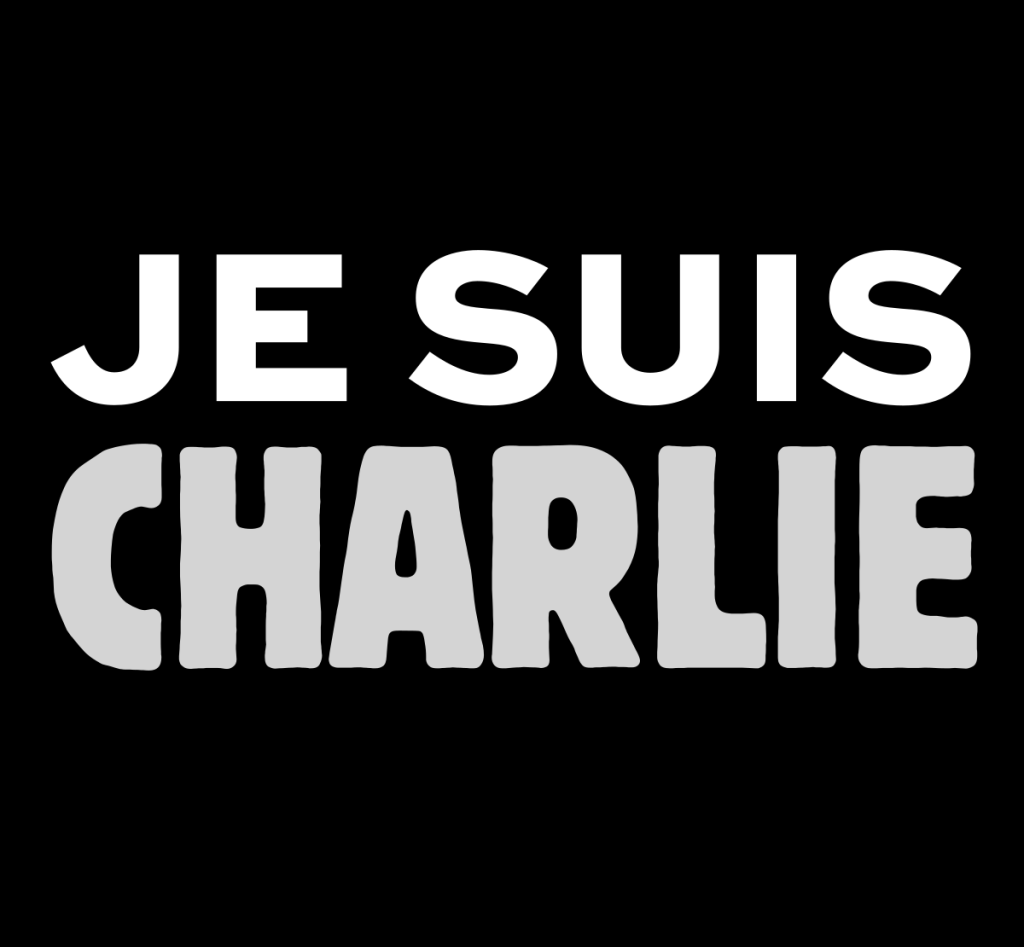
Today I stand with paris
hugh’s gig in Lewisham
Last night saw me in lewisham for a gig featuring my friend Hugh. To be honest I didn’t know what to expect, and yesterday afternoon I was in two minds about going, but it turned out two be a great night. There were three performers/groups on: the first was Charles Hayward (not to be confused with Charles Hazlewood – a complexly different person), with a rather postmodern mix of singing bowls, percussion and mouth-keyboard*. Next on after a short break was Hugh, performing with a woman called Cevanne. Under the name Cewdson and Cevanne, they do a highly atmospheric form of electric music using harp, computer, and a truly unique instrument, created by Hugh and Jodie, worn on the head. They mix electronica with folk in a truly brilliant way. The third act of the evening was a group called The Remote Viewers: four saxophones and a double bass, it was wonderfully evocative.
In all, a great night then. Looking back, I should have dragged Lyn to it – I think she would have enjoyed it – but, as I say,, I didn’t know what to expect. Chatting with the guys after the gig, though, I mentioned Lyn to charles, who put the night on. I think he would like Lyn’s work, and it might be an idea to introduce them to eachother; the potential for future events is huge. I got home just before midnight, only having hd one beer as it was BYOB, really pleased I decided to go in the end.
*Not sure what the correct name for that thing he was blowing is.
Free Stuart Rodger
As far as I am concerned, Stuart Rodger is a political prisoner, a victim of an increasingly oppressive government. According to this article, he has been ordered to carry out 100 hours of community service for shouting ”no public sector cuts” during a speech by CaMoron in glasgow. Since when was voicing an opinion a criminal offence in this country? This brave man tried to stand up for what he believed and was punished for it – to me that sounds like the actions of a vindictive, inceasingy totalitarian Tory government, willing to crush any dissent. Indeed, we can see another example in their plan to virtually ban public sector workers from striking. For goodness’ sake these unelected scumbags must get the boot this summer.
Suddenly watching the news.
Lyn and I just spent a pleasant afternoon in North greenwich. She needed a new SIM card, and I relish the opportunity to go to the dome. Coming home, I thought I would pop into my favourite pub. The news is on in here, and I am getting wind of the horrific things in Paris. The situation there now appears to be over, but not without huge bloodshed. After a relaxing time with lyn, my blood is suddenly chilled. The odd thing is, I almost forgot this was happening.
La vie de Charlie
Go to youtube and you can find plenty of footage of the old debates over the Life of Brian. It was, of course, a very controversial film, seemingly lampooning the life of Christ. It caused great offence to many, although it is one of my all-time favourite films. It was great to see it referenced at the London olympic closing ceremony. Yet events yesterday made me wonder: what’s the difference between Life Of Brian and the cartoons of Mohammed which appeared in Charlie Hebdo? Why does one result in debate, and the other in such cold blooded murder?
The second such questions are asked, of course, a truly monumental can of worms opens up. I was thinking about this last night: what to one person is satire, to another may be islamophobia. If I see a thug from the BNP, UKIP or the Front National making jokes about Islam, I take umbrage; but if I see it on the pages of a satirical magazine, might I take it differently? What if the situation was flipped, and a journal in the middle east chose to make fun of christianity? How might I react? On one level, I might not care – religion is all bollocks anyway. Yet part of me would probably see it as an external culture making fun of mine, and get angry, whether I believed or not.
What matters, then, is not just what is said but who is speaking. It was a group of white, middle-class Oxbridge graduates who made Life of Brian; they can probably be loosely termed Christian. Had that film been made by non-christians, however, would it have been so funny? If not, what is the difference? It seems one group of people are allowed to say certain things, while another group cannot.
That strikes me as odd. Yesterday I laid out my position on religion, beginning too to outline the complexities in trying to speak about it from the outside; but, perhaps because it was the one i’m most familiar with, I kept my criticisms to christianity: surely as an atheist I should be equally hostile to all religions. Surely they are all just as silly. Why, then, do I not feel I have the right to criticise Islam or Hinduism? Perhaps it’s because I don’t feel I can speak about something I know very little about, but it is also because I don’t want to seem xenophobic. And there lies the rub.
Part of me wants to say that it is high time someone made an islamic version of the life of brian; part of me strongly supports Charlie Hebdo; part of me wants to be as critical of islam as I am of christianity. Part of me wants to tell the thugs who perpetrated yesterday’s crimes to grow up, and grow a sense of humour. Yet I still don’t feel I can: I am gagged through a sense of respect, a sense that I don’t have the right. I fear that the second I do so, I become akin to the xenophobes I loathe. Yet if one has the right to criticise one religion, shouldn’t you criticise them all. Charlie Hebdo decided it had that right, that duty, and sadly paid a terrible price for it. Rather than the rather comic debates in the seventies between the Pythons and the clergy, yesterday we saw slaughter, the most extreme, barbaric and grotesque example of a person being denied the right to voice an opinion.
leftist/liberal contradictions
Thinking over the entry I made earlier, i seems face a slight contradiction. As a liberal (note the small l) I believe in tolerance, and that everyone should believe what they wish and respect each other’s views. At the same time, as a leftist (not sure what case that l should be), I believe in equality, that we are all equal, and that humanity should be coming together. We should be seeking to remove the barriers which divide us, one of which is religion. Both of these principals stem from the same broad idea – unity and equality – but are diametrically opposed. It is one of those paradoxes of liberalism I’ve touched on before: how can one seek equality and tolerance if it automatically means becoming intolerant? How can one seek to remove something which divides and oppresses if it means becoming oppressive yourself?
London stands with Paris
Just a quick note to say that my thoughts go down to Paris, to a city I adore. I have quite a few family members there these days – I hope everyone is ok. What the events of this morning mean is unclear, of course, but Parisiens should know that we Londoners stand with them.
Sorry Darryl
I woke this morning feeling quite bad, and rather guilty. Late last night I got into a rather heated online discussion with my Australian friend Darryl. Dazz is a Christian, and we were arguing about the existence of God. As you may know, I have fairly strong views on this subject: I see no evidence of any creator, and think we should outgrow religion as a species. Religion causes division and hate. Indeed, as I type, I am watching reports of horrific shootings in Paris which appear to have a religious basis. I therefore get rather aggitated when talking about religion; I can become angry and arrogant. Part of me holds that religious people believe in an entity which, should it exist, causes or allows indescribable amounts of suffering; I don’t see how they can blind themselves to that fact.
I fear I offended a good friend last night. In a way it was through Darryl that I met Lyn. I may have strong views, and I may believe passionately that I am right, but that does not give me the right to insult a good friend or his faith. I used words Darryl did not deserve. Sorry old friend.
missing an awesome action
I feel rather guilty now. I should not have been there, but up in westminster with my comrades in DPAC. Truth be told, it was raining here at noon, so I decided I’d skip what I assumed to be just another protest over the closure of the ILF. What a mistake! the first footage of the event is just appearing online, and I now wish I went. It looks as if the guys had an amazing day, meeting MPs in the back rooms of parliament an so on. At the very least I would have loved to see what it is like in there. At least the guys showed the bureaucrats what for; if they hold such an event again I’ll definitely go – I’m kicking myself.
trip to lower sydenham
Yesterday saw me in lower sydenham with Luke, sally and Les. Luke had had a somewhat traumatic experience a few days ago, so I went over to see f I could cheer him up. While it would not be appropriate for me to go into detail here, by Sally’s description what her son went through was pretty damn horrific – disablist abuse in the highest form. I just went over to see if I could help.
It was a pretty cool afternoon and evening. I got there too early, but apart from that, we had a lot of fun. Sally wants Luke to be more independent, and seems to think – somewhat bizarrely – that I could be an excellent rolemodel. If I can help of course I will. Yesterday, though, was more about fun, and I’m pleased to report we spent a merry couple of hours in the Railway Tavern, talking, drinking, and watching Turkish Football.
The road to recovery?
[img description=”undefined image” align=”centre”]/images/tory poster 1.jpg[/img]
linguistic trivialities
I suppose I’m growing rather curmudgeonly in my old age, or too proud. It’s a bright afternoon here in se7, and L and I are off out soon, but suddenly I feel rather grumpy and cynical. One of my online associates has called me up on my use of language, saying that I should use the term ‘disabled people’ rather than ‘people with disabilities’. The argument goes that, as society puts up barriers which hold me back, I am a disabled person, as you would disable a component on a computer by switching it off. A more-or-less valid point, I suppose. As a writer, though, nothing irritates me more than folk telling me what language to use: I like variety, and, given that there are arguments for and against both forms, see no reason not to interchange between the two. Indeed, you could say that to disable something on a computer is to switch it off, make it obsolete, and I am very much still on. Moreover, things like this come and go with fashion. Of course, I know enough about Lacan to know how important language is, but it just seems like certain members of the crip community like to show their mastery by calling you out on language, rather than dealing with the actual arguments. After all, when one is at full speed writing about how the current government is oppressing us, such trivialities barely enter your head.
New year poem
Night falls over the city, as this new year dawns.
Looking forward to what life brings, in all its viriety and forms.
In the air outside there is a distinct chill:
Feels as if it will snow soon, but still…
Spring will soon arrive, and with it the warm
Summer will soon follow, as night precedes dawn. So an exciting new year beckons, full of action and fun
A marvellous new year! Bright as the sun.
 The Ill-Informed Ramblings of a Cripple