‘He understands most things’

I was just n our local co-op picking up a few supplies. I have been going there quite regularly since I moved to London five years ago, but today something happened which puzzled me. I am quite well known there, and the staff often help me go round and get what I need. They recently took on new staff, and today one of the more senior ladies was instructing a new lad on how to help me. That was fine by me, but one of the phrases she used struck a raw nerve: ”He understands most things.” She said to the boy, as if I couldn’t hear. The implication being, of course, that she thinks there are things I don’t understand. Of course, there are indeed gaps in my understanding: I struggle with certain aspects of Lacanian theory, for instance, and the maths behind special relativity baffles me. Yet I got the impression that that was not what she meant: could it be that, even after five years of going there, they still think I have some kind of learning difficulties? I was a bit troubled to hear that. The assumption that people with cp also have learning difficulties obviously runs deeply. I will have to try to out that right.

The white riots

I certainly think this very clever piece of journalism is worth flagging up. It is a spoof report about riots by white men shown on CNBC. It highlights how american media is biassed towards reporting certain race-related stories in certain ways. To do this, it discusses riots by white men a though it was discussing riots by black men. They thus talk about ”white culture”, ”white parenting” and ”white history” in the same way that mainstream American media talk abut ”black culture” etc. The clever part is, none of what they say is untrue: there are indeed riots by white men around Saint Patrick’s day which could be attributed to precisely the reasons they state. It thus brilliantly reveals the double-standards in american (and probably British) news coverage by turning the paradigm on it’s head. My only criticism is, he rather spoils it at the end by overtly stating it was a spoof, as if the viewer was too dim to have clocked that.

voted!

Just o update everyone on something I touched upon in this entry, my postal vote was waiting for me when I came home from school. After having to whip to the shop to buy a black pen, it was duly filled in, sealed and popped into the post box down the road. Yay democracy!

Incredible tales in radio club

I met someone incredible at school today. I still volunteer at the local special school, currently going every Wednesday to help at their radio club. Today, they had a special guest: the students were interviewing a woman, currently volunteering at school, who had recently piloted a boat from North africa, across the Mediterainian via Lampaduza, through the rivers and waterways of France, across the Channel to london. She did this, alone in a small boat, to draw attention to the plight of refugees from Libya.

I found her story incredible. I wanted desperately to ask her more, but sadly didn’t have chance. I don’t think the students grasps the magnitude or importance of what she was telling them, but as soon as I realised my jaw dropped. What a film her story would make I thought, as she described her voyage, her encounters with the French people and their small villages as she made her way north. Unfortunately, I didn’t have chance to talk to her much – I didn’t even hear her full name – but I rode home inspired. It just goes to show that, in this city, you never know what amazing thing you are going to encounter next.

Hawking backs labour

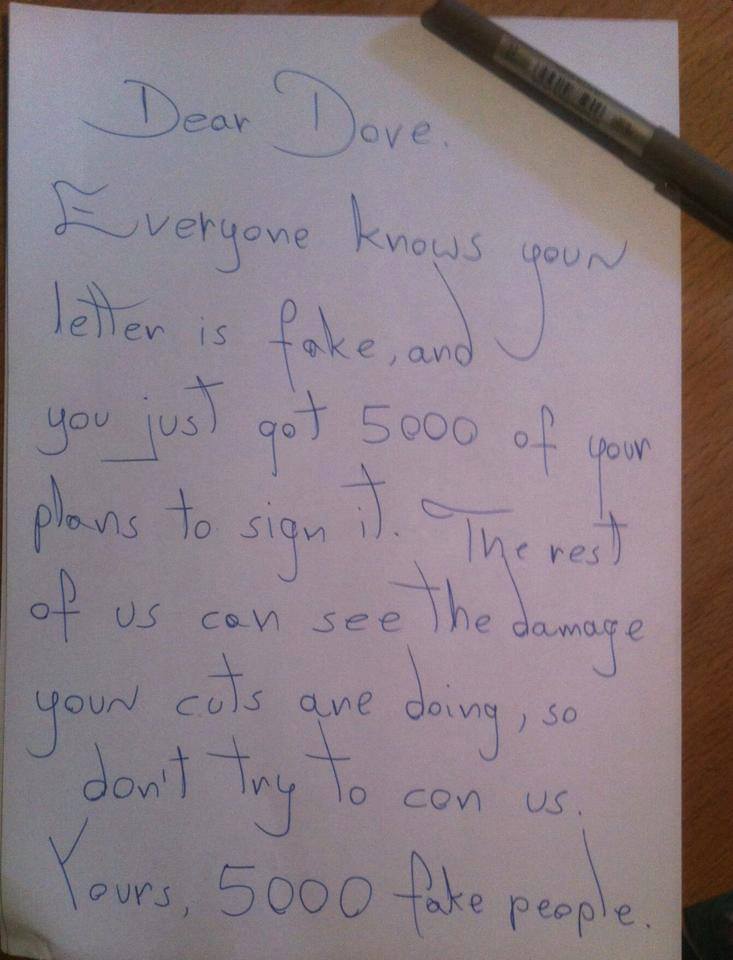
Stephen Hawking keeps getting cooler and cooler. On top of being one of my all time heroes from childhood, he first stars in the 2012 paralympic opening ceremony; then he surprises me by cropping up in monty python. Now, rather awesomely, he has spoken out in support of Labour in the coming elections. He has famously been very critical of the tory privatisation of the NHS; he also supports Labour’s stance on science funding. CaMoron may have his fake letter, but Miliband has the backing of one of the most respected people in the country, and indeed the world.

Marching in the face of hatred

It would be remiss of me not to flag this Pinknews story from america up. It concerns a dance troupe comprised of transwomen, who decided to continue to march in parades, perform despite vehement homophobic opposition. As they put it, they just want to be themselves and do what they love, marching in spite of the narrowminded crowd. They make the very good point that what they are doing, in defying hatred and opposition, is not that different to the actions of rosa Parks or Martin Luthor-King. I must say that is an attitude I wholeheartedly support, and indeed try to echo in my own small way.

Congratulations Mr. J

Just to update everyone on this entry, huge congratulations are due to Charlotte’s father. Mr Jones ran the London marathon yesterday in four hours thirty minutes.

That is quite a phenomenal achievement. I had intended at one point to go watch the event, given that the marathon route is so close, but in the end I just stayed home – crowds did not appeal to me yesterday. But it sounds as if the jones family, along with everyone else, had a great time. Congratulations everyone!

Accessible countryside

I almost never watch countryfile, but feel today’s episode needs flagging up. It has been a busy day: I had an idea for a film and was working much of the afternoon.

More on that soon. I just flipped the box on, to chill out before dinner, and came across quite a brilliant article on wheelchair access to places like the Peak District. When I lived up north, I always felt hard done by because I couldn’t always go where I wanted. According to the report I just saw, though, that area is now being made accessible to wheelchair users. More people with disabilities can go to that beautiful area of the world, following improved paths with adapted gates. I think that is great, and definitely worth mentioning. Check out the story on iplayer if you can, even if you don’t usually watch countryfle.

I still hate being patted on the head

Just for he record, I still hate being patted on the head, although it does not happen much these days. I was just checking my archives. Mum and Dad came to visit earlier: we had a lovely time, and it made me feel slightly nostalgic. I can hardly believe it has been ten years since I wrote this entry, a rant written after one of the canteen staff at uni patted me on the head. I remember the event vividly, as well as how angry I felt. At the same time, so much has happened since that moment that it makes my draw drop: the lad from cheshire, so fond of the fields, became a firm urbanite; the resigned bachelor became happily coupled; the boy reliant on his parents now looks forward to their weekly Skype conversations and occasional visits. However, one thing remains certain: I still hate being patted on the head!

Correcting the captain

I was just mucking around with my masters playdraft again today. A few days go, it occurred to me that I could have mentioned that Picard actually misquotes Melville when he recites moby-dick. The original two sentences are in chapter 41, and are slightly longer and more archaic. For example, picard says cannon when Melville uses ‘mortar’ etc. Hardly worth mentioning, and I don’t think my thesis suffers too much for it’s absence. However, when googling for the text, I found this fascinating website devoted to the book. It has all kinds of fascinating background info on the book, Melville and so on, as well as the full text itself. Definitely worth a look for literature buffs.

The uncanny part of Woolwich

I just got in from my daily stroll, and think I should note something odd. Today, having a question to ask at the council offices – I still haven’t received my voting papers, but was assured they are on their way – I took myself over to Woolwich. It’s a bright, sunny day, so after I went for a roll. I usually just look around the market and high street when I’m in that area, but today I decided to explore a bit. Crossing the road, I suddenly found myself in a quieter, stiller area. Although there were a few cars, the murmur of traffic, constant in London, suddenly seemed gone. Something about that place, with it’s long buildings and wide, deserted streets made it feel very different to the rest of Woolwich and London. This place seemed old, and indeed it was: I had entered the old arsenal, the site of the old munitions factories for which Woolwich is famous. They had restored most of it, and the area was shiny, clean and modern; yet there was a feeling of ancientness to it, an uncanny, unhiemlich feeling, as if the place was once, many years ago, teeming with life but now was dead. The faces of victorian and edwardian factory workers peer out from photographs dotted about the place. This place once supplied the empire with it’s guns, but the empire is faded. What remains, despite the restorations, are ghosts.

Nobody cares that ‘we’ can’t vote

I just heard on the bbc lunchtime news bulletin that scope has reported people with disabilities still have major problems when they try to access polling stations. Many stations still do not have ramp entry, and wheelchair users have been turned away. This utter disgrace is why I opt for a postal vote – that way, I can put the cross in the box sitting at our dining table with plenty of room. Yet the story reveals a major problem, though: this has been an issue for years. To deny a group of people the vote, for whatever reason, is an affront to democracy; but that is precisely what is happening. Whas makes me even more angry is that media, including the beeb, say nothing about it; and when they do they have it in the ”and finally…” slot at the end of the bulletin when it should be the headline story. That implies it does not matter to them. There is also not a word about it on their website. I find that disgusting, frankly.

‘The Cultural Politics of 007’ – book review

Just a quick note today to say I just reading yet another book on James Bond, 007. My masters may be finished, but I’m still intrigued with film. Reading books like ‘The Cultural Politics of 007’, a collection of essays looking into the books and films which I noted I was reading a few entries ago, only deepens that interest. I won’t even attempt to summarise the essays here, but what astounds me is the sheer breadth of perspectives they employ, from history to politics,from freud to marx. For instance, the final chapter, the one I just read, looks at Bond’s relevance in the era of the war on terror, pointing out some very interesting parallels between Blofeld and bin laden, both actual and symbolic. it would be fascinating to see if the upcoming film, Spectre, picks up on something similar. One or two left me with a bad taste in my mouth: after all, as they point out, Bond is essentially a fascist figure, a relic of the cold war and of Empire. I should hate him, and be repulsed by his appearance at the olympics. Yet, as I noted here, precisely the opposite is the case. 007 fascinates me still, and the more I read, the deeper I go, the ore intense that fascination becomes.

Star wars – open or closed narrative?

I’m sure most of you will be aware that a new star Wars trailer came out last week. I was pondering star wars last night. It struck me that one could broadly say that there are two types of film franchise in terms of structure: there’s what you might call an ‘open’ franchise, where self-contained episodes are played out in an overarching fictional world. Examples include Star Trek, where individual films stand alone, and James Bond, which I’d say is very episodic with individual films have almost no bearing on one another save for the odd reference. Of course, there are a few narratives running throughout Trek, such as the federation’s relationship with the Romulans, but they aren’t fundamental to it. You could come into trek at any point and still understand it. The same goes with Bond: I don’t have to have seen Goldfinger to enjoy Casino Royale. The narratives of each episode combine to gradually build up a fictional space which can be further built upon, a world in which a variety of stories can take place provided they stay within the rules of that world.

The second type of structure can be called ‘closed’. This is where all the films in a franchise join up to form one overarching story. A good example is The Lord of the Rings, composed of three films which tell one story. I’d say, here, that it would be more difficult – although not impossible – to watch the two towers without knowing what happened in Fellowship of the Ring. It’s more like a Soap opera, with one installation leading directly into another. I’d say Harry Potter is in this camp too. When the overarching story is told, when the one ring is destroyed and Voldimort vanquished, the narrative ends: there is no more; the characters have served their purpose and are allowed to rest.

The question I wonder about is, which camp does star Wars belong to? Here I’m only referring to the mainstream cinema-released films. I know there is tons of peripheral stuff, but most people are not familiar with that. Taken on it’s own, I’d say that Star Wars belongs in the latter, closed camp. It tells one overarching story basically the birth, rise and fall of Anikin Skywalker. He died in Return of the Jedi, quite an emphatic poignant death, so under my framework, star wars should be over. That’s why I still have my doubts about the seventh film; it just seems a money-making exercise with no artistic merit. If JK Rowling wrote another harry Potter novel, no doubt people would cry ”Isn’t she rich enough already?” That narrative is complete, as is star wars.

Yet part of me is asking why. You could say that, in terms of my categorisation, star Wars has room to manoeuvre, an ambiguity to it. The original 1977 film, a new hope, was originally conceived as a stand-alone film, and then the franchise was expanded into three, then six, films. Why shouldn’t it go further? I’m sure many star wars fans would argue that if you take into account all the non-cinematic stuff, the ‘extended universe’ and so on, my categorisation is wrong and that the narrative is far from closed. My task, in that case, is clear: time to go find out about all this other Star Wars material I’m only vaguely aware of. Perhaps there’s more to this than I thought. Perhaps star wars could be swapping positions.

Until then, though, I’m afraid my initial assessment stands: I cannot shake the idea that star wars 7 is nothing but a money-making exercise. Given that episodes one two and three were so abysmal, and that these new films are being made by Disney, I cannot help thinking that this seventh film will be cliched, childish pap, but that the fans will enthusiastically and uncritically lap up whatever bull they churn out. Vader is dead, so the story is complete: resurrecting him, as I fear they somehow will, would just be an insult to viewers’ intelligence and film as an art form.
Should Nigel Farage be sectioned?

I am just watching the news. I now think that Nigel Farage needs to be sectioned. Reading that, I’m sure many would tell me not to be silly: just because I disagree with him does not mean he is insane. However, the BBC just covered the tragic story of migrants from Libya, and for some reason they invited the ukip leader to comment. Using very debatable logic, Farage claimed that the situation was caused when the allies bombed Libya. According to him, we destabilised the country, and everyone lived happily with gadaffi in power. Farage thought we should stay out of the issue.

Such a proposition is of course absurd. How can we cut ourselves off from the world, turning a blind eye to tyranny? More to the point, it is dangerous to have the bbc use this fellow as a go-to guy, a trusted source of information or opinion. His opinions are destructive; he blames everything on our European neighbours, and would leave refugees to drown. As such, he is a destructive, harmful influence who would destabilise society. He would turn us against our European neighbours. Given that insanity can be termed as a delusion which poses a threat to ones self or others, Farage can be termed insane. His delusion is an irrational hatred of Europe, as evidenced by his attempt to blame it for everything, which is very reminiscent of a person with schizophrenia trying to link all their misfortunes to the focus of their delusions. Further, he is clearly a danger if the BBC continues to allow him to spread his views as they just did. In all seriousness, then, I call for Nigel Farage to be committed, before he can cause any real damage. As absurd as my call may seem, he is a destructive dangerous influence intent on distorting reality and causing great harm to others.

The uncanny thing about meeting Sir Patrick Stewart

I discovered something rather spooky yesterday; it’s just a small detail, but one I’d like to note. Inspired by Thursday’s epic gig, Lyn and I decided I should go and try to get tickets for a Paul McCartney gig shortly to be held at the O2. I set off back up there, only to be told they were sold out. While I was up there, though, I thought I’d just pop over the river to the Excel exhibition centre to see if there was going to be another Star Trek show there this year – with any luck, I could meet Sir Patrick Stewart again. It turns out, however, that that event was a one-off, and that they aren’t going to have a star trek gig there again (this yea it’s Dr. Who). That fact strikes me as really uncanny. What are the chances? The year I finally pass m MA after so long is the year I met the very person I had been writing about, and indeed it turns out it was the only year I could do so. That, I must say, strikes me as really uncanny. Not that I believe in the afterlife, but it is as if my school mates I mention in my thesis were looking down and decided to give me the biggest treat ever. The way in which events came together like that is really, really odd.

Paul Simon and Sting

I missed the debate last night, so I can’t comment on it. We were, however, dong something much, much better: last night saw us at our second great gig of the year. Lyn and I went to see Paul Simon and Sting at the O2, and I can honestly say it was a wonderful, wonderful evening. My head this morning is filled with tunes we heard last night, from ‘Ceceilia’ to ‘Roxanne’ to the mighty ‘Bridge over Troubled Water’, which they left for their encore. They did a mixture of both mens’ tunes, varying them, alternating them, playing with them and mixing them up. I had no idea that they would go so well together, yet they did. The result was quite wonderful. They Played The Boxer too, reminding me of the time my friend Steve had to learn it for a performance at uni – a great, great song thus summoned a great, great memory.

I have been a bit of a fan of both men for quite a while, since I was first able to control what I listened to on my computer, although not as passionate a one as Lyn; Thus, seeing both these musical legends on stage was awesome. It made me feel very close to Lyn, sat next to me, a great big smile on her face; most of the time I wanted to lean over and hug her – after all, I wanted this to be her evening. To see her so wrapped on the music, concentrating so hard, yet so happy, was great. The finale, though, melted my heart: to have seen Paul Simon play Bridge Over Troubled Water live is a great, great privilege, and something I can now look back on with fondness.

In all, then, it was an incredible evening. I must say I’m becoming very fond of the O2 arena: I was once quite dismissive of it, but having come to know it, it seems to me a fabulous place where all kinds of wonderful things happen. Last night added to that perception. The combination of both mens’ repertoires, both mens’ voices, was magnificent. As usual, it left me thirsting for more gigs; but after last night I doubt anyone would blame me.

Hawking, python and asteroids

I really did not think things could get more awesome than watching Stephen hawking sing the Galaxy song at Monty Python Live last year, but the pythons have taken it a step further. According to this, Hawking has lent his voice to Monty Python’s famous Galaxy Song as part of Record Store Day 2015. They have also released a video to go with it, and, best of all, a version of the game asteroids, which involves Hawking spinning around shooting asteroids with the faces of the monty python team on them. To me, that is simply awesome. Go play, sing along, and smile!

Kill the puppies!

I just have to draw your attention to this, given that it appeals to my sense of humour on so many levels. Lawrence Clarke, one of my favourite crip-comedians (perhaps that should be cripedians?), sits in the street with a collection bucket shouting ‘kill the puppies’. As he’s sat in a wheelchair and has CP, people put money in his bucket regardless of the violent cause he is collecting for, and even when Clarke objects, saying ‘you want to kill puppies, you bastard!” after someone puts a coin in his bucket. The point he is making, of course, is that pity for disability trumps anything else; people will feel sorry for ‘us’ no matter what. It’s odd to think how deep that pity goes: people see our chairs before they see anything else. Thus Clarke makes a very good point. I also love when one old dude comes up to him and asks ”are you a cripple of some sort?”

Now, if you’ll excuse me I’m off to collect money for my next pub trip; where’s my bucket?

please keep farage off our screens

I just turned the tv off. I usually watch the 11am news bulletin, mostly out of habit, but the bbc just decided to cut to Farage and his bunch of idiots launching their ‘manifesto’. Even the merest sight o that piece of scum has me flying into a rage. He’d take us back to the fifties; no doubt ukip would have people like Lyn and myself put into homes to save taxpayers money; they would cut us off from europe, clinging to outdated ideas of empire. Indeed, a few days ago, our PA Marta – a wonderful, gentle, kind person – told us that she feels very uncomfortable as an immigrant, because of the rise of ukip. Freedom of speech is all well and good, but I’d rather xenophobe like farage be kept off our tv screens: airtime only encourages them, giving them a sense of importance and validity they do not deserve.

Urban viriety

I just got back from one of my walks. It was quite a lengthy one today: I followed my nose to Lewisham, caught the dlr up to Canary wharf, then rode the jubilee line one stop to North greenwich and caught the bus home. I am always stuck by the variety of landscapes there are in London – no two areas look alike. There is the village atmosphere of Charlton; the market town feel of Woolwich, so reminiscent of the Northern towns of my childhood. There is the wide open space of blackheath, and the ornate refinement of greenwich park. There’s Canary Wharf, london’s allusion to New York. There are the heady pleasure centres of the O2 Arena and Stratford, so built up and bright. All these varied landscapes in such a small space; I have just named a few – those i know in the east of the city – but I get the impression that this variation extends across the city, so that there will always be more to see, more areas to explore, the area around Richmond, Kew, and the southwest, for example. I realise this could be said of any city, but I, personally, have never known such a varied, vibrant space, and it’s all waiting for me to go out and explore.

The BBC overindulging portilo’s hobby

Our t.v is on, and I am currently watching a truly bizarre program. Michael Portillo presenting a program about the role trains played in the First World War strikes me as very odd indeed. I was fine with his previous shows about the various systems of Europe, but this program just seems like Portillo trying to shoehorn his personal hobby into an unrelated subject. Granted, trains were important in that era, but no more than any other mode of transport, and certainly not as vital as Portillo seems to be claiming. The result seems crass: the BBC indulging the hobby of a trainspotter pretending to be a historian, ending up with something I might just dismiss as odd, or an insult to real history, depending on my mood. These stories can certainly be told in a far better way, without the self-important Portillo trying to relate everything to trains. Indeed, the entire premise seems laughable given that the war was a famously stagnant one, fought between trenches.

Paris steps closer to olympic bid.

I know you’re wishing I would just shut up about the olympics, but this morning I read that Paris city council has voted in favour of the city bidding to host the 2024 Olympics. It takes their bid a step closer. This excites me somewhat, although I’m not sure why; I should probably be ranting about the election instead. Yet the events of 2012 inspired me somewhat: I would love to see Paris shown off as London was; I’m curious about how they would handle it. Also, since coming across Ernest Hemingway via Michael Palin in 1999, I’ve had a curiosity with Paris of the twenties. Given that the french capital last hosted the olympics in 1924, this bid seems a nice invocation of that era, a strange, coincidental form of time travel. Thus, as I wrote here, I’m a strong supporter of the Paris bid. At least, Im keeping a close eye on it: not only does there seem a certain justice to it, but my hunch is that in such decisions one can read quite a bit about the mood of the world. So forgive me if I post entries on this subject every now and then: I know it’s nine years away, and nobody really cares, but something in this process, in London 2012, in competing bids, in great cities shown off to the world, has captured my imagination.

Going clubbing

Reading another essay on Bond earlier today, I came across a reference to Blades, the gentleman’s club to which M is supposed to belong. It caught my attention, so naturally I Googled it. Blades, it turns out, doesn’t actually exist, but is a creation of Fleming’s based on two real clubs, Boodle’s and Whites. Both are in St. James’s, both are over 200 years old, and both are extremely exclusive.

An idea popped into my head so delicious I can’t shake it off: what if I was to go up there and ask to go in? What would they say? would they let a drooling guy in an electric wheelchair in? Never mind that I would not be dressed properly or would not have the entrance fee, I’m just curious what they would say. After all, such places are remnants of a passed age; they are what remains of an empire upon which the sun has indeed set. They are highly conservative places where only the ‘right type of people’ are allowed entry; thus they cling to a class system and worldview which badly needs subverting. Part of me wants to go up there and demand to be let in.

Of course I’ll do no such thing. I daresay all that would happen is I’d go up there, kick up a bit of a fuss, get nowhere and come home; it would be a complete waste of time. I’d just embarrass myself. Yet the idea persists: what if, for some reason, they let me in? What if, to avoid causing controversy, they lend me a blazer, ask me to wipe my chin, and usher me quietly through the door? Think what an adventure that would be; think what I’d find in there; think of the exotic food and drink perhaps I could get a martini. Think of the mess I could make! What an idea! that’s it – I’m going clubbing.

Slow Train through Africa

I was interested to watch Griff Rhys-Jones present A Slow Train through Africa on ITV last night. It struck me as a perfectly good program, rather fascinating for the most part. On it, Rhys-jones explores the rail systems of Africa, revealing some of their history and speaking to the people who use them. It was the kind of program I love. But I must wonder, is this ITV trying to play catch-up with the BBC? The beeb have Michael Palin’s travelogues, where a well-liked, jovial comedian goes off to explore exotic parts of the world. Thus, as interesting as it was, I couldn’t help but detect a faint whiff of imitation in the air: ITV doing something the BBC did almost thirty years ago. That aside, I think I’ll continue to watch: even though the adverts bugged me, Rhys-jones is exploring a very interesting part of the world.

Where is Fallon’s resignation!?

I must say I am astonished news of Michael Fallon’s resignation wasn’t in this mornings papers. That it wasn’t is very telling of the Tory character. He made a disgustingly ad hominem attack on the leader of the opposition, very low and mean, then arrogantly acts as if he was perfectly in the right. His actions spoke volumes about the Tories yesterday, as did the fact that one of Fallon’s major criticisms of Miliband was that he would put tax up. It’s as if they think contributing to society, helping others through tax, is a bad thing. I find that mindset utterly disgusting, and frankly I’m appalled that we have people like Fallon anywhere near power.

It all stems from the opening of an envelope

I was up in Stratford yesterday. I go up there every two or three weeks or so, as it’s easy for me to get to, and it’s one of those thriving, throbbing places where there’s always something going on. Thus I’ve seen it gradually change over the weeks: there is a lot of building work going on in Queen Elisabeth Olympic Park to prepare it for post-olympic use; yesterday I saw that they’ve started to put the new roof on the stadium. Builders, plant and materiel are everywhere. Yet you can see what it will become: that park strikes me as a beautiful place: very soon, families with children will be going there for picnics; people will be riding bikes along the paths; events will be taking place. It will be green and verdant.

Yet it occurred to me, as I rolled along the banks of the river, that not long ago that place was very, very different. Before 2005 that area of Stratford was apparently a wasteland, it’s river a polluted ooze; a dumping ground for cars and fridges. I wasn’t here back then, but I’ve seen pictures,and it was not pretty. What a difference! What a staggering, staggering difference! The Westfield shopping centre over the road, built alongside the olympic park, is now one of the trendiest places to go in London, and yesterday was, as usual, thronging with people. How different it could have been. That area might still be a wasteland, were it not for a single moment in time, a single decision back in 2005 which changed everything for Stratford. A downtrodden area at the end of the Jubilee Line was turned into a place unrecognisable from the way it was.

There is something incredible in that, something wonderful. One moment can change the course of time, the unravelling of events. Had the IOC chosen Paris that night as everyone expected, I would never have had my outing yesterday; there would be no shops, no crowds, no park, no stadium. There would also have been no ceremonies: no meeting of bond and the queen, no Paraorchestra performance, no monty python bit (which may well have been one of the factors which lead to their reunion last year). In short, none of the mind-bogglingly cool things now associated with that place would ever have happened. It’s fascinating to think how different it could have been, and that it all extends back to the opening of a single envelope and a man reading a name. Somehow I find that thrilling: who would have thought something so small could trigger something so enormous.

James Chapman interview on bond and the queen

I am in a James Bond mood again today, and was just on the sofa reading an essay on Bond and Britishness by James Chapman, one of the world’s leading writers on the bond phenomenon. It was a very good essay in a very good collection. Having referenced another of Chapman’s essays in my MA thesis, I thought I’d google to see if he’d written or said anything about the Bond olympic stunt. I wanted to see whether my fascination is shared by proper Bondian academics. I wasn’t disappointed: I found this rather fascinating interview with Chapman for a Canadian radio station. In it, he begins to unpick the Bond phenomenon, it’s politics, and what it says about our culture. It’s a bit stop start, but I thought it worth linking to. Chapman points out, for instance, that the 007 character is increasingly coming to represent ‘brand Britain’: the image of ourselves we want to present to the world, one of unfaded power and importance – an image fast becoming an illusion. (I once touched upon something similar in this entry).

Good luck Mr. J

I think I need to flag this up today. Charlie’s dad, Mr. Alistair Jones, will soon be running the London marathon. One of the coolest and most decent men I know, he is raising money for The Hospice of the Good Shepherd, which provides free specialised care for adult patients with incurable illnesses and support to their families from Ellesmere Port, Chester and Deeside. We all know how tough times are, and zark knows the people most in need aren’t getting enough support from the government, so please donate if possible. Mind you, this may mean the Jones clan could soon be on it’s way down here, which is always fun.

Sofa shopping

Lyn and I are in the process of buying a sofa. The one on which I am currently sat having become rather threadbare, we’ve decided to get a new one. Lyn being Lyn, she has connected her iPad to our big TV, and we are currently scrolling through what’s on offer on eBay. It certainly beats having to go to our local DFS. It also occurs to me that this is the type of mundane task all couples have to do from time to time: we have probably all seen devoted husbands following determined wives round furniture shops. I suppose this means Lyn and I are no different, except that our version has been updated a bit. Lyn is quite happily browsing through the hundreds of sofas on offer, with me chipping in the occasional opinion. Now, though, I better stop typing and return my attention to the task at hand…before I get told to ”come along dear”.

An okay weekend

It has been a bit of a quiet weekend. My parents came to visit yesterday, and it was good talking to them for a couple of hours. Apart from that, I have been out on my usual walks, while Lyn has been rocking out on her online radio station. Not the most active of weekends, then, but the Sun is out, I saw mum and dad, and L has a great mix going – what more can a guy ask for.

Still looking for something niche to enthuse over

I am slightly frustrated that I still haven’t found a new topic or fiction to geek out about. My main enthusiasms are still bond, Star Trek and Lord of the Rings, but it occurs to me that all three were the creations of straight White men. I want to find something new, something much less mainstream to get enthusiastic about. I’m looking for something more niche to ponder. You can probably tell from many of my entries that I keep returning to the same subjects, subjects which often occupy my thiinking. Yet they are subjects everyone knows about. Part of me thirsts for something more niche, less universal; possibly something only found in the dark recesses of the web. That’s where you often find the most creative, unusual stuff. The problem is I am yet to find something which gets me going like my ‘big three’ do.

The great debate

Yesterday evening was a very interesting one indeed. Political junkie that I (sometimes) am, I was glued to the sofa from eight onwards; I found the whole spectacle fascinating. I think last night we got the best look at our political leaders we will ever get, certainly in this election cycle, and I found what I saw really telling. Miliband performed better than I expected: he seems, thankfully, to be growing in confidence and getting more leaderly – Labour, as we already know, have good presentation coaches. As others are noting widely, CaMoron was quieter than we all expected; he didn’t seem to have much to say. The tories are claiming this morning that that is because he wanted to stand back, let the others scrap it out and thus seem leaderly, but that is bullshit. CaMoron kept stum because he couldn’t defend his record, and when he did speak out he just trotted out the same old greed-driven tosh about low tax being good that always makes me want to hit him, or tried to pedal the absurd fiction that Labour caused the economic crisis. Clegg, on the other hand, redeemed himself slightly, trying to justify his record and at least trying to come clean about getting a things wrong. He could and should have gone further mind.

Then there was Farage. That bigot was an insult to that stage; he should have not been there surrounded by the other real politicians. He was an embarrassing onetrack record, trying to blame everything on Europe, or constantly trying to take the conversation back to immigration. He aded nothing sensible to the debate. Most shocking of all were his comments on ‘health tourism’ by people with HIV: that he can countenance not treating people with such a condition just because they don’t come from this country is disgraceful, and goes against everything the NHS and this country stand for. He should apologise for his comments.

The big surprise of the evening, and one that causes me a dilemma, was how impressed I was by Nicola Sturgeon. I found myself agreeing with her on most things; at one point I began to wonder how I could vote for her. The problem is, I can’t vote for the SNP: they have no candidates down here, nor do I want the UK to break up. Yet I found myself agreeing with her left-of-centre stance. If only we had more politicians like her, but who stood for the UK as a whole. (Perhaps I better suggest to Lyn that we move to Scotland). Broadly the same goes for Leanne Wood of Plaid and Natalie Bennett of the Greens.

A fascinating evening, then. I must say I found it utterly gripping. Perhaps equally interesting will be what people say about it in the days ahead; no doubt the press will be going over it with a fine toothed comb. Already I see different papers calling it this way and that. No doubt I’ll disagree with much of what is written, as others will disagree with me, but then, isn’t that what debates are all about?

right-wing politics is basically greed.

I keep trying to think of other ways to look at it, but no matter how I do, I keep coming to the same conclusion: as far as I’m concerned, conservatism/right-wing politics is basically greed. I don’t see how it could not be. Those on the left see themselves as part of a bigger whole; they do not mind high rates of tax because they see it as contributing to the whole, of helping others in society. Those o the right resent high tax: they think that everyone should be allowed to fend for themselves, Everyone should be free, government should interfere as little as possible.

The problem with that logic is that not everyone is equal. While I passionately believe everyone has equal potential, equal innate worth, not everyone is ideally placed to seize that potential. This might be for a wide range of reasons, such as class, physical ability and so on. This causes a waste of potential which humanity needs to escape. For example, I have a Master’s, but I could not have earned it had I not had help, ranging from learning support to the extended keyboard upon which I type. Had I been left to my own devices, had I been subjected to the same conditions as anyone else – been expected to use a pen, for example – I’d never have got GCSEs, let alone an MA. The same principal applies in general: to maximise human potential, to work most efficiently, we must collaborate.

The only true way to do this is via the state. The Right say that low tax means that people give more money to charity, or that reducing tax would lead to an overall increase in stare revenue as it allows employers to take on more staff. Yet that seems a mere excuse, a post-fact rationalisation, for individualism, for begrudging tax and getting rich while others are left to suffer. In the long term, it is an inefficient use of human resources. That is why I get so angry at politics; that is why I scream at Newsnight and Question Time so furiously that Lyn looks at me as if I’m mad. I hate tory greed and selfishness; I hate their refusal to see the big picture, to value others as they seem to value theirselves. We must get beyond such greed: it is not anther equally valid point of view, because it leads to so much waste, so much suffering. Frankly, for the tories to reduce tax and therefore state income at a time when those reliant on state benefits are suffering due to cuts is nothing short of criminal.

As a species we need to grow up, to grow out of such base individualism. I don’t mean that as an insult to anyone, but as my genuine objective assessment, passionately felt. In the long term, right-wing, leizzes-fair capitalism (greed) gets us nowhere; we need to replace it with a system of liberal democracy where everyone works together. The problem is, of corse, that’s easier said than done.

google pacman.

I don’t know how long it will be online for – hopefully it’s permanent, and not just for first of April frivolities – but Google have created a pacman version of their maps. You can now whizz about streets you know, chased by ghosts, 80s style. I just read of it here, and check pacman-charlton out here. How very, very awesome!