Disgraceful treatment at Tesco

Something happened just now which has me fuming. Yesterday on the bus home we passed a shop not far from Eltham I liked the look of, so this morning I decided that a trundle was in order. In the end it turned out to be a wild goose chase, but I enjoyed the roll anyway. Coming back though, I decided to pick up some lunch at my local Tesco, where I usually shop. Everything was going well until I got to the check-out.

One of the women who works in there really doesn’t like me. She always treats me like an idiot and talks as though I’m not there. This afternoon it was worse than ever: in front of all the other customers, she told her colleagues how she didn’t like helping me, and thought she shouldn’t have to do it. When I then tried to speak to her, she then totally ignored me. I have never felt so insulted. Given that this wasn’t the first time this particular member of staff has treated me like this, I now intend to take this further and possibly lodge a formal complaint.

This cannot be allowed to stand.

An afternoon out

I just got back from a bit of an adventure. I had heard a lot about the Bluewater shopping centre, being the biggest mall in Europe, but in over a decade of living in London, I had never actually been. Today though, thirsty for a change of scenery, curiosity got the better of me. I know the current advice is not to go five miles away from home, but I haven’t been outside east London all year. Checking the TFL website, getting there would only take two bus rides, so I didn’t think it would be too bad for an excursion on a gloomy Sunday afternoon.

As it turned out, it only took an hour or so to get there. Once there, I spent an hour or so whizzing about the massive shopping arcade: it was deathly quiet with half the shops shut. Of course I wasn’t there to buy anything, but to see what it was like for future reference; and I must say I was quite impressed. The architecture was fairly stunning, and it absolutely dwarfs The Trafford Centre. Built in a former quarry, it even has a small boating lake. Possibly the highlight, though, was bumping into and having a short conversation with a fellow powerchair user with CP who had quite a cool transparent cover completely enveloping his chair like a tent, presumably to guard against both viruses and weather. I assume he was just enjoying an afternoon out, like me, but if I’m going to enjoy many more outings like this I probably ought to look into getting a covering like his.

Diwali

I heard on the news today that it is the Hindu festival Diwali. Of course, my attitude to it is the same as my attitude to all organised religion, but thinking about it earlier, the word pricked my curiosity. It obviously comes from India, but could the word ‘Diwali’ share an etymology with the English word Devote or Devout? Wiktionary says that the latter two stem from Old French and before that Latin, but they sound so similar that it makes me curious enough to note it here. It could just be a coincidence, but the similarities in both sound and meaning strike me as rather uncanny. If they do share a root, that would suggest some form of ancient protoindoeuropean.

Anyway, to anybody reading this celebrating today, stay safe and have a good day. Namaste.

Platinum Jubilee Plans

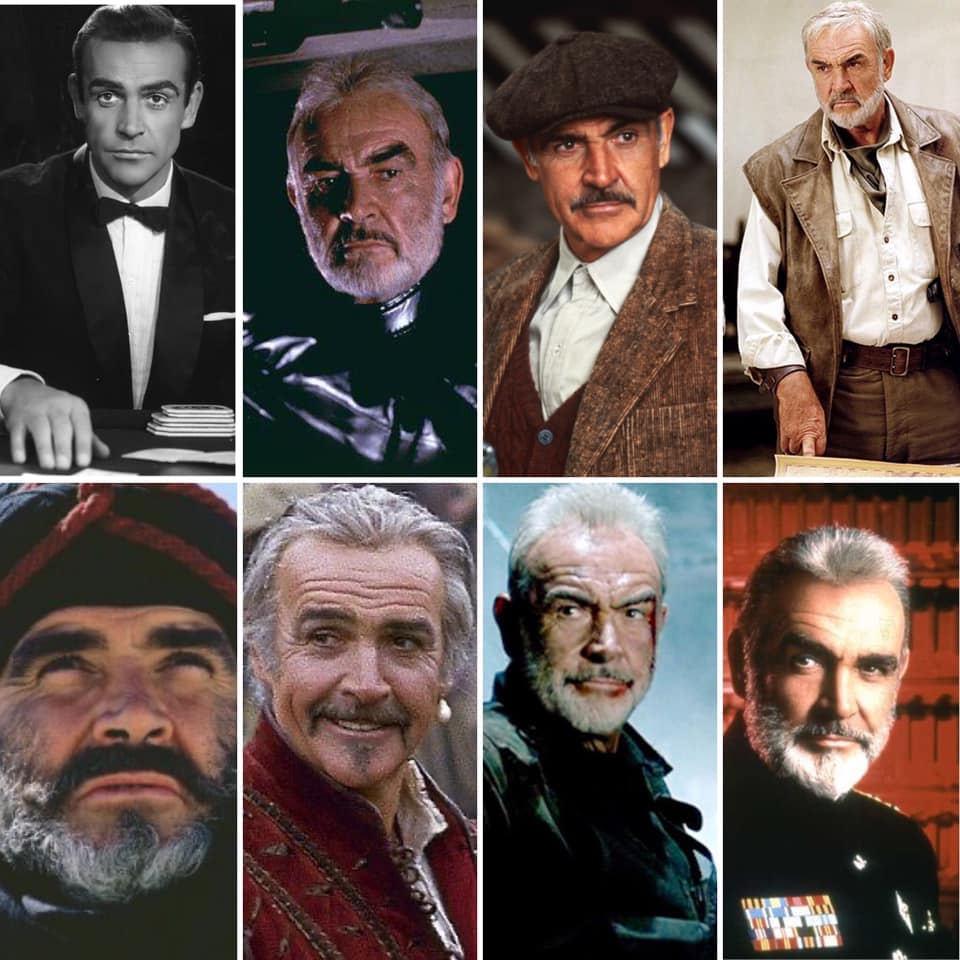
Not that I’m particularly a monarchist or anything, but the plans for the Queen’s platinum jubilee in two years were announced today. I must say I find that quite incredible: arguments about democracy and monarchy etc aside, the fact that the queen has been on the throne so long, reigning throughout not just my lifetime but my parents’ is surely pretty extraordinary. I like the fact that they’re already planning the celebration. Of course, I’m hoping that James Bond makes another appearance, like he did in 2012 (I know that was for the London Olympics rather than the Golden Jubilee, but even so). The only question is, who would be playing him?

Should some mysteries remain unsolved?

Watching the news coverage of armistice day earlier, quite an interesting thought occurred to me: would it now be possible to find out who the unknown warrior buried in Westminster Cathedral was? These days we have pretty accurate DNA testing, so presumably it would be possible to open the tomb, take a sample probably of bone and find a bit of DNA. The identity of this anonymous soldier could then be found, and in theory his family could even be traced. A century-old mystery would then be solved. I’m sure I’m not the first person this has occurred to, and I suppose the question is, would we want to? The point of the Unknown Warrior is that he stands for all the soldiers killed in action, and finally establishing his identity would destroy that metonymic power. Solving historic mysteries is one thing, but maybe it would be better to let this one remain unsolved.

Corrections

All right, I admit I can be a bit of a numpty on here sometimes. Before writing yesterday’s entry, I should have checked what I was talking about. When I got to my computer earlier, there were a couple of emails (I won’t say from whom) reminding me that James Doohan was Canadian not Scottish; that Dominik Keating, who played Lieutenant Malcolm Reed in Enterprise, is from Leicester; and that Jason Isaacs is also British. I genuinely didn’t know about Scotty and Keating slipped my mind, but I must admit I ought to have remembered about Isaacs, having been watching Discovery so recently.

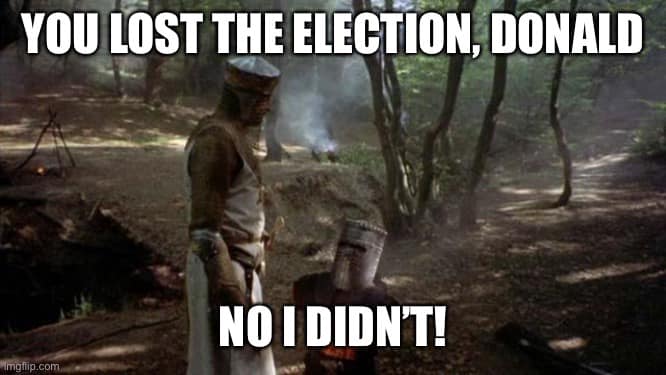
Oh well, in the grand scheme of things I don’t think such small mistakes matter, and are easily corrected. What concerns me more though is the way in which, these days, people seem less and less willing to correct their selves. Online especially, people are growing more and more belligerent. Even when faced with clear evidence, they refuse to admit they were wrong. This applies especially to politics, and the prime example is what is happening in America right now. I may have made a few silly mistakes in my blog entry yesterday, but at least I’m not refusing to concede an election I obviously did not win.

Two geeky, Trek-Related Thoughts

I have recently been binge watching Star Trek Discovery, rewatching it from the beginning in case I missed anything before going on to season three. Compared to other Trek incarnations, I still think it’s pretty awful: a lot of bunkum about spore drives, parallel universes, and chasing Spock around the galaxy without ever actually seeing him. If this wasn’t Star Trek I would have given up on it ages ago (in fact I did, and recently decided to give it another chance.

Now, indulge a trekkie if you will, but two thoughts occurred to me while watching an episode this afternoon which I think I need to note: firstly, have you ever noticed that all the best Star Trek series have British characters and/or actors in lead roles? The Original Series had Scottie, played by James Doohan; The Next Generation had Jean-Luc Picard, who, despite being a supposedly French Character, was played by a great english actor, sir Patrick Stewart; and Deep Space Nine had Dr. Julian Bashir, played by Alexander Siddig. Surely it can’t be a coincidence that these were by far the best, richest incarnations of star Trek, and they were the only three with British Actors? Of course you could add Colm Meaney to that list, who played miles O’Brian in DS9, although he’s Irish. Voyager, Enterprise and Discovery were flops in comparison, and none had any Brits.

However, that takes me on to my second geeky thought, also cast related: in Discovery, Section 31 looks like it will take a major role in future seasons. Starfleet’s secret service has been mentioned once or twice in past incarnations of Trek, but not really fleshed out. That got me thinking, how awesome would it be if the head of Section 31 was played by Dame Judi Dench? If that somehow became reality, and she was revealed sitting behind a desk on earth wearing a grey suit, I think it would make my year.

25 years of the DDA

I wouldn’t be much of a disability rights campaigner or commentator if I didn’t direct everyone here. Yesterday was a very auspicious day: Twenty-five years since the signing of the Disability Discrimination act. A quarter of a century since a group of Disabled people took to the streets of London, handcuffed theirselves to busses, and began the fight for the same basic rights everyone else naturally enjoys. Thanks to that Act, I, as a disabled man and powerchair user, can now live independently in London. I doubt many outside the disabled community would realise the profundity of the difference that act made to lives like mine. Every time I get on a bus or tube train, I think about the activists shown in this BBC news clip made twenty-five years ago. Yet, as noted in the video, there is still quite a way to go until equality is achieved: nowhere near all the tube stations are accessible for one, and that is just the tip of a very large iceberg, so it’s now up to guys like me to continue the pioneering activism began by these disability heroes.

America is Likeable Again

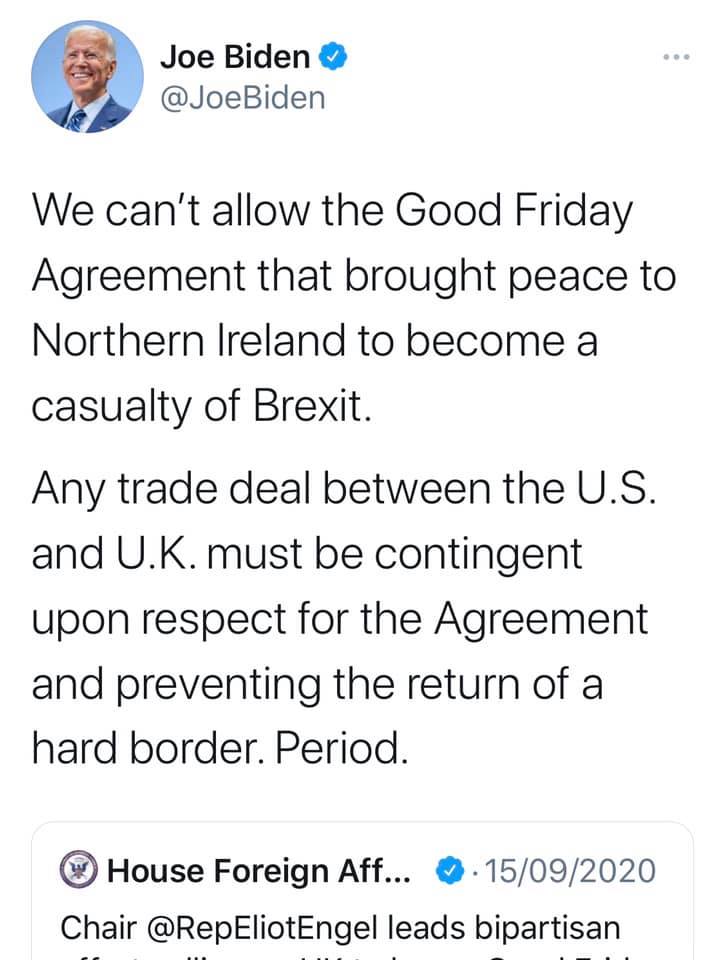
A couple of hours ago after posting my previous entry, I popped to the shop for some bits. When I got back to my computer, my heart filled with joy. I saw the best bit of news in months. Joe Biden is now president of America. In what has been a truly awful year so far, we at last have something to celebrate. Hopefully he can start to repair the damage done to his moronic predecessor. More to the point, what will the consequences be for us in the UK? We know that Biden is no fan of Brexit, so might the tories soon be forced to rethink? Now America has undone it’s stupid mistake of 2016, can we?

The Real Deal

This morning when I got to my computer, one of the first things I read was this Disability News Service article. There has been a considerable backlash in the Crip Community against Liz Carr’s CripTales monologue, The Real Deal: many ‘activists’ are apparently appalled by it, saying it feeds directly into the right-wing tory narrative that benefit applicants cannot be trusted and are somehow faking their disability. Having just rewatched the short, I would certainly agree that it is very problematic. After all, it depicts a disabled person spying on her neighbour: he teaches her how to cheat in her PIP assessment, and she then reports him to the DWP. At best it is thus very morally ambiguous.

Of course, the whole point of art is to challenge perceptions and assumptions, and I think that is exactly what this monologue does. It isn’t at all clear whether Carr’s character is in the right or not, given that she judges another person for cheating the benefit system, yet is seemingly willing to get his help to do it herself. The way she describes both are quite horrific, for example going into explicit detail about the way she was told to present herself at her assessment. The viewer is thus deliberately challenged; this is clearly not the stereotype of the sweet, innocent disabled person.

I have had a few such assessments over the years. In each, I have found it best to be as honest as possible, telling the assessor what I can and cannot do. Can I cook for myself? Nope. Wash myself? Nope. Dress myself? Sort of. And so on. I have found it has given me broadly the amount of support I need to live independently. The thing is, I think the reason why others have reacted so strongly against this monologue is because there is a grain off truth to it. The assessment system sometimes forces people to exaggerate their impairment in order to get the level of support they think they need. The Disability News Service article cites people with hidden disabilities who say this film made them feel angry and distressed, as if it was accusing them of benefit fraud personally. I suspect those whose impairments aren’t as obvious and physical as mine might see it as a personal attack by illustrating strategies they might use, perhaps unconsciously. They argue that the assessment system is fundamentally geared towards those of us with physical disabilities by asking what people are and are not physically capable of, and so disenfranchises people with hidden or mental impairments. You can still be disabled even if you can do everything on the assessor’s checklist.

I can certainly see why beginning to articulate such moral ambiguities might cause certain people to feel challenged. Whereas people like me tend to want to minimise our disabilities and get on with life as independently as possible, albeit with the right support and equipment, others seem to feel forced to highlight the degree to which they are impaired. The way in which Carr describes her neighbour asking if he could borrow her powerchair for his assessment because ”You never know what will happen in a year or so” might well strike an uncomfortable chord in some. I have written on here before about how increasing numbers of people now seem desperate to have their (usually hidden) disabilities recognised; I think it’s pretty obvious why they would find a film like this, which addresses the subjects of benefit fraud and whether someone really qualifies as disabled head on, so challenging. However, it is only when we begin to address subjects like benefit fraud to a wider audience, articulating it’s problems and ambiguities, that we can start to dispel some of the dangerous stereotypes associated with it. Thus while I found this film problematic, it was also quite brave.

The Cult of Trump

It doesn’t look like we’re going to get a result from the states any time soon. I have been pondering what is happening there culturally: By claiming to speak for and represent an apparent ‘silent majority’, is trump doing something both sophisticated and insidious? He is a self-proclaimed millionaire who says he sides with the poor working class; a man who has been on television throughout his life yet who opposes the media and dismisses news as ‘fake’. Trump thus occupies a set of contradictory positions, perhaps most of all by claiming not to be a politician yet occupying the worlds most powerful political office. Does doing so let him appeal to the type of uneducated working class person, who may feel excluded from a Symbolic / Media sphere controlled by educated liberal ‘elites’? Newspapers and TV channels are usually controlled by people educated enough to reject the views of people like Trump and his supporters, which is why such views do not get much representation in the media. But by telling his supporters that they are an underrepresented majority whom he alone stands for, Trump lets his supporters believe that their reactionary, xenophobic views are as intellectually valid as any other, and that the only reason why they are not represented in the Symbolic is that the ‘elites’ are biassed. Trump thus legitimises the simplistic, reactionary thinking of the right by establishing himself as a figurehead for it. Due to him, people think it’s okay to be an uneducated xenophobe, and such thinking is rejected by the media not because it’s flawed, but because the media is controlled by despotic elites.

He thus effectively empowers right-wing reactionism by framing those who reject it as an oppressive, elite minority. Ignorance and the rejection of education, especially higher education, is framed as advantageous; this also allows Trump to establish himself as his supporters sole source of information. Trump therefore has a hoard of ignorant, reactionary zealots following him with cult-like fervour. I find that very concerning indeed: whatever the outcome of the election, such a state of affairs, with so many people following one despotic, egotistical man so blindly, is surely very worrying. Whether he did so intentionally or not (and I rather doubt he is intelligent enough to make such a plan) trump has set himself up as a messianic figure to his supporters, both of the people and superior to them. This means that if he looses the election, his followers are so brainwashed that they would simply see it as another form of oppression by evil liberal elites, refuse to accept the result and probably become violent.

The Two Things On My Mind

To be honest it’s one of those days when there is something I know I ought to write about on here, but there are other, bigger issues on my mind. The first two Crip Tales were on BBC Four last night, and I don’t think I’ve ever seen disability explored more frankly, brutally or honestly. One by Matt Frasier and one by Liz Carr, these Alan Bennett-esque monologues really seemed to allow the speakers to open up about what to most viewers would be a mysterious, perhaps even scary existence. I enjoyed Carr’s especially, as it confronted the myth that we crips are all playing the benefit system. It has Carr speaking about meeting a man who tries to cheat in his disability benefit assessment, telling us how appalled she is by his attitude. By doing so, she lets the audience know that we crips are just as appalled by benefit cheats as they might be, if not more so since it gives all of us who need benefits to live a bad name.

Today though, such matters feel less important than usual. I’m more concerned by what is happening in America. Of course, I hope to fuck Biden wins and things can at last return to some semblance of normality there. The problem is, if he does, how will Trump and his moronic supporters react? Could things become violent? Many are now earnestly predicting something tantamount to a civil war, or at least months of turmoil. I dread to think what we’ll find the breakfast news bulletins reporting tomorrow. The Crip Tales are certainly worth checking out, but today they just serve to take our minds off the impending storm in the States.

Coup 53

I just came across this Guardian review of a new TV film called Coup 53 and think it might well be worth checking out. ”Made over 10 years by Walter Murch, the celebrated editor of Apocalypse Now and The English Patient, in collaboration with the Anglo-Iranian director Taghi Amirani, it tells the story of covert British intervention in Iran after the second world war and stars Ralph Fiennes, … as an MI6 spy in a reconstruction of a key incident. The film’s fresh perspective prompted widespread positive reaction among foreign affairs journalists, including Channel 4’s news anchor Jon Snow, who called it “utterly brilliant”. Gripping stuff indeed, promising to give us quite an insight into British imperialism in it’s death throes; although what caught my attention most was the casting of Ralph Fiennes. Now he’s playing M in the Bond franchise, is he becoming associated with spy films? I may have to wait, however, as the film’s release has apparently been blocked by some top British documentary makers, who ‘allege the film undermines their reputations by suggesting they kept government secrets when they first told the story on television in 1985 in the landmark Channel 4 series End of Empire”.

BBC to mark 25 years of the DDA

I think the series of programs outlined here is set to be very interesting indeed. ”The BBC is to mark the 25th anniversary of the passing of the Disability Discrimination Act (DDA) next month with a series of dramas, documentaries, news packages and discussions.” I obviously can’t say much at this point, but the list of disability-related dramas and documentaries promises to give me plenty to get my analytical teeth into. The DDA was obviously a very important political moment for guys like me, and it’s good to see the Beeb marking it’s anniversary.

Time to be more Assertive

Is it time for me to take more of an active role in disability politics and culture? Until now, I’ve just got on with life, generally acknowledging what could be called the wider community of disabled people while not really interacting with it. In fact, my biggest contribution to disability culture is probably my blog. Of course I have quite a few friends with disabilities, but like Lyn I see no reason why I should interact with my fellow cripple any more than anyone else.

Now though, I’m beginning to wonder whether I should try to assert my voice in the various disability forums a bit more. I still get the feeling that, with more and more people now defining their selves as having some kind of disability – the very definition of which seems to be widening – voices like mine are at a risk of being drowned out. More to the point, in the various online forums I keep an eye on, a few voices tend to be dominant: certain people seem to dominate and control the entire community; people who, as far as I can tell, ironically have relatively tenuous links to it. Such people seem to bully and brow-beat others so that only their voices are heard and only their opinions are perceived as valid.

In response, perhaps I should participate a bit more actively. To be honest I’ve had enough of deferring to others on certain disability related issues. Take inclusive education, for example: the dominant opinion among disability ‘activists’ is that kids with special educational needs must be educated in mainstream education at all costs. I used to defer to that opinion. Yet while I still think inclusion is a nice idea and should be implemented where at all possible, my own personal experience, both as someone educated at a special school, and who now often volunteers at one, tells me that trying to educate the most severely disabled young people among their able-bodied peers is not only impractical but downright cruel.

At Charlton Park Academy, there are students who simply could not handle life among mainstream students. My attitude towards inclusive education is therefore more nuanced than it once was, having been informed by a decade of volunteering at a special school. Those who insist carte blanche on inclusion seem to often lack the personal experience I have, and so let ideology get in the way of practicality.

I therefore think there’s room for me to start asserting my voice a bit more: As a man with moderately severe cerebral palsy who has lived more or less independently in London for the last decade, blogging, writing and making films, and who for most of that decade lived with a woman with severe CP, I think I have an experience of life others do not. Having grown up with severely disabled classmates and then having watched them die one by one; and then having lost the most incredible person I’ll ever meet, I know how harsh life as a disabled person can be. My perspective on disability is as valid as any other, if not frankly more than many, and I therefore feel it’s time I stopped deferring to others. If it is indeed true that more and more people see theirselves as disabled, isn’t it up to guys like me to make sure they know it isn’t all about blue badges and queue jumping.

Why I’m still fascinated by the olympics

My abiding interest in the olympics probably seems a bit weird given that I’m not really into athletics. To be honest I’m not really bothered about who wins what medal. Yet, since 2012, I’ve had an interest in how, every four years or so, the world comes together as one community to participate in one big sporting and cultural festival. Our collective attention is drawn onto one spot on the globe so that, for a month or so, we jointly get to explore and celebrate a city and culture. The selected city gets to show itself off to the world in a once in a lifetime event.

That’s why I’ll always see what happened in 2012, being here in London, getting to watch Lyn and the Paraorchestra play at the Paralympic closing ceremony, as one of the greatest events of my life. But it’s also why I’m interested in the olympics as a cultural and political force. As Thomas Bach explains at some length in this recent Seoul Peace Prize acceptance speech, the Olympic movement is about bringing people together in a spirit of mutual respect. As he puts it, there is no discrimination at the Olympic village. The olympics is probably the only event which draws the world together to compete in the spirit of global culture and universal respect. When I think about it, to have had the opportunity to participate in that, to have been with Lyn and her fellow musicians as they played before the entire world, is jaw-droppingly amazing. Of course, the fact that Lyn has now passed away makes such memories even more poignant and powerful.

What interests me now, though, is the city aspect of it: The IOC selects a city to host the biggest event in the world, so their selection is, in a way, highly political. To be chosen to host the Olympic and Paralympic games means that a city has made it onto the world stage; it has been given the opportunity to show itself off to the world. That is why I’m proud of the fact that London was the first city to hold the games three times – what greater honour could there be for a metropolis? – but it’s also why I’m interested in which city gets chosen. Which city will we get to explore next? How will a city represent itself in it’s bid, and if selected, how will that city choose to show itself off? How will the people of that city use the olympics to reveal itself and it’s culture to the world? I also wonder whether we need more events like the olympics which similarly draw people together, but which are perhaps based around art rather than sport?

Can we start to hope?

Now that there is just a week to go until the election in America, the question I’m pondering today is, with Biden’s lead in the polls looking quite solid, can we start to hope that this time next week the nightmare will be over? Can we afford to start to breathe more easily, given that so many votes have been cast already by post and so will probably reflect opinion polls? Can we let ourselves imagine that the total embarrassment to human civilisation who Americans have called their president for the last four years might be on his way out of power? I really, really hope we can, yet if the last four years have taught us anything, it’s not to get our hopes up.

Transphobia on the rise

There was a worrying item on the BBC London lunchtime news about a huge rise in transphobic hate crime. Transgender people are being picked upon and discriminated against more and more, usually by people refusing to respect their preferred/chosen gender. It goes without saying that this appalls me: I saw it happen to Lyn once or twice. She took it in her stride, of course, but it made me exasperated to realise how closed minded and arrogant people could be.

Now, that being said, I want to add a small, potentially contentious caveat: when people are transgender, they are transgender. Something deep down inside of them, usually far beyond their consciousness, tells them that they were born into the wrong gender and would be more comfortable if they transitioned. Obviously in such cases nobody has any right to question their decisions, and doing so constitutes transphobia. These days, though, I get the feeling that a few people are declaring their selves trans for less innate reasons. They like the politics of it, and want a louder say in the alternative lifestyle discourse, so they emulate transgender people they know and declare theirselves trans while never having shown any sign of it in the past. It’s a type of what I call cultural intrusion, which I think is also happening in the disability community. Such self-styled ‘activists’ usurp the whole discourse and drown out those of us with genuine concerns, baselessly accusing others of transphobia when confronted.

I can’t be sure how widespread this phenomenon is, but I’m pretty sure I’ve encountered it (online) a couple of times. Such people seem to think they can speak on behalf of an entire community, taking it’s politics and language as their own, even though they might not really belong to it. To be honest I think such people should be confronted as their behaviour, in a way, mocks or devalues the turmoil genuine transpeople go through. Being trans has nothing to do with whatever ideas you may have about gender equality. The danger there is you end up sounding just as bigoted as those who misgender and bully people like Lyn.

A tough year

Zark knows how it slipped my mind, but four days ago marked the end of my first year living on my own in Eltham; a year since I wrote this entry. To be honest it has been quite a traumatic year, as it has been for everyone. It barely seems two or three weeks since I was living in Charlton with Lyn, but now she’s gone and that old bungalow is empty. It really staggers me to think how quickly things changed: just a little over two years ago I was partner to the most incredible person I’ll ever meet, with visions of myself living there with her for many years to come. Now I’m a bachelor again, on my own more or less; we broke up, I got my own place and Lyn passed away. Everything has changed staggeringly, heartbreakingly quickly.

It has obviously been a rather gruelling year. Lyn’s death is the biggest blow by far. Even after I moved out I imagined I would be popping in on her for years to come. Yet all I can do now is look to the future in the hope of better times to come. If life with L taught me anything, it is that truly awesome things could be just around the corner – you just need to look out for them. So here I am, marking the end of a year I once couldn’t have imagined, sitting in my own place living a more or less independent life. Things may be difficult for everyone right now, but years like this make us realise just what we are capable of. Lyn not only showed me that I was capable of anything I wanted, but she always told me to look towards the future rather than at the past: the past, she said, has already gone, but it’s the future that you can make a difference to. I think that’s good advice for us all at the moment. I may now be mourning one of the greatest friends I’ll ever have in a year which has brought so much loss to so many, but that is no reason not to look forward to a better, brighter future.

Vote For The Rule of Law, please

I don’t want to say much about it as it’s perfectly articulate already, but I think anyone concerned about American politics should watch this Youtube video. In it, a US lawyer outlines precisely what his countrymen are voting for: Donald Trump is a criminal who has broken the law numerous times, both before and after becoming President. Outlined like this, it really is sickening how much Trump has already been allowed to get away with. I just hope enough of our American friends are listening to voices like this. After all, it isn’t just their future which hangs in the balance.

An online houseparty

It may surprise you to read that I went to a house party with my old uni friend Charlie last night. Well, when I say ‘went’ I didn’t actually go anywhere, of course – old fashioned parties seem decidedly out of the question these days. Rather, everyone stayed in their respective homes and met eachother over Zoom, in an attempt to have fun and remain Covid secure at the same time.

It worked surprisingly well, and I think everyone had fun. There were four or five other groups in attendance, all in fancy dress. I wasn’t going to dress up at first, but C insisted, occasioning me to break out my pink tutu for the first time in a while. Unfortunately, most of the games C had organised involved drawing, meaning I could only watch, but nonetheless it was a lot of fun, popping back and forth between my computer desk and table for sips of beer. I think the best thing about it was the feeling of actually being involved in something, participating in a social event, for the first time in months; I think I had missed that. It felt good to see everyone together, chatting, laughing and having fun, even if it was just online. While there’s no denying that it made me slightly nostalgic for the type of real, physical house party I used to go to at university, I think this type of online get together will have to do these days. It looks like we’re all in for a pretty harsh winter, so I think we will all need things like this to keep our spirits up.

HBD Kat

It feels like ages – literally years – since I saw my brother Mark, Kat and the kids, at least in person. I think the last time I saw them, they got me playing football! Today marks Kat’s birthday, and I really hope they’re having fun together. It has been a bit of a miserable year, so I also hope it won’t be too long until we see each other again, perhaps in the spring. Whatever they’re doing, let me just wish my sister-in-law a very happy birthday, and say that I hope Mark’s behaving himself for her!

Cruelty is Trump’s plan

I just came across this Stephen Colbert video which I think is worth flagging up. The election in America is just two weeks away, and, worryingly, the polls are apparently tightening. I may joke about Trump being a disgrace to humanity, but he really is: Colbert describes how his government has ordered the separation of immigrants’ children at the Mexico border, presumably to act as a deterrent. It has intentionally caused fear and misery for thousands. How can any government act so cruelly, just to stop people entering their country? More to the point, how can any country seriously be contemplating reelecting a monster like Trump?

I have an archive!

After yesterday, I’m now fiddling around with the pages section of WordPress, and what do you know, there’s an archive option. You can now see all my blog entries since moving to my new site here. To be honest having to scroll through all my entries to get to the one I wanted to see was getting irritating, so this is a nice find.

Concerning my archive

Just to pick up on something I mentioned a couple of days ago, I just learned there is no way to upload my weblog archive. The problem is, there is no way of altering a date of a post, so if I tried to copy my old entries from 2003 to 2018 onto my new site, they’d just register as new entries like this one, and the whole thing would become a mess. I must admit I’m disappointed: I’ve kept my blog up for seventeen years, and for fifteen of those years (over three thousand entries from before I started using WordPress) to be suddenly wiped from the web is quite a bitter blow. I’m relieved I still have them in an offline, pdf version, because they represent quite a bit of work and quite a bit of history: not only did I record my life at university on my blog, but my decade with Lyn in London. To have written so regularly for so long must be quite an achievement. On the other hand, weblogs are, by their nature, current: the point of updating them daily is so people can read something new every day, even if it is an ill-informed cripple waxing lyrical about his weblog archive. What matters is that I keep my blog updated as I have done since 2003, and if anyone really wants to see my old entries, I can just email them the pdf.

An idea in the park

While out on my daily stroll today I had a bit of an idea which I think I’ll note here. I was going around Avery Hill Park, where there’s a small, outlying campus of Greenwich University. It kind of reminded me of Alsager, which made me wonder whether they had a film or media faculty there. These days, living in Eltham with a university so close, could it be worth getting back into research?

For a moment I had visions of me reviving my undergrad days, but that would just be silly. It might be worth getting in touch with the Media Faculty at Greenwich, though, showing them my Master’s thesis, and asking what they think. I don’t necessarily mean doing a PhD – not yet anyway – but perhaps I could work with them, like I sometimes do at Charlton Park Academy. Perhaps I could do something creative or constructive with them. They may be able to use a disabled blogger, writer and filmmaker with a Masters in film studies.

I think it’s worth investigating anyway. Of course, these days I can’t see anything like that happening any time soon, but now I’m a bachelor living more or less on my own, the idea of getting back into film studies and academia in general kind of appeals. At least, it could give my life the bit of structure I currently find it lacks. I’m therefore now contemplating sending them a copy of my MA thesis with a covering letter and seeing what happens – you never know.

A Northern Republic?

I might now call the mighty metropolis that is London my home, but I still definitely have roots in the north, so I was quite perplexed to read this news earlier. “A banner with the defiant message ‘Northern Republic Now’ has appeared above the road in south Manchester…Photos of the bridge earlier in the day also showed a second part to the sign, which read ‘End London Rule.'” Obviously, this sign was probably made in jest, but I suspect it hints at serious and growing social tensions: people in the North of England are starting to feel really left behind by an increasingly London-centric economy and society. For me it also raises a few interesting questions: what would such a ‘northern republic look like? Where would it’s capital be? Liverpool, Manchester, Newcastle? Where would it’s borders be, and how far south does The North actually extend? More to the point, how popular is this idea in reality, and how popular could it become? If the Tories proceed the way they are going, and the perceived social and economic divisions between The North and The South, particularly London, are opened up even further, might an idea which is just a few words on a banner at the moment actually start gaining traction? In this era of Brexit, Trump and Coronavirus, to be honest I wouldn’t rule it out.

On missing an occasional entry

You may have noticed that I didn’t post an entry on here yesterday, for the first time in a couple of weeks. I take pride in keeping my blog updated, and get sort of fretful whenever I miss a day. That is rather silly, of course: it’s sometimes difficult to find something to write about on here every single day, and forcing myself to do so just leads to blogging for the sake of it. Besides, I posted every day in 2016 and 2017, an achievement I’m still quite proud of, and I still hope my brother Luke will one day upload my pre-2018 weblog archive so I can prove it (although he is quite a busy fellow these days, and there are about fifteen years of entries.) It makes me wonder, though: Does anyone know of any other personal blogs which have been updated at least every second day since around 2004, give or take the occasional break for holidays? I would be surprised if there were that many other bloggers who have posted so regularly for so long.

Chair choice

Now that I have a second backpack (thankyou Serkan) it seems I have two practically identical powerchairs. Both are fully charged and in good working order. I’m about to go out for my daily dose of fresh air, so the question I find myself mulling is, which chair should I take out? I’m seriously considering flipping a coin or doing ”eany meany miney moe” every day, but it may just be easier to alternate them, so they get equal use.

Best pub name ever

While I haven’t gone up to the North West in ages and frankly can’t see myself going up there any time soon, I now definitely want to visit the pub mentioned here. “A Merseyside pub has been cheekily renamed in an act of defiance towards the Government’s new lockdown restrictions in the area. The James Atherton in New Brighton, the Wirral, has renamed itself “The Three Bellends” – with a sign featuring the faces of Prime Minister Boris Johnson, his close adviser Dominic Cummings and Health Secretary Matt Hancock. The sign appears as pubs were forced to close in the Liverpool area on Wednesday as part of the Government’s new three-tier system of coronavirus restrictions for England.”

You really have to take your hat off to the Merseyside sense of humour, although it’s probably also a sign of how frustrated and angry people are getting across the country. The pandemic has been woefully mismanaged, and people’s fury is rightly being directed to the idiots in charge. The pub’s landlord says he’ll change the name back once the current situation is over, but I really hope I have a chance to go and have a drink there, perhaps with Charlie, while it still has it’s current name.

Storyville – documentary or drama?

I came across something last night which had me quite puzzled. It was a double episode of Storyville on the BBC about north Korea. While it claimed to be a documentary, watching it, it felt more like some kind of scripted, directed drama pretending to be a documentary. It was supposedly about a spy who was planted as a ‘mole’ in the Korean Friendship Association, a group trying to change perceptions of North Korea, in an attempt to gain access to the secretive state. While it was very interesting, to my eyes, something about it didn’t make sense. It was supposed to be shot entirely on hidden camera, and while many of the shots seemed that way, some of them were straight out of standard television dramas. There was no way the film’s makers could have got those shots through entirely hidden footage. And then we have the problem that some of the scenes we were shown seemed too convenient; we were privy to conversations which were too unlikely, yet too central to the plot, to have been captured purely through chance. Thus something about this film didn’t ring true, and I couldn’t quite make out whether I was watching a documentary or drama. Of course, answering these questions would mean rewatching and analysing the program shot by shot, but given that the subject of the program is currently so critical to geopolitics, for the BBC to air such an ambiguous film in the first place strikes me as very puzzling indeed.

Travels Of A Lifetime

I’m still a huge Michael Palin fan, and watching Travels Of A Lifetime these last two Sunday nights has been wonderful. It was through Palin’s travelogues that I was introduced to Monty Python. Something about watching this calm, pleasant, intelligent Englishman explore the more exotic parts of the world of a Sunday evening really captured my imagination: not only did it make my feet itch and want to see what Palin was showing us for myself, but it also made me curious about what else he had done. Hence I was introduced to, and fell in love with, dead parrots and transvestite lumberjacks.

Those shows were first broadcast in the early Nineties, when I was eight or nine and still at school. I remember them giving me a warm, cozy yet reassuring feeling, like when my Dad or Mum were reading a bedtime story, but tinged with curiosity and wonder. They told me that the world was out there to be explored, with great cities to see and adventures to be had; but whatever might happen, there will always be friendly people, good food and a warm bed at the end of the day. Binge-Watching Pole To Pole just now, I felt precisely the same coziness; but I now view it through adult, educated eyes. In Episode Two, for example, Palin visits St. Petersburg and shows us the Winter Palace. My mind immediately went back to AS History and what I learned of the Russian Revolution, which gave what Palin was saying far greater depth. This might be homely Sunday evening TV, but there is a depth and profundity underlying it. After all, we’re being shown parts of the world most of us would never normally see.

No wonder the beeb is screening a four part retrospective of Palin’s work in the same time slot that his shows originally aired; right now, I daresay it’s what most of us need. It’s great to see these programs recognised as the pioneering TV they were, and also to hear people like Joanna Lumley and Ade Adepitan noting what an impact Palin’s travelogues had on their later shows. Added to that, the input of the greatest broadcaster ever, Sir David Attenborough, make this fantastic Sunday night telly.

I must note, though, that Michael Portillo has been conspicuous in his absence, at least for the first two episodes of Travels Of A Lifetime. Surely he too owes a lot to Palin for his new career making programs about train journeys, but I somehow get the impression that the old Tory sees his shows as separate from others, as if he pioneered his own genre. (Is it me or does Portillo think he is Palin, or the Conservative equivalent of him?)

That aside, this really is succulent, outstanding television – the best type of telly for cold Sunday evenings.
Powerchairs and Bags

This is going to sound a bit silly, but I think it’s worth noting. I have two powerchairs, so if I break one I can use the other while it’s being repaired. I’m supposed to use them both equally in order to level out wear and tear, but I must confess I tended to just use one while the other gathered dust. I suppose it was kind of a habit. I realised the other day why this was, though: only one chair had a bag on it’s back, and because of the way it was attached, couldn’t easily be swapped. So if I needed to buy anything when I was out and about, I could only take the one chair. It’s silly but true. The solution is, however, simple: I now intend to buy a second backpack as soon as possible.

Seriously?!

Are Americans seriously supposed to believe that a man who claims to have contracted Corronavirus just a week ago is now perfectly well? A clinically obese, fairly unfit man in his seventies, who did nothing to avoid catching the virus and thus caught a fairly bad case of it, is now suddenly well enough again to resume holding campaign rallies? Is america seriously supposed to believe that?

And is the rest of the world seriously supposed to still respect this buffoon or the country he leads, after he has spent four years turning it into a laughing stock? After he has reduced political discourse there to the level of primary school playground bickering, and encouraged fascist thugs to reduce cities to ash? A once great, proud country, sunken to the level of petulant, horrifying bickering through the election of this imbecellic egomaniac with no idea how to lead a superstate; who claims to have caught a fatal virus but then suddenly recovers just a week later. Are we seriously supposed to respect that? Seriously?

The Searchers

Every Thursday evening recently, BBC Four have been airing a film from the Golden Age of Hollywood. It has been wonderful to watch a few of the classics, such as Doctor Zhivago. However, The Searchers was on last night, and it left me with a very nasty taste in my mouth.

Widely regarded as an all-time classic, this John Ford western has John Wayne going in search of a young woman apparently abducted long ago by Native Americans. I must say, though, the way the film is shot, with Wayne and co going off to deal with savage, backward ‘Indians’, appalled me. Viewed from Twenty-First Century eyes, the imperialism in this film is sickening. No attempt was made to explore things from the Native American perspective, but they were just dismissed as savages who had kidnapped a white girl and were bringing her up as one of their own. She thus needed rescuing. The Europeans, or those of European descent, on the other hand, were presented as noble, brave, and always doing the right thing: the settlers are depicted as out on the west, civilising it, trying to make a living for theirselves. Whatever faults they had (arguments, fights etc) were quickly, often comically dismissed. Wayne’s character in particular struck me as sickeningly racist and right wing, yet he is presented as heroic and brave. When he eventually finds the girl they’re searching for, she just flings herself into his open arms, no questions asked, no debate offered.

Perhaps at the time it was made, such issues would be taken as read; but viewed today, knowing what we now know about history and politics, so called classic westerns like this are shocking in their imperialism and arrogance. I know a lot more can be and has been written about this film, and, not having watched The Searchers since my undergrad days, this is only meant to represent my gut reaction to my viewing last night. Yet it nonetheless struck me as very problematic and dated indeed. I’m tempted to say that I’m glad we have grown past such attitudes, but I’m not sure all of us have.