007 At the Albert Hall

There are great nights and there are awesome nights. Great nights are, as the word suggests, perfectly enjoyable: fun, memorable events which you are glad to have attended. The thing is, they lack the special something that elevates them into the ranks of awesomeness.

Last night, I think, was a good example. Of course, on one level to have seen all the James Bond themes performed live by a full orchestra at the royal Albert hall was incredible: a few months ago my mum managed to get tickets; and as I made my way to meet up with my parents at the old family house in Harlesden yesterday, I was buzzing with anticipation. The Bond themes, like the films themselves, mean a lot to me, and have done since I played them over and over again as an MP3 playlist on my computer as a teenager. They seemed to encapsulate the suave, brutal rebelliousness of the character himself. Here was an ultra masculine, ultra able man who could go anywhere at will and perform any task with an ease I would never be able to muster. Absolutely nobody did it better than Bond: he seemed able to live and let die in an increasingly cold, brutal, unjust world.

Thus to have a chance to hear these pieces of music played at a venue as magnificent as the royal Albert hall was an opportunity I simply couldn’t miss. As I went into the hall with my mum last night, all the gravitas and power of the films swirled about in my head. Frankly, I could have killed a martini. The thing is, when the music started, that was all it really was: the themes from films which I had listened to many times before. The spectacle didn’t seem to have the impact that I was sort of expecting. They struck me as covers, played fairly rapidly one after the other, which didn’t quite have the resonance or aura of the originals. The compère for the evening, Nick Mohammed, struck me as quite lame; and the performances, although perfectly good, didn’t seem to have the impact I was kind of longing for. The only original performer in the entire evening was Lulu, but who on earth could replace the likes of Shirley Bassey, Tina Turner or Paul McCartney?

The event itself is due to be televised this Saturday, so I’ll leave you to make your own minds up about it. I’m not sure what, if anything, could have elevated it to the level I was longing for: the appearance of a Bond actor or two, perhaps, or a guitar solo by some awesome rock legend. I don’t want to sound too negative or ungrateful, as it was, after all, a pretty special night. Yet it didn’t quite hit the mark which for me comes with the martini swilling, adventurous legend that for me is Double O Seven.

Pity Porn For Breakfast

I don’t know how many people reading this will watch the BBC Breakfast show, but it’s usually part of my morning routine, glanced at as I gulp down copious amounts of coffee. On this morning’s program, there was an item which, to be honest, I don’t really know what to make of: it was about Patrick McCabe, a sixteen year old with fairly severe Cerebral Palsy who has recently sat his GCSEs using eyegaze technology. Quite a bit was being made of his perseverance, and the fact that his exams took so long to sit. On one level, of course, it is indeed a remarkable achievement, and McCabe deserves all the credit he gets; yet the cynic in me can’t help detecting a whiff of ‘pity porn’ about it. After all, I have GCSEs, A Levels, a degree and a Master’s, and I didn’t get invited onto national breakfast TV – nor did I expect to be. I’m afraid there was an element of a condescending ‘didn’t he do well’ mindset to the item which ultimately does more harm than good.

If McCabe and guys like him are going to get anywhere in life, achieve independence and get a decent education, they’ll have to keep their heads down and just get on with it. It’s all too easy to get sucked into this ‘I’m so special’ frame of mind which ultimately leads to complacency. I don’t want to be seen as extraordinary, and nor should McCabe. If anything, part of me still feels like I underachieved because I never did a Phd. Treating people like us like exhibits in a freakshow just because we have done the exams everyone else our age does simply pidgeonholes us and puts us down, as it implies we have achieved all we are going to. We are not freaks: we are as intelligent and capable as anyone else, and thus ought to be treated like anyone else. I’m not writing this to diminish or belittle McCabe’s accomplishments, but rather to attest that I think too much was being made of them. He was obviously just as intelligent as I am or anyone else is, and as such his GCSE results are just the beginning of his achievements, rather than the grand final endpoint that they seemed to be being treated as this morning. With the right support he can achieve anything he puts his mind to. But if you give someone a prize for climbing a mountain when in reality they’re just in the foothills, they loose the incentive to go any further.

The Great ADHD Myth

To be honest, I saw a programme a couple of days ago on TV which I instantly knew I wanted to blog about, but the subject was so complex and controversial that I spent the whole of yesterday trying to decide what to say about it. The Great ADHD Myth is the kind of television which is always going to split opinions: my problem is, I know what I think about it, but I’m not sure I know enough about the subject to fully articulate and justify those opinions. Broadly speaking, the gist of the documentary is that Attention Deficit and Hyperactivity Disorder doesn’t really exist as a medical condition, but is just a vague list of symptoms which people are increasingly ascribing to children. I certainly agree: as far as I can make out, such kids don’t have any sort of neurological disorder, but were simply never taught to pay attention and stay focussed on what they need to do. It’s just a matter of childhood discipline. When I was little, my brothers and I were always taught that we needed to finish our schoolwork before we could go and play, or that we wouldn’t get any pudding unless we finished our main meal. These days, however, kids seem to be being allowed to get away with whatever they like; and when they start to play up, rather than being told to behave, their parents start to claim that they have a medical condition.

I probably sound like a grumpy old man for writing that. I know there will be people who resolutely disagree with it, and will be very angry that the programme was aired. To them, ADHD is very, very real, and to have it’s existence and validity contested will seem like a challenge to their identities. Indeed, according to this BBC article, ADHD UK has complained to Ofcom about the programme,  saying: “ADHD is not a myth. It is not a social construct.” Yet I think this speaks to something which is becoming increasingly obvious these days: people seem to be becoming increasingly eager to compartmentalise themselves, and categorise and pathologise behaviours which would previously be seen as perfectly normal as medical conditions. It’s as if being normal is no longer cool, so everybody is starting to claim to have a condition or disability. As someone who has had a clear-cut, unambiguous disability all his life, it’s frankly becoming increasingly insulting. I’m just glad to see that other people are starting to pick up on it.

Could The Docklands Transformation Happen Elsewhere?

While I mentioned the awe and excitement I feel whenever I visit Canary Wharf in my entry yesterday, the truth of course is the jaw-dropping redevelopment there hasn’t been confined to the Isle of Dogs. The reason that area strikes me as so incredible is that, just forty years ago, all that was there is a bunch of decaying docks, but these days it feels like New York, Dubai or any other modern metropolis. The contrast could barely be more striking, and the amount of money which must have been ploughed into the area over the last half century is surely incomprehensible. The thing is, of course, that investment and regeneration wasn’t just confined to the Isle of Dogs but took place all over East London and the Docklands. I just need to head out of my flat to find examples of it: the Arsenal at Woolwich; the Royal Docks; Stratford with it’s olympic park, stadium and huge shopping centre. All chock-a-block with expensive, modern buildings; and all now linked together with a state of the art public transport system. I just came across this video from 1976 in which the redevelopment of the Docklands is being debated, and it’s a fair bet that East London today would be unrecognisable to them. They speak as if it is somewhere set apart from the rest of the city, neglected and forgotten; but thanks to infrastructure like the Jubilee and Elisabeth Lines, London feels more united and navigable than ever before.

The thing is, what I find concerning is whether this could have happened anywhere else. As incredible as such a transformation is, the fact remains it required a huge effort spanning several governments to transform a postwar wasteland into a thriving economic and cultural epicentre. As fortunate as I now feel to live in this fascinating area of domes, stadiums, skyscrapers and huge convention centres, I can’t help worrying whether areas outside of the capital are getting similar levels of investment. Was it just because the Docklands were part of London that they received such a transformation? There must be areas outside of the capital in need of such renewal, but which still aren’t receiving it. Large cities such as Manchester are doing rather well, but what about other, smaller places. Thus, as amazing as I find the story of the docklands, I can’t help worrying that it exposes an imbalance between the capital and the rest of the country.

A Warning I Probably Needed

I headed over to Canary Wharf again today. I think I’ve said here before how that area of London fascinates me, and how I find it thrilling to think that, just forty years ago all that was there were some decaying docks. I always feel a buzz.of excitement whenever I head out to explore more of this constantly changing metropolis. The problem is, recent events may have put that under threat. I have recently been told that, if I have another mishap like the one last week, questions may start to be raised about my capacity to live independently.

Of course, when I first heard that I was appalled: the last thing I would ever do is relinquish my life here in Eltham. I love having my own flat, my own routines and my own life. The thing is, I can sort of see where they are coming from: the powers that be obviously simply perceive me as a guy with a fairly severe disability who might have called for help once or twice too often. To them, the enormous value I put on my status within the wider community is neither here nor there, and it may be easier to shove me away where I can be cared for.

To be fair, it was probably only effectively a warning that I need to look after myself a bit more and drink more water; and the fact remains I feel very grateful for the help I received last Wednesday. On the other hand, the question that this revalation raises for me is, could anyone else be threatened in such a way? Would a county or borough council go to anyone else after they go through any kind of medical emergency, and suggest they might not be able to live on their own any more; or does the mere fact that I have CP change things, so that my agency can be threatened far more readily? Are councils still far more eager to step in and intervene in cases like mine? If that is the case, then it would seem that the progress disabled people thought we made towards equality may be far more fragile than we took it to be.

I’m Officially Fine

Why oh why do I feel bad for not posting an entry yesterday? It isn’t as if I skip days that often, and nobody will think bad of me, or that I’m getting lazy. The truth is, yesterday was one of the most difficult days I’ve had in a long, long time, and one which a large part of me would rather just forget. But I know that, as a blogger, I can’t just write about the cool stuff, and that recording such occasions is essential if I want people to learn about lives like mine.

Long story short, on Wednesday evening after my Personal Assistant had left, I found myself shaking uncontrollably – it just wouldn’t stop. A lot of issues were swirling around in my head – personal ones which are better left for other entries. Becoming more and more upset and starting to think something was seriously wrong, I pressed my alarm button. I think I’ve said here before how that’s something I prefer to avoid, and do only as a last resort; but on Wednesday evening I genuinely thought something was seriously wrong.

Using my Telecare alarm I can contact Greenwich council. I then speak verbally to one of the operators, but I thought it might be easier if I emailed them, so after a brief verbal conversation and an email exchange, they sent an ambulance. By then my body was shaking in a way I don’t think it had ever done before, and to be honest I was starting to become really freaked out. For some reason I began to think someone had been trying to poison me. I was taken to the local hospital, and the next few hours were some of the most uncomfortable of my life: sat on a hospital bed, unable to think clearly, convinced I was about to die for some reason.

Looking back, I think it’s safe to say that I wasn’t thinking straight. The next few hours plodded on: the battery in my Ipad was dropping fast so communication was becoming difficult, and the staff were speaking to me in such a nauseating, faux-friendly manner that I think I genuinely lost the will to live. The night passed into the morning, and I was just sat there, on a hospital bed. I was put on some kind of a drip. That and the fact that my body seemed to be behaving strangely was enough to convince me that something was seriously wrong, and that I wasn’t just being silly. For some time I honestly thought I was about to die….although, looking back, the matter of blogging never really left my mind.

I don’t think I slept at all on Wednesday night, and was given only a sandwich to eat yesterday morning: I was just sat there, with only my Ipad as company, it’s battery levels fast dropping. I reasoned that if I was fine I’d already have been allowed to return home, ergo I must have been about to die! But if that was the case, why weren’t things far, far worse; and why was I gradually and undeniably starting to feel better?

Fortunately for the wisdom of the ambulance staff I had put my Ipad charger in my bumbag before coming out, so avoided letting it die completely. The hours dragged on. I was just sat there in a hospital bed, unable to go anywhere, change clothes or do anything. Mind you, the fact that the thought of blogging about the whole affair probably means I genuinely have some kind of psychosis. All I could do was wait. I didn’t have my powerchair so I couldn’t go anywhere, and none of my PAs were nearby. Eventually, the news came that I was fine, and that all my tests had turned out normal. I was just a little dehydrated – hence the drip. Late yesterday afternoon I was discharged and taken home, tired, hungry and frankly deeply embarrassed, going more or less straight to bed after my dinner.

To be honest a large part of me would far rather forget about the entire, stupid episode. It didn’t need to happen. Yet, as unseemly as it might be to politicise such things, I think it must always be pointed out that it is only due to the NHS that I can be given such care, free at the point of use, first rate, if a little patronising. We should all feel extremely proud to live in a community where every one of us can go and get medical care, whatever the problem may be, irrespective of our ability to pay for it. The truth is for some time I was genuinely scared, so it’s obviously only right that I express some gratitude for the support I received.
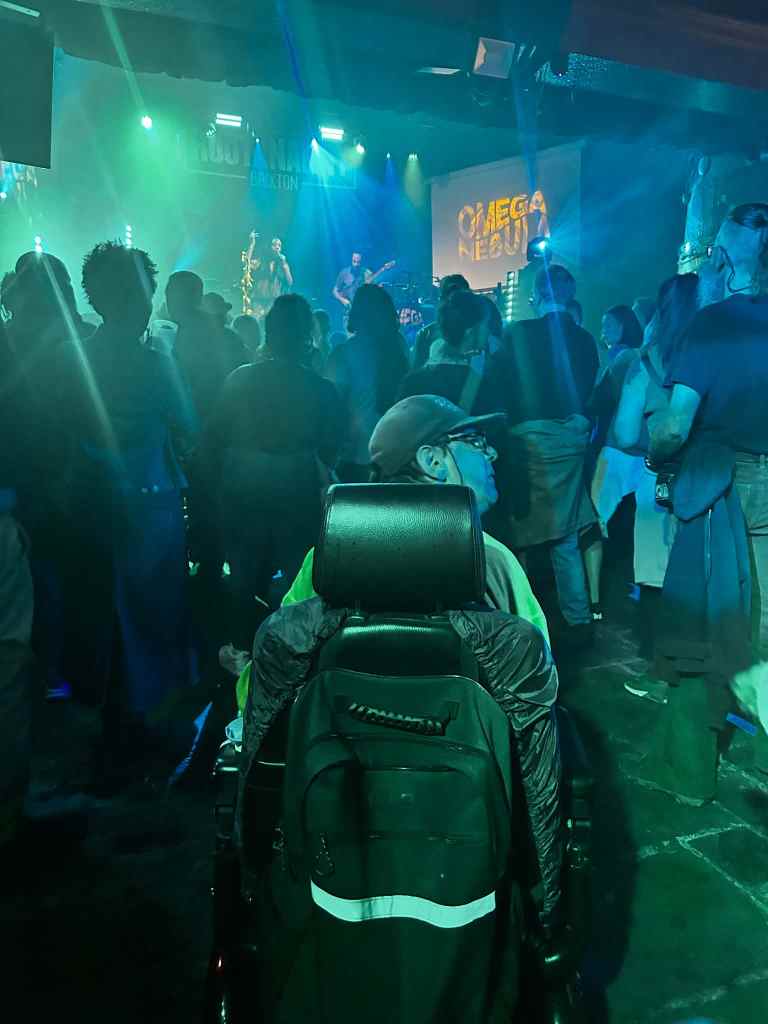
Trans Pride 2026

You know you live in an incredible world city if, when you turn on your computer in the morning you learn that a huge trans pride march is happening in town that afternoon, only to find yourself at the heart of it about three hours later. That is exactly what happened to me today. I had initially assumed that it would just be an interesting way to spend my Saturday: I could go and just make a few observations for a blog entry. As soon as I got there though, I found myself being swept along with the entire march.

It’s not that I don’t care about trans rights: Lyn, the most important person to me ever, was transgender. What I found myself caught up in this afternoon, however, was truly puzzling. It was overtly political in a manner I would not have expected: half the chants the protesters made were about Palestine. While there were obviously plenty of people there who identified as trans, this was trans in its widest, broadest sense, resulting in quite a vast array of people and groups being represented. I thus got the impression that the event meant so many things to so many people, that some of its overall meaning may have been lost.

Even so, I love how London has the awesome habit of turning out all these wonderful surprises. This morning I was reconciling myself to yet another quiet Saturday; but this afternoon I found myself surrounded by all kinds of wonderful, exotic people. While I admit that one or two of their demands, such as for free, over the counter HRT treatments, struck me as slightly ill-advised, there was an overall atmosphere of welcome and acceptance. As with the gay pride march I checked out a couple of weeks ago, this is definitely the sort of thing London is good at.

Why I Need To Be Careful

This morning, more than anything else, I’d like to get something off my chest which has been bothering me for a while, and I think blogging about it might help. I hate hurting my parents. More than anyone else on earth, my Mum and Dad are more precious to me than anyone else. From time to time there have been occasions when I have physically hurt them: when I haven’t controlled my body as well as I should have, and inadvertently caused them great pain. It’s an absolutely ghastly feeling. It happened yesterday: I was supposed to visit them in Harlesden, but had got there far later than I should have and arrived far later than I was supposed to. Going through to the kitchen I sat down far too quickly on a chair and accidentally head-butted my Mum in her jaw. I was already feeling rather flustered, but at that moment I just wanted to return straight home: through my clumsiness I had hurt one of the people who loves me and cares for me the most. What a total dick I am!

The fact is that moment reminded me of an even more horrible one long ago, before I left for uni. Dad and I were just playing around on the landing at the top of the stairs. He was playfully trying to block my path, so I thought I’d be clever and hit his privates. It was only a flip of my hand, and I think I expected Dad to dodge it, but it was too hard and the next thing I knew my father was writhing on the floor in agony. It was a horrible, haunting sight – one still etched into my memory. Of course, I still love my Dad a great, great deal; the thought of hurting him in that way was enough to make my blood run stone cold. Even over twenty years on the thought that I did such a stupid thing still upsets me.

Obviously when you have Cerebral Palsy you have difficulty controlling your body, so you need to be really careful with everything that you try to do. Sometimes that care lapses, and from time to time that can have catastrophic, terrifying consequences. Without such care it’s possible to hurt the people who are most precious to you. I think that’s probably a valuable lesson for us all.

Liz Truss Really Should Shut Up

Liz Truss’ lack of self-awareness really is staggering, isn’t it? While I haven’t come across anything I can link to, this morning I keep coming across posts on Facebook stating that she now plans to have some kind of grand ‘comeback’, and also that she’s now making all sorts of spurious predictions about Andy Burnham wrecking the economy. This is coming from the shortest-lived, most disastrous Prime Minister in UK history; someone with so little clue that she had to be kicked out within a month. If Truss had any idea of her actual standing and reputation, she would have crawled under a rock with embarrassment, never to return. Yet now she’s apparently giving speeches at far right conferences, strutting around on stage like some political great. The question is, should we find it appalling or hilarious?

More broadly however, I think we can glimpse within this a wider social phenomenon: people in general seem to be becoming less and less self aware. We seem to all have increasingly inflated ideas of our authority and importance; probably due to our increasingly online lives, we seem to all think that what we have to say has gravitas and ought to be listened to. I’m probably no exception, while being under no illusion that I’m just a cripple who likes to spout bollocks on his blog every day. Yet while I accept my opinions are largely heeded only by a few of my friends and family members, there seems to be a tendency to think that once you say something online, particularly on social media sites, it will be listened to. Perhaps this feeds one’s sense of personal importance, seemingly leading some people to assume they are experts or authorities on certain subjects, when in reality they have just made a few dubious Youtube videos on it.

Thus, as comic and cringeworthy as it may be, in Truss’ bravado we can read something wider: a growing egoism and arrogance; the dogged insistence that your personal opinions outrank all others, and any evidence to the contrary is just a personal slight to be ignored. We see exactly the same in Donald Trump: Truss seems to think that, despite it all, despite being little more than a laughing stock, she deserves to be revered as some kind of great politician. The problem is, as we become more and more personally opinionated, the bonds which bind society together start to fray.

A Freedom We No Longer Have

Over breakfast just now I was talking to John about travel once again. He was telling me how he knows people who travel from place to place across Europe, moving from one city to another across the continent. He also explained how, as a Polish man, he can get trains to all kinds of fascinating cities across the EU where he can live and work. To be honest, as wonderful as his descriptions sounded, they also filled me with sadness, tinged with an intense anger. While I know that it would still be possible in principle for brits to do something similar, the fact remains that, ten years ago, fifty-two percent of us were fooled into voting to cut the country off from this union of nations. Travelling across Europe is now far harder and bureaucratic for us. Through an act of abject xenophobia, we trapped ourselves behind a wall of paperwork.

I know that yesterday I directed everyone to a video explaining how we should be more understanding and less dismissive of the kind of people who voted for Trump and Brexit. Yet the fact remains that, were it not for them, we would still be free to live and work throughout Europe: we’d still be able to explore and roam as we wanted, working alongside all kinds of people, experiencing new cultures; we would still be part of a wider, broader community. As someone who believes in such unions, and who relishes the notion of people from across the globe working together as one, the fact that we are now cut off from that boils my blood with rage. Be they physical, rhetorical or bureaucratic, borders are borders: they divide and imprison us all. Call me a member of the metropolitan liberal elite if you like, but John’s stories of wandering across Europe by train sounded so captivating and wondrous, that the thought that that might no longer be possible for guys like me, due to idiots fooled into voting for something they didn’t understand in the name of ‘taking back control’, is utterly gut wrenching.

School, Survival and Perspective

I wrote a few days ago that I objected to once being described as a survivor of the special school system, and that I thought it wrong to view special schools in such negative, oppressive terms. On the other hand, I’ve also written about my quite traumatic experiences going to such a school, and said that I thought that only people who go through such childhoods can really grasp the reality of disability. I am aware of the rather obvious contradiction between these positions: do I think that special schools are a necessity or an oppression? Was I taught or traumatised? Should I be fond of my memories of school or view them as something truly dark? Did going to such a school hurt me, or make me who I am, giving me a perspective on life which you can’t really claim to have unless you have been to such a place. Should I perceive myself as a survivor, a victim, or something else?

There is no denying that, in retrospect, going to a special school was heavily traumatic. Where else would your teacher come in to your class of a morning from time to time to tell the class that yet another of your classmates had passed away? Yet schools like the one I went to aren’t like other schools: there is less of an emphasis on learning, in the traditional sense, and goals are more tailored towards a student’s personal needs. Thus to try to compare a special school’s performance with a mainstream one in any usual sense, say by using GCSE results, is essentially meaningless. Rather, what I think school taught me was far, far more profound: lessons in humility, patience and perseverance; lessons in holding your head high and walking on through the darkness. Things no other school, buzzing with energetic, hormonal teenagers , could possibly teach.

I suppose in a very literal, meaningful way I can call myself a survivor of the special school system: of the eight people in my class who I grew up with, there are now just two of us left. I find that thought utterly terrifying; yet I do not think it gives me the right to cast myself as any kind of victim of that system, or to feel sorry for myself. As I have said here before, I feel incredibly proud to have known every one of my mates, so to resent going to a special school would be to resent them.

 Hence the question of whether I see myself as a survivor or victim of the special school system is an incredibly complex one. To have been cast in .that role by self-ordained activists who knew nothing of such places, seemingly intending to depict the special school system as a form of manifest, intentional oppression simply in the name of political provocation, felt wrong; yet there is no denying that going to such a school denied me education I would have otherwise received.  My memories of school fill me with equal amounts of pride, joy, anger and sadness. I am extremely proud to have achieved as much as I have in spite of having attended such a school, but paradoxically would not prefer to have been to another. At the end of the day, my memories of school and the incredible people who I met there made me who I am.

Tubes, Ramps and Glasses

I suppose it’s another of those half full or half empty glass conundrums, but I’ve recently been trying to make up my mind where to stand, at least metaphorically, on ramp request tube stations, ie stations on the London Underground network which aren’t step free but have a lift, so wheelchair users can use them but only if they request help with a ramp. A couple of days ago I came across this quite excellent video illustrating how much longer it still takes going from A to B across London if you use a chair, and a large part of that is having to rely on ramps and step free stations. I have said here before how enamoured I still am with London public transport, but the fact remains that it is still nowhere near fully wheelchair accessible. On the other hand I also know just how dire it could be, and how much progress has been made towards accessibility has been made over the last twenty to thirty years. I can go pretty much anywhere I want across this sprawling, fascinating metropolis; I just have to be careful about the route I take, and make sure I request the ramps I need.

The question is, how should I feel about this? Should I welcome the progress which has been made, or feel blighted that there is so much further still to go? I remember how impossible it was to get around London on our family visits as a child; equally, it would be wonderful to just be able to roll into and out of every tube station in London, like everyone else. Should I therefore see the progress which has been made in a negative or positive light? Is the glass half full or half empty?

Obviously both positions are equally valid; but the problem comes when people try to make political hay from such issues. That is to say, they use the fact that not all stations are accessible as a sign of the overt opposition of disabled people, and a way to get people angry. Telling people that they are oppressed is a very effective way to politicise and manipulate them. While there is no denying that the only way to improve any situation like this is to take political action, it is also true that such issues are open to abuse or distortion. It has happened to me more than once, when I was told that things like the special school system or inaccessible public transport were part of a scheme to intentionally oppress people with disabilities. Thus, as I wrote here, I was told that I was a “victim” or “survivor” of “segregated education”, often by people who actually had very little experience of what they were talking about. The reality of such issues, as any actual disabled person will be able to tell you, is much more complex and nuanced. More to the point, by focusing only upon the negative aspects of a given situation it becomes all too easy to adopt a mentality of victimhood and oppression all too prevalent these days. Surely it is far healthier and more useful to appreciate that there might be valid, practical reasons why not all stations are accessible, just as there are very good reasons why not every child can attend a mainstream school, and work from there.

Reflecting Upon Race

Today I would just like to dig into what I wrote here a couple of days ago with regard to the notion of race. We’re probably all familiar with the idea of course, but when you start to think about it, race – as in a biological, cultural or social subdivision of humanity – isn’t as straightforward as it might at first seem. Of course, I’m a blogger, not a biologist, so I’m no expert in this, but I can’t help recalling A Level Film Studies and the debates around genre. That is to say, there was a lot of academic writing about how each genre was defined and how a film could be classified as belonging to a genre. Broadly speaking, it boiled down to the iconography of a film and to what extent it fitted in with each category. A film featuring starships flying through space probably isn’t going to be a high fantasy film – but then, how does Star Wars fit in with that?

Obviously living beings aren’t films, and categorising people isn’t going to be that straightforward. We are all essentially one species with the same biology and genetics; there is some variety in terms of skin colour, complexion and bone structure in people from across the globe, but such differences are ultimately minor. We are all ultimately human: the last non-human branch of our species, the neanderthals, died out about a hundred thousand years ago. There is nothing to prevent people from across the globe mating and mingling.

That is why I find the entire idea of race so problematic: like genres, when you begin to dig into it, it becomes a bit of a trap. Where does one group of people begin and another end? That is why I think we should abandon the concept entirely, and just see ourselves as one human civilisation. This is also why I dislike the fact that certain people or groups of people seem to want to position themselves as members of a different race, seemingly just to set themselves socioculturally apart. It means clinging to a form of sociobiological stratification which should be redundant. But then, of course, the issue of culture crops up: There are certainly cultural differences between groups of people, and such variety obviously needs to be relished and preserved. What relationship does that have on the notion of race? Does it mean the concept needs to be safeguarded?

Again, I find that extremely problematic, given that dividing humanity up along racial grounds has proven so harmful. Thus we need to weigh the necessity of outgrowing essentially arbitrary dividing lines against the need to preserve cultural diversity. The whole point of traveling is to experience other cultures; but we must never forget that, wherever we go, the people we meet and cultures we discover are just as valid and human as we are. And needless to say the same applies to being open to and embracing the cultures and traditions of the people who come to live with us. The danger is when we put up false social barriers and start to needlessly stratify groups of people, placing them in artificial hierarchies which do far more harm than good.

Making Space For Me

Whoever said that it’s the small things in life which make it worth living clearly knew what they were talking about. I was sat at a bus stop this afternoon: to be honest I had got a bit lost and had been waiting ages for a bus back to Woolwich. It didn’t help that I was already in a pretty foul mood, but when the bus eventually came it had two prams in the wheelchair space. When the driver started to spout the usual guff about having to wait for the next bus, needless to say I lost it and began to demand they make space.

A small standoff ensued, but I was determined to stick to my guns: I knew my rights, and wanted to get home. Just when I was getting quite furious though, something reassuring happened. The mums in charge of the prams told the driver to put the ramp out, saying they would move their babies. Upon hearing that, of course my anger turned instantly into gratitude. I was able to get on the bus, and we were soon on our way.

In the end it wasn’t a problem, but the fact is I could easily have been left sitting at that bus stop. Sometimes I know I need to stand up for myself, albeit metaphorically. A wheelchair space is a wheelchair space, not a pram space; and I had fully expected, with the driver on their side, for those mothers to stubbornly refuse to make way, as has happened before. At the same time, the kindness of those women filled me with gratitude, enough to make the world suddenly seem a lot brighter. Small though they may be, such fleeting acts of kindness and understanding can often have the most profound effects.

Not All Tiers Are An Evil

While I can’t say I’m absolutely cool with it, I think I need to flag this very interesting little piece by my friend James Cullis up. The notion of social tiers has cropped up in the national discourse, and James argues that adapting to everyones need is an essential result of human diversity, so to a certain extent social stratification is inevitable. As he puts it, “We prioritise, we triage, we judge. Society works because we discriminate — not in the moral sense, but in the literal one: we distinguish between cases.This is why the Novak scandal was so disturbing. It was a grotesque parody of justice, and yes, anyone who manipulates religion to game the system should be condemned. But here is where I part ways with Starmer: tiered policing exists because society itself is tiered. It is not a glitch in the system; it is part of the system.If we truly wanted “one tier,” then let’s be honest about what that would mean. Remove the ramps from buses. Rip out the lifts. Tell disabled people and the elderly to climb the stairs. Abolish sign language. Scrap subtitles. Eliminate every accommodation that acknowledges human difference.”

I think that, on the face of it, this is quite incontestable, and very well put. The thing is problems arise when such ideas are taken too far and this stratification is used to justify inequality and injustice. We are indeed all different, everyone has different needs, and society should accommodate those needs; but that should not be allowed to give rise to some kind of social hierarchy. Accepting that everyone is different should not then be twisted into the idea that some people are inherently worth more than others. If anything, the fact that there is no such thing as a “normal human being” means precisely the opposite: we all have equal potential and equal worth, so society/the environment needs to adapt to help everyone fulfil that potential, whatever their needs may be. Somewhat paradoxically, treating everyone equally does not automatically mean treating everyone the same. If some people are more capable than others, then surely those with more ability should assist those with less, be that help practical, physical, financial or whatever. Diversity should thus not be used to underpin notions around socioeconomic class. That is why, in spite of his otherwise solid argument, I find Cullis’ use of the term tier in the quazi-positive sense he does seems to leaves a slightly nasty taste in my my mouth, as it carries with it overtones of the very social stratification that we need to be breaking free from. Yet Cullis seems to imply that such tiering, in this context, is a good thing.

The notion of tiers can therefore be taken either way: used as the basis for equality and acceptance, or abused to justify discrimination and hierarchies. We are currently watching it being taken both ways. The scandal around Henry Novak is now being hijacked: such stratification is being sold to people in the name of tiers, and used as evidence for the perverse notion of “two tier policing”. The fact that some people’s needs differ from other’s should not be used to argue that some people deserve more than others simply because of who they are, or to stir up animosity between groups of people. That’s what makes what we saw yesterday in parliament so sickening, and this cultural impasse so dangerous.

When Water Becomes A Problem

Water has suddenly become quite a major problem. While just a few days ago I was desperately trying to keep my powerchair dry from the rain, all of a sudden I’m internally complaining that it’s too flipping hot. It’s like someone has flipped a switch or accidentally turned the local thermostat up to maximum. Of course, such things don’t prevent me going out on my daily trundles, but I know how essential it is to keep hydrated. The issue is, how? For most people it’s just a matter of carrying a bottle of. water around and taking regular swigs, but I feel the need to explain that it’s not so simple for me. I go out alone: I’ve explained here before that my daily trundles often last for hours, and I can go miles, following paths and getting on and off busses. Having a PA following me around would be impractical.

That usually isn’t an issue as long as I’m home in time for dinner. In this heat, though, the issue of drinking water regularly becomes prominent. Of course, I carry a bottle in the bag on my chair, but in order to drink any I need someone to get it out, open it, put my straw in and hold it up to my mouth for me. That means I need to find someone I can trust to do so, which isn’t always as straightforward as it might sound: you can’t just roll up to random people and ask them to do such things. Thinking about it as I was going through Greenwich earlier, I realised it would have to be some kind of community warden or police officer; you have to be very careful who you ask to perform such a task. On the other hand, the only alternative is to return home. In the end one of the staff at the Cutty Sark Museum kindly helped me.

I know this might seem trivial, but I don’t think people realise how much of an issue such little things can be for guys like myself. IE, when I say I asked someone to help, I mean typing into the communication app on my Ipad what I needed them to do and why. I feel almost indebted or subservient to the person helping me, like a baby suckling it’s mum. To a certain extent, this creates if not a barrier then a restraining dynamic between myself and others which I’m not sure people realise exists, which is why I think it’s worth writing about here.

A Place where one can Imagine Enjoying a Martini

I came across a tantalising tidbit of information yesterday which made the Bond fan in me go into overdrive. Believe it or not, I had never visited Eltham Palace: I trundle along the paths around it’s grounds quite regularly of course, but before yesterday I had never payed the admission fee to go in. It turning out to be such a sweltering day though, and my curiosity having been growing for a while, I decided it was finally time to investigate.

Thanks to a National Trust card kindly lent to me by John specifically for this reason, I was let in for free. I was expecting to find the remnants of an old medieval stately house or castle, which in itself would have been interesting; but what I found pricked my interest in a way I did not expect. After exploring the gardens, which were their selves pretty enough for me to decide I needed to take my parents there, I went into the Palace. Unfortunately the lady at the gate told me that the lift was broken so I wouldn’t be able to go up to the second floor, but the ground floor wouldn’t be a problem. Looking at the pictures, it appeared extremely 1920s chic, making me remark to the lady that I wondered whether Ian Fleming had ever visited. It was just a casual question, but to my astonishment and excitement, the lady replied that, while she hadn’t seen any record of Fleming visiting, the owners of Eltham Palace at the time, Stephen and Virginia Courtauld, did indeed have connections to the SOE, the Special Operations Executive.

Hearing that in itself was enough to have me break into spasticated squeals of excitement. The Special Operations Executive was formed in 1940 to conduct espionage, sabotage and reconnaissance in German-occupied Europe and to aid local resistance movements during the Second World War. Essentially the precursor to MI6, Ian Fleming had a close involvement in it, as personal assistant to Admiral John Godfrey, director of naval intelligence. The prospect that his path could indeed have crossed with the Courtauld’s, or that Fleming may even have been to Eltham Palace – certainly a place where one can imagine enjoying a martini – was enough to make my day.

I clearly had some Googling to do, so after exploring the palace with it’s intriguing juxtaposition of 1930s rooms and medieval hall, I made a beeline home. Unfortunately my investigations didn’t get much further, as I couldn’t find any record of Fleming’s path ever crossing with the Courtauld’s. Yet the notion that one of my favourite authors could have a link, however tenuous, to somewhere so nearby is just too tantalising for me to abandon. After all, we know that Fleming took the number 007 from a bus route which used to run through Eltham; and it’s extremely likely that he and the Courtaulds mingled in the same bourgeois metropolitan social circles. Quite frankly, I find the prospect that I could one day come across a photograph of the creator of the world’s greatest spy casually lounging in one of the sitting rooms I glimpsed yesterday, vesper in hand, simply too delectable to forget. Having said that, the question of what role the Courtaulds played in the SOE is probably just as intriguing. This is obviously something I need to look into.

Glasses: Half Full and Unbroken

There are famously always two ways of looking at the same thing: half a glass of water can be half full, half empty or both. I just got back from my daily trundle. It started out as quite a lovely one, heading to Lewisham and then along the river Ravensbourne. There is a very pleasant linear park with a path that I sometimes like to follow. However, just when I was beginning to reflect on how it would be a good place to bring my parents, I somehow suddenly hit a pothole and fell out of my powerchair.

The next thing I knew I was on the floor, having hit my face. The few moments after a fall are always the worst, as you don’t know how much damage has been done or how you’re going to get back up. I stayed there for a few seconds before starting to call out for help. Fortunately within a few more seconds a man had seen me, then a young woman; they helped me back into my chair.  My face felt scratched but wasn’t bleeding.

And just like that I was on my way again, almost as though nothing had happened. People seem to regard such falls as absolutely catastrophic events which ruin one’s day, but I know that it could have been far worse. Nothing was hurting or bleeding and I didn’t need to go to the hospital. For a moment I had been worried that I’d damaged my glasses and the lens had come out, but to my surprise and huge relief they were fine. 

I know how much worse such falls can be, which is why I feel far more relief than dismay when such things happen.  For one, broken glasses would have meant my day would have taken a significant negative turn. There are indeed always two ways of looking at such things, but I think having a disability means that you learn to accept them. Such things inevitably happen, but if nothing is damaged and you can continue on your way afterward, then what is the point of worrying about it? After all things could have been far worse. More generally, people seem to see needing to use a powerchair as something which must be catastrophically depressing; but when you grow up in a special school and have lived your life around other seriously disabled people, you learn that there is always cause to hold your head high. Accidents happen, but there will always be people around to help you up; catastrophes happen, but if you remember that things could be far worse, and carry on through your struggles just as your friends did, things will be okay.

Vampiric Transvestites In Cambridge

What would the reaction be if I wrote a musical play about a pair of white guys who go driving at night. They get lost, and find an old gothic mansion. They are welcomed in by a group of black people who revel in black culture, singing, rapping and everything. At first everything seems fine, but then the black people turn out to be murderous vampires, and then aliens. Things get darker and darker, with distinct overtones of Mary Shelly and other horror films. But then, at the end of the piece, everyone but the white characters gets shot, leading the audience to erupt into rapturous applause. Would my play not be considered abhorrently racist? But instead my play becomes a classic and grows a cult following, with many people viewing it as a celebration of black culture. What would you say?

That is the issue I have this morning. For the most part yesterday was an awesome day: John and I went up to Cambridge, largely just to have a look around, and as part of my ongoing aim to get out of London a bit more. Cambridge is a stunningly beautiful city. To be honest we spent most of the afternoon walking through the botanic gardens, parks, and along the pretty little river. There was a photography exhibition which we both wanted to see, which included some absolutely incredible natural history images.

At about eight though, after a bit of dinner, we made our way to the theatre to watch a live performance of The Rocky Horror Picture Show. Of course I had heard a lot about the musical, but surprisingly I’d never actually seen a performance – it had never really crossed my path before yesterday evening. I may have stopped dressing up a while ago, but I’m still very interested in gender bending and trans culture; and of course, Lyn’s memory still means a lot to me. I was thus very much looking forward to what we were about to watch.

I’m afraid to say, however, that within about five minutes of the show starting, the semiotician and cultural critic in me kicked in. It quickly became clear that something very, very odd was going on. Gender norms were being bent, but in a way which still distanced it from the audience: transpeople were dancing and singing merrily on the stage before me, but they turned out to be vampiric aliens from another galaxy. The show seemed to have a nasty subtext which I’m afraid I could not ignore. Slightly more concerning, though, was the fact that the audience around me, many themselves dressed in all kinds of weird costumes, seemed to be revelling in it, taking the performance to be some kind of kinky celebration of trans culture. I’m afraid to say that, given where we were and their apparent age, I couldn’t help wondering whether many of them had actually met a transperson or had many transgender friends. Could such performances just be about accommodating them, allowing them to feel inclusive while maintaining a ‘safe’ distance to the topics at hand?

Perhaps I’m overreading things once again; perhaps I’m just being grumpy. It was a great show and a fun night. But as we rode the train back from Cambridge last night, I just couldn’t silence the troubled voices in the back of my mind. To me, the show seemed to alienate the very culture it claimed on the surface to celebrate; it was a celebration of transvestism and gender nonconformity, but kept it at a safe rhetorical distance. The cross dressers turned out to be cannibals from another galaxy. I’m afraid this gave what I watched a disquieting contradiction which I couldn’t really shut my eyes to.

Two plus Two

I think I have admitted here before that I’ve never been very good at maths. Even so, I am pretty certain that I know what two plus two is. That never really seemed very important, but the film I watched yesterday afternoon with John revealed just how consequential it in fact is.

We went to see Orwell: 2+2=5, a 2025 film directed by Raoul Peck, and as I wheeled out of the Curzon cinema I honestly thought I had a new favourite film. I don’t think I have ever seen a more beautiful, intriguing filmic text. To just call it a film or even a biopic would be to over simplify it. It may be about George Orwell, but it is also about much, much more. Peck juxtapositions Orwell’s writing with contemporary politics, enabling it to speak to our world. The result is phenomenally powerful, as if a voice from eighty years ago was able to accurately predict and comment on what is happening today. Freedom has become slavery, war has become peace, and ignorance has indeed become strength in a way Orwell could never have imagined but predicted with chilling precision.

Riding the Lizzie Line home last night though, I began to wonder what I was going to say about this masterpiece. It is a very cinephiliac film: that is to say, it revels in the cinematic art, referencing countless other films and reminding me what cinema is for. It made me realise how little I know about George Orwell, and made me ravenous to know more. After all, he was a contemporary of Hemingway, Fleming and Tolkien, and just as influential as all three, but I have never really studied him. This will sound like a bit of a cop-out, but I honestly don’t think confining my thoughts to a blog entry would do the film justice: I now feel the urge to go far, far deeper, exploring a writer who was clearly one of the greatest of the twentieth century, yet who I know so little about. In a way, Peck’s film whetted my appetite and made me hungry for more. It really is an astonishingly great film which I would urge everyone to watch, saying so much about both Orwell and the present; but the cool part is, it was just the beginning. It feels like it has opened up a completely new realm for me to now dive into and explore.

We may well live in a world where two plus two might soon equal five, and where everything Orwell warned us against may soon become reality; but as long as films like this are being made, and as long as we remain aware of the threat posed by Big Brother, we should be all right.

Lifts Need Rules

Lovely spring day that it is, this afternoon I thought I’d go over to Canary Wharf to see what was going on around there. Nothing too noteworthy really, taking the Superloop bus which now runs from Blackheath to the Isle of Dogs. To get back to the south side of the river though, I thought I’d use the foot tunnel which goes down to Greenwich. I like those foot tunnels under the Thames as they sort of have a historic, eerie atmosphere to them. The only problem is I never know whether I’m going to be able to use them as most of the time one of the two lifts is out of order, so I need to take the DLR back instead. This afternoon, however, I was in luck and I got back to Greenwich without an issue.

I feel I need to say, though, that it really annoyed me that there were five or six people also in the lift who were perfectly capable of using the stairs. I know I keep returning to issues like this, but it winds me up: if only people who needed to use such lifts were allowed to use them, they obviously wouldn’t break down nearly as often. The same goes for the lifts at the foot tunnel at Woolwich and across the entire transport network. But because people can’t be arsed to use the stairs, lifts get over used, break down, and guys like me are left stuck. It is one of my bugbears, but it’s becoming a bigger and bigger problem, and I seriously wish something would be done about it. Part of me wishes there was some kind of penalty for using a lift when you don’t strictly need to – perhaps then people would realise that, to guys like me, they’re more than just convenient ways of scaling or descending heights.

A small Vast City

Ask any random person and I’m sure they’ll say that London is a huge, sprawling metropolis. Compared to other world cities though, it’s actually relatively small. When I first moved down here, I remember how it seemed utterly vast; yet as I have got to know it, it has begun to feel increasingly knowable, navigable and even walkable.

Of course, when I say that it is walkable I mean that I can go around it in my powerchair: I don’t personally have to walk anywhere. I can navigate around the city, from borough to borough, quite easily, either just in my chair or using the various types of public transport. I have written before about how much I love to explore the paths and towpaths, and how fond I have grown of London’s busses and tube system: they help the city seem far more compact than you might expect. Walk along the Regent’s Canal west from Stratford, for instance, and in a couple of hours you’ll find yourself in Central London; and the new Superloop bus routes speed up getting around Greater London even further. Thus a place which seemed so vast and sprawling, in a way now feels rather compact.

The thing is, that assumes such transport systems are working normally. Thanks to things like the Elizabeth Line, guys like me can get from one side of London to the other quicker and more easily than ever before. If such systems are not working properly, however, things obviously become far harder and slower. Trips which pass in minutes below ground sometimes last eternities above it. This afternoon, for instance, I thought I would head back to the other Westfield shopping centre in Shepherd’s Bush, basically as part of my effort to get to know the other side of London a bit more. The trip there looked straightforward enough: the Lizzie Line to Paddington, then the Circle line to Wood Lane. I guessed it wouldn’t take more than forty minutes or so. When I got to Paddington though, I was told that the lift at Wood Lane had broken, but fortunately I was helped to get a bus there instead.

The big difference between buses and trains is that buses are far slower: they use far more convoluted routes and have to deal with traffic. The bus I had to take,  the seven, seemed especially bad. Thus a journey I had expected to take just minutes took more than an hour, and proved far more tedious and stressful than I had expected. As a result I got to my destination far later than I thought I would, and when I did it was almost time to start thinking about heading home.

Thus the size of this city can vary from day to day: a trip that can seem quick and straightforward on one day can prove anything but on the next. This is especially true if you use a wheelchair and are thus reliant on accessible stations and working lifts. A welcoming, homely world city can turn in an instant into a sprawling, alienating labyrinth. Hence London can seem simultaneously small and vast, walkable and unknowable at the same time; shrinking and expanding like a lung.

Chronically Nauseating

To be fair at the moment I have a bit of a runny nose, probably brought on by the onset of spring and nothing to worry about. Apart from that, however, I do not nor have I ever seen myself as sick or ill. I have a congenital physical disability, but I have known for a long time that that is no reason to feel sorry for myself. In fact I am probably one of the luckiest, healthiest people around.

I find self pity utterly repugnant. I think I have written here before that one of the reasons I admired people like Lyn so much was that they never complained about their Disabilities, despite the severity of their conditions. Recently online though, I have been coming across more and more videos by people styling themselves as “sick” or “chronically ill”. The content they post seems based wholly upon this status, and they frame their entire online identities around being unwell. While I am aware that not all medical conditions are obvious, in their videos they appear perfectly well, and usually upload every day or two. What I find most provocative though, is that, while they appear to be able bodied, they also refer to themselves as disabled, even occasionally calling themselves cripples.

I’m sorry but that to me is intolerable. Of course I have used the word cripple in the title of my blog for over twenty years; but as a survivor of the special school system among other things, I think I have a right to be part of the reclamation of such language. To hear such online fakers try to claim it as their own, when they aren’t the ones who have had such words used against them as terms of abuse, feels like such grotesque sociocultural usurpation and intrusion that it physically hurts. More to the point, the vlogs they post are little more than streams of self pity about how woeful their lives are, as well as how difficult it is to convince medical professionals that they are indeed ill. Again, while I may jokingly call myself a cripple, I know how important it is not to just blog about having a disability, but to touch on other topics ranging from politics to film to what I had for breakfast, if just to let readers know that I am as rounded a person as anyone else. My disability does not define who I am, nor do I use it as the basis for endless blog entries about how miserable my life is and how everyone should feel sorry for me.

I know I keep coming back to this issue, but it really troubles me: people are claiming to be ill or disabled when there is nothing wrong with them. From the bit of online research I have done, the number of people claiming to have some sort of medical condition has shot up markedly over the last five years, particularly since the pandemic. That alone I wouldn’t mind, but the fact that they are now so resonant online, claiming our language as their own and framing themselves almost as champions of disability rights, really gets to me. They haven’t been what people like me, Lyn or my school friends went through: they weren’t shoved away into special schools, don’t get treated like five year olds or get mocked by children in the streets. As far as I can tell, they have lived pretty normal, able-bodied lives. Many such people admit to having partners, children and – until quite recently – jobs.

Thus to hear them speak with such nauseating self pity about how downtrodden and oppressed they are, while flashing the boxes of pills they claim they need to take on screen, really does boil my blood. It effectively reduces an integral part of who I am down to an online trend; it uses disability as pity porn to attract online viewers. I know many people would advise me to just put up with it; but this trend is rising so sharply and becoming so obscene that it just makes me want to slap these lachrymose, attention seeking imbeciles. To be fair, some of them may well have hidden, minor medical conditions; but even so that does not give them the right to effectively hijack all of disability politics, talk as if they are the most hard done by of us all, and then use that as the basis for regularly uploaded online videos. It is that which makes me so angry.

Trouble, Fury and Hurt In Woolwich

Something happened yesterday afternoon which made me furious at the time, and which I still think I ought to record here. It was turning out to be a nice day, so at about noon after a short trip to Eltham High Street, I decided to catch the bus to Woolwich. I was planning to catch the Elisabeth Line to Liverpool Street in order to check out a bit more of the phenomenal building work around there. Getting off the bus at General Gordon Square though, I almost immediately encountered a lady shouting nonsense about Jesus, whereupon my instincts kicked in and I told her to shut up. Her reaction was far from pleasant: she instantly became very angry, and rather that trying to talk to me and discuss the issue, she retorted that my lack of faith was the reason I was disabled, or words to that effect.

Needless to say, this made me furious. I saw red, and decided that I wanted the woman either arrested or sectioned. As coincidence would have it, there were three community support guys (quazi policemen) nearby, who came over to see what the increasing noise was about. To my absolute horror and disgust, however, they completely refused to see what I was typing into my Ipad to tell them. They only listened to the woman, and seemed to assume I had nothing to say. It was as if they didn’t know communication aid users existed, or register that I was trying to speak to them.

Being treated with such disrespect naturally enraged me even further. The entire incident only lasted a minute or two. When the officers started to walk away, I tried to follow them, still wanting to speak to them – perhaps I could ask why the ignorant bastards had ignored me like that. But they strutted away as though they had assumed I had nothing sensible to tell them, heading to their offices up Wellington Street.

By then I was angrier than I had been in a long, long time. I headed into the Woolwich Centre opposite: perhaps I could talk to someone in there who could call the police or take some kind of action. To have been ignored by the officers like that was gut-wrenchingly disgraceful. Fortunately I know the people in The Woolwich Centre as they’re the guys who do my PA payroll etc, and to cut a long story short they helped me to lodge a complaint. Whether anything will come of it remains to be seen of course, but I felt it imperative that I took some kind of action. To have been treated in that way, first being insulted by that woman, then totally ignored and even sneered at by the very men who are supposed to sort such issues out, felt very hurtful indeed. I frankly find it extremely troubling that I can still be treated in the way I was yesterday.

Missing An Important Protest

It annoys me how much of a dumbass I can be sometimes. Yesterday was turning out to be a pretty ordinary Saturday: I went out at about eleven, had a nice long trundle through Charlton (no cricket in the park yet) down to Woolwich and then back to North Greenwich along the river. Nothing too unusual. I got back at about four, had lunch and checked my computer, only to see that there was a massive anti right-wing protest in central London taking place, which I had been intending to go to but completely forgotten about.

I was in too minds at that point: was it still worth going, or was it too late? From the pictures I saw, something was still going on in Trafalgar Square, and getting to Westminster on the Jubilee Line isn’t that hard, so I headed off again (keeping a close eye on my powerchair battery level). It would obviously have been easier just to stay home and settle down for the evening, but this was important: right-wing reactionary politics is gaining more and more traction, and we must show our opposition to it whenever we have the opportunity. The gradual swerve towards right-wing vitriol, happening not just here but in America and elsewhere too, is becoming so concerning that we have no choice but to stand up to it. Mind you, given that the event was called Stand Up To Racism, I feel I ought to point out that some of the most broad minded, tolerant people I’ve ever known could not stand up.

Such gripes aside, unfortunately I got up there just as everyone was heading home: people carrying placards were heading in to Westminster tube station just as I was heading out of it; police on Whitehall were packing things up. From the look of it, it had been huge. I got to Trafalgar square but nothing was happening, so there was nothing for me to do but turn around and head home.

I may have missed it, but really hope there will be many more protests like yesterday’s. It is vital that we show our opposition to people like Farage and Yaxley-Lenon, and the puerile, repugnant politics they espouse. If we don’t it will just gain more and more traction. I’m glad to say that the action yesterday was huge: 150,000 people apparently turned out, far more than the 20,000 or so morons who came in support of Tommy Ten-Names. It just frustrates me that I wasn’t among them, although I’m pissed off at myself more than anything. The weirdest thing of all, though, was there wasn’t a word about it on the evening news, which was surprising given it was so big.

Bait – WTF?

I obviously like to keep my blog ticking over, but yesterday was one of those days when I struggled to come up with an entry. It wasn’t as if I didn’t have anything to blog about, though. The evening before I had watched all six episodes of Bait, Amazon’s new comedy series, and it had given me plenty to think about. The problem was, I didn’t know where on Earth to begin.

Let me keep this brief. Bait, if you ask me, is a total mess. Huge James Bond fan that I still am, of course I’m going to be interested in anything to do with the character. But as Calvin Dyson explains quite well here, Bait is related to Bond tangentially at most. It’s essentially a short comedy series about an actor of Indian heritage who somehow auditions for / gets cast as 007. It obviously came about now that Amazon have the rights to the Bond franchise, and it’s a clear statement of intent that they’re going to mine it for all it’s worth. The narrative plays out over the six half hour episodes as a tangled, confused, not very amusing hodgepodge of conflicting messages: the series clearly wants to position itself as some sort of commentary on multicultural Britain, but did so with such broad, unsubtle brushstrokes that I frankly found it tiresome. The whole thing played out as a lecture on inclusion coming from yet another person who assumes they know what they’re talking about but in fact hasn’t got a clue.

However, the thing which for me pushed the whole thing over the cliff into the abyss of derangement was having Sir Patrick Stewart voice a pig’s head. I’m naturally going to be interested in anything to do with Sir Patrick, but here he just voices a pig’s head which the central character schizophrenically hears talking to him. We never actually see the great actor appear on screen, which to be honest struck me as somewhat cheap; although what made matters worse was that the lines he was given were so crass and vulgar, the actor was so misused, that the whole thing felt like it was written by a moron for morons. I don’t know whether it was an attempt to be some kind of comment on mental health, but if so it was made by someone who had never attended a single psychology lecture. I came away from the last episode wondering what the zark I’d just watched, whether I had missed something, and wondering whether it was one of those things I needed to watch again in order to understand.

Smooth Pavements and Privilege

I freely admit that the following will probably be one of the stupidest sentences that I have ever written: I think I want to visit more places where I can’t use my powerchair. I realise how ridiculous that must sound, but it’s a feeling I have had for a while. When it comes to accessibility, of course, London is a long way from perfect, but at the end of the day it’s one of the richest, most privileged cities in the world. It is safe and secure, and I can get around the city pretty much on a whim. This morning, for example, I decided to continue to try out the overground by taking the train from Kidbrooke up to Victoria. Dom and I had taken the route on Friday to get to the theatre, but I wanted to see if I could use it alone. It turned out to be a pretty uneventful trip, and, aside from a short wait for the ramp, I was in central London probably more quickly than ever.

If you haven’t been into London recently, it really is jaw dropping just how quickly it’s developing. Colossal amounts of money are clearly being spent in and on the city; not just in central London but in the so called east end too. The area around Victoria station, however, took my breath away: it was like a 3d labyrinth of concrete, metal and glass, with walkways, arcades and paths leading around coffee houses and expensive boutiques. The wealth was so apparent that it didn’t seem quite real.

The thing is, I’m almost used to it: I’m used to trundling along wide, smooth pavements; I’m used to being able to get on and off buses with automatic ramps; I’ve come to expect stately, well maintained parks which I can explore just as easily as anyone else. Of course I have a right to expect such things, but I can’t escape the cynical voice in the back of my mind crying out that they are all simply facets of extreme privilege. There is no denying that London is an extremely rich, bourgeois city: take a walk around Mayfair or Pimlico and you can almost smell the entitlement. It is a great world city which can fund any infrastructure project it wants. As fascinated as I still am by it, part of me now craves grittier, grimier places.

Of course I’m not talking about leaving London altogether. London is obviously an incredible base, full of culture and life, where I can go and buy fresh doughnuts five minutes from my front door. It’s just that the pull of grittier, grimier parts of the world is growing. Towns and cities which have not been so pumped full of money; smaller, more down to earth places, not so used to being developed and redeveloped beyond recognition. More earnest, less privileged places, not so accustomed to being the centre of attention or being granted permission for every project it likes. Perhaps it would be harder to get around such places, and I might not be able to use my powerchair. The people there might not even speak English. Yet I really think that it would somehow seem more real: I think I have become so used to trundling around one of the richest, most highly developed metropolises on Earth that the call of smaller, less affluent places, still in touch with a kind of proletarian reality, is growing louder and louder.

Doctors or Dumbasses

To be honest it really, really pisses me off when clergy style themselves Drs and claim to have PhDs. Surely anyone stupid enough to be convinced of the existence of an omnipotent, omnipresent creator being has no right to any such qualification. I’m sorry if I sound grumpy, but this really does offend me. I was watching the BBC breakfast programme again this morning, and they suddenly had an item about the so-called Arch bishop of Canterbury making some kind of pilgrimage. It was obviously just a stunt to get press attention, but the Beeb had fallen for it. What wound me up, though, was the fact they then had the bishop of Manchester appear on the premises spouting all kinds of nonsense about God. He seemed to think he had the authority of an elected politician or academic. 

I’m afraid to say it made me fly into a rage and I had to turn it off; but the guy seemed so arrogant, so up his own religious arse, that it was insufferable. In any other context, trying to convince people of something as manifestly absurd as the existence of a god would just get someone mocked and ridiculed, so it baffles me that such people are awarded such reverence. I have no idea whether the guy has a PhD or not, but he deserved one as much as Trump deserves the Nobel prize. He just spoke so condescendingly and with such crass superiority, as though he should be treated like some great paternal authority figure simply because he cited a book of Bronze Age myths, that it made my blood instantly boil.

I surely can’t be alone in finding this kind of thing so abhorrent. At the end of the day, such people are trying to tell us what to think and how to act, demanding we believe a set of baseless myths which start to seem ridiculous the moment you actually think about them. If nobody listened to them, if everyone saw this anachronistic cult as the outdated form of social control it is, such authority would instantly evaporate and perhaps they would have to find something more productive to do. Yet they seem to think they have the right to speak down to the rest of us, demanding we remain chained to their belief system; allowing them to talk on TV alongside professionals, politicians and people who have actually earned their authority just plays into their game and reinforces their undeserved status. That’s why I find letting such people appear on news shows so appalling: as a society we really need to outgrow such divisive, oppressive forces, but letting such people appear on the morning news and referring to them as doctors simply allows this perverse, outdated form of social and intellectual domination to continue.

These Cowboy Hats Don’t Fit

Fascism is one of those things which is notoriously difficult for define. The term is bandied about all too easily, often used as an insult, to the extent that it loses any real meaning. I think, though, that in the broadest terms, fascism is a form of ultra right wing, discriminatory culture; a form of reactionary intolerance where you are right and everyone else is wrong, and one’s culture is inherently superior to all others. Under those terms, however, that is precisely the culture we now see emanating from the United States.

Since the second election of Donald Trump, America has become ever more brash and arrogant: its attack on Iran was unprovoked and criminal. To be honest such actions give American culture in its entirety a far darker, more reactionary feel. Americans now have the aspect of those who feel they have the right to do whatever they want, no matter what suffering it causes. Of course, I know not all Americans approve of what their government is doing, but you could have said the same about Germans under the Nazis. For me at least, American culture now has a vile, repugnant undercurrent to it.

That makes what I am experiencing today far more disquieting than it would have been not long ago. I am writing this sat in the corner of the O2. The Country To Country festival is on this weekend: country music is being played through the speaker system; thousands of people are walking around in cowboy hats and jeans. I frankly doubt many of them would ever have actually been to the Midwest, and I thus can’t help feeling a deep sense of charade to what I’m watching. More to the point, the fact remains that this event is essentially a celebration of a culture which is slipping further and further to the right. Like it or not, American culture is now a fascistic, intolerant one; a culture which is becoming increasingly violent and discriminatory; a country now lead by a vainglorious megalomaniac who thinks he can do anything he pleases. A culture underpinned not by freedom and liberty, but by guns, fury and gut-wrenching arrogance. To see that culture being celebrated here in London today, however lightheartedly, feels profoundly disconcerting. At any previous point in time I would not have had any issue, but here and now, with a needless catastrophe unfolding in the Middle East, I cannot divorce this event from the culture and nation it supposedly celebrates.

London and the Lion’s Share

I was just watching Politics London on the Beeb. To be honest I’d just had a much needed shower, so my glasses were still off and it didn’t have my full attention, but nonetheless one thing stuck in my ear. One of the politicians on the programme was saying how London is effectively the financial powerhouse of the country, and as such should get more money devolved to it to use how the Mayor chooses. It could then use it to fund all sorts of new infrastructure projects. I must admit that struck me as fairly bizarre: the contribution the capital makes to the UK economy is obviously beyond parallel, not just through tourism but also the financial sector and all kinds of things. But to argue that London isn’t getting it’s fair dues really takes the biscuit: I only have to take a short trundle out of my flat to come across all kinds of lavish, expensive building projects. More to the point, just four years ago the Elisabeth Line opened, the biggest, most expensive infrastructure project in Europe.

Contrast that with the neglect I see being reported from places outside of the capital, especially in the North-West of the country, and it really seems like the guy was taking the piss. Now, I haven’t personally been there in some time, but the reports of degradation and neglect I see coming from places like Stoke on Trent really are becoming alarming. Empty shops are being left to rot; high streets are barren and deserted. There is no transport infrastructure to speak of. In reality, London is still getting the lion’s share of investment, and the notion of levelling up is looking more and more like a perverse joke. Thus for any politician to moan that London doesn’t get enough money really strikes me as a piss-take.

Powerchairs and Youtubers

I don’t think I should go into too much detail for fear of sounding like I’m bragging or gloating, but I’m very pleased to say that I took receipt of my new powerchair this morning. My old one was fast wearing out and fast needed replacing. As I think I’ve said here before, while I might not need my powerchairs in the quite same way that my friends at school did – ie they aren’t absolutely essential for my day-to-day living – I would nonetheless be pretty screwed without one. They are more or less essential for my life here in London.

I think it was going to a special school which taught me every disabled person is different, and that we all have slightly different requirements. My classmates all needed their chairs for different things: about half of them used powerchairs, the other half manual. They often switched over the years as their conditions worsened. Either way, their chairs were part of who my friends were; it was just how they got around.

Coincidentally enough, a little earlier I came across a short Youtube video by a fairly young woman seeking to explain who should use powerchairs and who should use manual ones. To be honest as soon as I began to watch it, it struck me as a perverse, sickening insult, but I would just like to explain why. It was frankly obvious that the woman was one of the growing numbers of people who have only recently started identifying as disabled: it was clear she had never been to a special school, and had probably met very few other disabled people. However, she had somehow taken it upon herself to be the arbiter of who should use what type of chair, or to advise people on which chair they should be using like some sort of self-appointed expert. To be honest I found it sickeningly arrogant, as if she had hijacked part of my identity which she knew nothing about in order to attract Youtube views. She seemed to be treating wheelchairs as mere accessories which people can choose between, like they choose between shoes or bikes. Anyone with an actual disability will know what kind of chair they need and what they can best use. We don’t need some airheaded Youtuber giving us advise like some self-appointed expert, reducing something as essential as mobility to the level of any other bit of tech or fashion accessory.

Again, I know I shouldn’t get so wound up about things like this, but I hope it’s clear why it is so insulting. It’s as though these people are trying to make videos about things they know nothing about, arrogantly assuming they are experts, spouting all kinds of nonsense on the internet while drowning out those of us with actual experience of such things. It’s as if part of who I am is being hijacked, or people are thinking they can speak for guys like me, reducing my life experience to a mere internet gimmick, even though they know nothing of what our lives our like. It is really starting to make my blood boil.

Now if you’ll excuse me, I have a new powerchair to try out.

SEND Is Becoming Political

I suppose the subject of my blog entry today is pretty obvious: the government’s overhaul of SEND provision as a result of the dramatic rise in the number of students with special needs. The thing is, I honestly have no idea what to make of this spike. As I touched upon here, I grew up in a class of young people with fairly severe physical disabilities: they all had conditions like Muscular Dystrophy and Spina Bifida, which have well established causes and effects. I must thus admit to being rather puzzled by this sudden dramatic rise in kids with special needs: many apparently have far more ambiguous conditions, such as anxiety.

I will obviously know about as much as any other layperson about what caused this increase, yet I must admit it seems very perplexing. It just suddenly feels as if a core aspect of my identity, which I have always had to overcome and which has always set me apart, is now being opened up and politicised. The status of having a disability, of whatever kind, is being claimed by people who never used to; it is being ascribed to kids for more and more tenuous or political reasons. More to the point, the education system is now having to deal with this rapid change. Children are increasingly being othered; their behaviour – which may well have previously been seen as normal – is now being perceived in the same manner as a physical disability. I worry it gives young people pseudo-medical labels which they might not ultimately need, but which they then unconsciously internalise and conform to in a way which may not necessarily be healthy. It sort of seems to me that having a disability of whatever kind has become almost fashionable, and having a kid with special educational needs possibly even more so. I suppose that if it means that young people get the support they need, then it’s fair enough: yet I can’t help feeling that a large aspect of my identity and life experience is being opened up, watered down, and rendered in terms of just another sociopolitical identity without people having any real understanding of what having a physical disability really means.

Fiddling While Milan Burns

I suppose I still have quite a naive, romanticised view when it comes to the Olympic games. It seems to me that they are festivals of world unity unlike any other: periods when, every couple of years or so, the attention of the entire world is focussed on one city or region, and we can all enjoy the sports and festivities together. I still think back fourteen years to London 2012. Just to have been here in London that year was incredible. The metropolis had a buzz to it; it felt like the centre of the entire world as we played host to human civilisation. To see Lyn performing at the paralympic closing ceremony will always be one of the greatest moments of my life. For those few weeks, humanity felt as one, centred around London. It wasn’t just a sports event, but a celebration of culture and place.

I freely admit this is a highly naive view which (probably deliberately) ignores all the overt corruption and scandal which underpins the olympics. In a way I think it ties into my love of travel: I like how it gives a city the opportunity to show itself off before the world. From this perspective, olympic opening and closing ceremonies are effectively performances, not just to be enjoyed but read and analysed. What do they reveal about a city’s culture, and what is the community trying to say to us? Thus, in an ideal world, I’d like cities from all across the world to host the Olympics and Paralympics, so that the global community can focus on them and they can show theirselves off to us, as London and Paris did. I also think it would be cool to see more such mega-events, just as gigantic, but focussed on other disciplines such as arts or technology.

But again, I’m being naive. The world is far from ideal, especially at the moment. The olympic games take billions of pounds to put on, money which many countries do not have; so obviously only the most affluent cities get to show themselves off like this. More to the point, the world of 2012 or even ’24 is long gone: we stand at the brink of a profound global catastrophe. Thus as intrigued as I am to watch the Winter Olympic Opening Ceremony in Milan this evening, I can’t help thinking there are now more pressing issues at hand. Celebrations of human unity are all well and good, but at a time when we may well be about to blow ourselves apart, it feels like fiddling while Rome (or Milan) burns. I”m not saying that I think the games should be cancelled or delayed, just that to hold such an event right now feels like we are wilfully ignoring wider, darker issues, giving rise to quite an unseemly mismatch or juxtaposition.

At Least They Had Their Granddad

As militant as I like to be about prams and the bus wheelchair space, I can’t help but feel rather guilty occasionally. It may not have been the driest day for it, but I went exploring today: a couple of days ago my friend Kate suggested meeting for coffee sometime, and that the nearest tube station to her was Finsbury Park. Accordingly, today I decided to see how easy it would be to get there. To cut a convoluted story short, three tube lines later I got there safe and sound.

The problem was, by then it was bucketing it down. I would have liked to explore the area a bit more, but instead decided I better head back. Luckily outside the tube station I found a bus heading to Liverpool Street station, from where I could get the Elisabeth line- that would be far more straightforward than getting back on the tube.

Shortly after getting on the bus though, it stopped again: a mum was waiting there with a pram, three young sons and their apparent grandfather. The little boys got on with their grandad, but the bus driver wouldn’t let the mum on with her pram because I was in the wheelchair space. By then it was too late though, and as the bus door shut the three boys burst into tears at being parted from their mother. Obviously they were perfectly fine as their granddad was with them, and he told them to calm down, both adults silently agreeing that they would meet at their destination. But nonetheless the incident made my heart sink: I felt so guilty for making those children cry, if just inadvertently. Of course I knew their parting wouldn’t last long, and that I had every right to be sat where I was; yet I don’t think people realise how galling and disheartening knowing you have caused such turmoil can be.

Of Travelogues, Statues and Tolerance

I watched the first three episodes of Clive Myrie’s African Adventure last night. I love travelogues almost as much as I love travelling itself, so it was captivating to see Myrie explore a part of the world I still know very little about. The three episodes I watched all focus on South Africa, although no doubt later episodes, which I’ll probably get to later, will look at the wider continent. As such, there was quite a bit in the programmes about the history of South Africa, apartheid, it’s legacy, and Nelson Mandela. He is a man who still stands head and shoulders above all other politicians, and whose legacy should never be diminished.

While it must be said that, above all, watching the program filled me with the intense urge to go to South Africa and explore it myself (well, probably with John), it also filled me with an intense pride that Mandela’s statue now stands in Parliament Square: he deserves to be there, just as much as the statues of Churchill, Gandhi, and the other great politicians. His is the statue I go and pay my respects to whenever I go to Westminster, and in fact I may well now head that way later today. What he did, in his forty year struggle to rid his country of racism’s abhorrent stain, is testimony to human fortitude.

But then, another, darker thought occurred to me: we all know that, these days, society is more fractured than ever and that racism is on the rise. To some, outright xenophobia is seen as a perverse form of rebellion and a way to strike back against ‘the liberal elite’. Such dunderheads might not like that statue of Mandela being there, and want to attack it. Naturally, that thought made me want to go to Westminster even more, just to check all the statues are still there. Surely that square is the place we, as Brits, celebrate such great people irrespective of their ethnicity, gender or whatever: people whose impact upon history can only be recorded in iron and stone. After all Mandela, like Gandhi and Lincoln, was not even British; yet we nonetheless had the wisdom and foresight to commemorate him there among all of our other political champions.

The thing is, I then thought, how would I feel if a statue of Farage or Yaxley-Lemon appeared there? What if a hoard of racist dishcloth heads held a petition to get a statue of one of their charlatan heroes built? Naturally I’d be indignant, and probably head up there to physically try to stop the square being so desecrated. But wouldn’t that be hypocritical on my part? How is it my place to only allow statues of politicians I agree with to be built, in Parliament Square or anywhere else? If I truly want to champion and celebrate diversity, should that not include diversity of ideas?

Mind you, as it stands I doubt we’ll ever see a statue of Farage or Tommy Ten-Names in parliament Square: as political figures. they’re still far too contentious, and I think there would be a widespread rebellion against it. Many people would, like me, find it repugnant to see such deceptive, divisive charlatans celebrated in that way. Yet the fact remains, if we are truly the open, tolerant society we desire to be, and if we truly respect the lessons which people like Mandela and Gandhi taught us, then we must accept and respect the views of those we so vehemently disagree with.

The One Thing London Lacks

I have once again just got back from my usual daily trundle. Today I thought I would just go to Lewisham, take the DLR up to the Isle of Dogs, and head up to Canary Wharf. That area still amazes me: to think that, forty years ago, all that was there was a bunch of decaying docks is incredible. Going there is like suddenly stepping into Manhattan or Tokyo or any other great commercial centre of the world. The way skyscrapers keep shooting up is nothing less than jaw-dropping.

The thing is, I am starting to think that the very thing that makes that area so incredible is also what makes it dull. Ernest Hemingway once said he found London too normal. When I first moved here, I couldn’t disagree more: London seemed an amazing, innovative metropolis unlike anything I had experienced before. As someone used to a small,  rural Cheshire town, to suddenly find myself trundling around one of the world’s greatest metropolises filled me with awe. Yet sixteen years on, I think I finally see what Hemingway meant. London is rich and affluent: the type of city capable of turning a wasteland of crumbling docks into a thriving commercial centre, creating multi billion pound rail networks, hosting the Olympic Games or anything else. It is rich, middle class and safe. Obviously it is multicultural and diverse, but that’s because people come here from all over the world because it is so safe. It’s wonderful to hear such a diverse array of languages being spoken in the streets and on public transport, but at its core London remains an affluent, middle class English city. 

The thing is, in that middle class safety it looses something which I now find myself craving more and more. Everything may work here and the busses may come on time, but with that it looses something exotic and intriguing. Its ability to pile billions of pounds into all kinds of projects means it loses any sense of danger. Its coffee shops may be accessible and well maintained, but it feels like I am getting bored of cappuccino. Tube stations may all be clean and have working lifts, but with that they become sterile and inhuman. Busses and trains are brilliantly regular, yet that regularity is starting to feel soporific.

With privilege you lose thrill, and it is that which I now find myself yearning for. That touch of human limitation which carries with it a sense of cultural diversity. A kind of exotic fallibility or down-to-earth grit that I encountered in places like Jaipur or Tangier, but which London would just concrete over and turn into yet more ubiquitous blocks of flats. The grimy, gritty, working class docklands of east London have now been transformed into a phenomenally wealthy landscape of sleek skyscrapers, bling and decadence: Canary Wharf could be an area of any other big city. In that sense, it’s transformation and gentrification took away what gave that area it’s own unique character and rendered it normal.

Another Westfield

I just got back from Westfield Shopping centre. Only today, it wasn’t the Westfield I usually go to up in Stratford. I can get to that one quite easily, and as huge and opulent as it may still be, I’m getting bored of it. I decided a while ago that I need to get out of East London a bit more, so today I decided to head to Shepherd’s Bush. I had  had a glimpse of it a few days ago, having been on one of my canalside trundles; but today I decided to go back and check it out properly.

Getting there was somewhat novel in itself: the Jubilee line to Westminster, the District to Hammersmith, then a short walk from there rather then taking the circle line a single stop. I’m becoming more and more comfortable navigating london’s transport system and switching between lines, although some of the gaps between the train and platforms were slightly wider than I’d have liked. Even so, my journey was relatively swift and problem free.

I didn’t stay at the actual shopping centre that long, and decided to start making my way home after just a short cruise around it’s opulent shops. I realise how strange that might seem, having gone to so much trouble to get there. But that isn’t the point. The reason I have adventures like today’s is to sort of demonstrate to myself that I can get to places. It’s about establishing routes. Now I know I can get there though, and that this ‘other’ Westfield is just as big and impressive as the one in Stratford, I think I have a potential new rendezvous point for meeting mum and dad. Moreover, getting back turned out to be even easier than getting there, as I found a Superloop running directly to Ealing Broadway, where I could just hop onto the Elizabeth Line.

London is definitely feeling smaller and smaller. I’m not sure how many people will be interested in all this stuff about me going places and which trains I ride, but in a way feel compelled to record it. This city once seemed like a huge, inaccessible labyrinth; yet it is becoming increasingly familiar, homely and welcoming. I’m feeling more and more comfortable with getting around and exploring it, and as I do so it becomes ever more fascinating.

Peter Hujar’s Day

By and large, film is a very accessible artform. Most of the time, I can just wheel into a cinema, watch a film, and get what it is about. I can understand the story the audience is being told. However, this wasn’t the case yesterday. John said he was going to watch a film at the Barbican, and once again invited me along. The film he intended to watch was called Peter Hujar’s Day. I’d never heard of it, but as usual try to be open to such opportunities.

We got into the screening room slightly late (my fault), but what I found myself watching was very odd indeed. It wasn’t a conventional film at all: it was just two people, a man and a woman, talking. They spoke and spoke, mostly about his apparent career as a photographer. Nothing else happened; there was no other action or any kind of establishing shots. While I recognised a few of the names the guy mentioned such as Susan Sontag, pretty soon I felt my mind wandering. To be honest when the film ended, I was baffled what I had just been watching.

In this case, however, context is all. When we got home John explained it to me: the film is essentially a dramatisation/visualisation of audiorecordings made in 1975 by Linda Rosenkrantz of her conversations with photographer Peter Hujar. The recordings tell of his interactions with all kinds of famous New York artists, such as Andy Warhol. They essentially give us a glimpse of the vibrant artistic landscape of New York fifty years ago. Being told that instantly put what I had just seen in a fresh light: it wasn’t just a piece of dull, pretentious fiction I’d assumed it to be, but an interesting fragment of reality and art history. Audio transposed into the visual. As soon as I was told that, I kicked myself for being such a luddite, and now feel the need to find out more.

Could I Change Someone’s World?

For the last couple of weeks I’ve had a question rattling around in my head which won’t seem to pipe down. It first occurred to me on the day my powerchair broke down on the other side of London. Just before that catastrophe, I had been once again thinking about how wonderful it is to live in this fantastic city, and about how it all stemmed from the fact that I met Lyn. Had I never met her, I simply wouldn’t be here: I would never have moved to London and got to know this incredible metropolis. The chances are that I would still be living in Cheshire with my parents, and the notion that I could ever live in my own flat in south London would still seem absurd, or even frightening.

Meeting Lyn put an end to that: during my ten years living with her, not only did I start to get to know London, but I also learned that I didn’t need to rely on the cozy support structures which I had been used to since childhood. My world changed from a quiet, conservative two-storey Cheshire town to one of the greatest, most vibrant metropolises on earth.

When I think about it, it’s hard to sum up just how different those two existences are. Here I am, exploring this city, flitting on and off busses and tube trains, trundling around shopping malls and skyscrapers and royal parks; going to cinemas and concerts and shows, just like any other Londoner. I’m living a life which would once have seemed unimaginable. And it’s all because, around seventeen years ago, I received an email from someone called Lyn. Had that not happened, and had she not had the kindness to invite me to move in with her, zark knows how things would have turned out. That is not to say that life before Lyn was bad or uncomfortable; but that meeting Lyn took it in an energetic, thrilling, previously unthinkable new direction. She showed me what is possible. To be honest the fact that I’ll never now be able to thank her for the difference she made to my life will always get me down.

What I find myself wondering now though, is could I one day make the same sort of difference to someone else? Could I change someone’s life as fundamentally as Lyn changed mine, and bring as much joy, wonder and potential for awesomeness into someone’s life as L brought into mine? I profoundly hope I can: It seems only fair, after all. The only question is, how?

Fooled Into A Spinoff

I was expecting to write my response to the BBC’s exciting new science fiction series today. From the trailers it had looked quite promising: at last something new to get into and blog about. Something which would potentially divert my intellectual energies away from the usual staples of Star Trek and James Bond. Thus last night I settled down to watch the first two episodes of The War Between the Land and The Sea full of optimism.

I freely admit I can be a dumbass sometimes, but it took me a few minutes to realise what I was watching. The opening struck me as somewhat cheesy, but I could let that slide. It wasn’t until I kept hearing references to “The Doctor” that I realised that, rather than the brand new science fiction series I was expecting, I had stumbled upon some sort of godawful Dr Who spinoff. The odd thing is, there had been no mention of Dr. Who in the trailers, leading me to feel rather misled.

I have not watched Dr. Who in years. It is, let’s just say, not my thing. As much as I love science fiction, I prefer it to be grounded in some semblance of reality – something which Dr. Who does not have. The plots are derivative and contrived, lapsing so far into the fantastical that it becomes nauseating; the special effects third rate at best. Thus to have been tricked into that fictional world when I was expecting something far more refined irritated me. More to the point, I quickly found that what I was watching wasn’t any better.

As an educated, aware man I have nothing against environmentalism. Of course we must do what we can to curb the damage we are now doing to the environment. However, to have such an ethos rammed down my throat with all the subtlety of a shovel wielded by a Eastend builder whose football team just lost five nill was another matter altogether. What we were witness to last night, with its mysterious sea-bound yet humanoid species emerging from the depths to reprimand us for filling the seas with shit, made Beavis seem like an expert in Lacanian psychoanalysis or a three-year-old with a well-loaded paintbrush look like Turner or Matisse.

Check out this no less critical Guardian article for slightly more detail, but if guys like Russel T. Davies want to spread the message of environmentalism, there are far better ways to do it than through something so crass and infantile. Of course, people need to be told about such issues, but to do so so heavy-handedly risks putting people off.