Captain Picard Wouldn’t Sing!

I must admit that, apart from Picard a few months ago, I haven’t really got into any of the so-called ‘New Trek’ – the new variety of Star Trek currently being produced. A large part of the reason for that may be because it’s being aired on various streaming services which I don’t have access to, but it just doesn’t appeal as it once did: Trek seems to have become a mess of re-readings and re-tellings of stories and characters which we were all fascinated by thirty years ago, which just does not appeal. The producers now seem to want to take the show in new directions which I have no interest in.

I just turned on my computer, and almost immediately had my first ‘What The Smeg?’ moment of the day. The word was that Star Trek is now producing it’s first musical episode. I was baffled, of course, so I googled it and sure enough found this bewildering news. ”The upcoming ninth episode, “Subspace Rhapsody,” of Season 2 of Star Trek: Strange New Worlds will be a musical themed episode, the first ever in Star Trek franchise history, premiering on Thursday, August 3! The special musical episode “Subspace Rhapsody” will feature 10 original songs, plus a “Subspace Rhapsody” version of the series’ main title…”

Of course my jaw immediately hit the floor: Star Fleet officers do not suddenly burst into song; Star Trek is supposed to be a serious television program about humanity’s future exploring the cosmos, with awesome space battles, warp drives, quotes from Herman Melville and ‘Tea, Earl-Grey, hot.’ Why are it’s producers now taking it in these bizarre new directions so unlike what we who grew up watching The Next Generation, Deep Space Nine and Voyager are used to? On the other hand, guys like me must remember that the Star Trek franchise has always reinvented itself: back in the eighties, Trek fans would have been similarly aghast at the idea of a completely new Captain and crew on a completely new Enterprise, totally separate from the stories about Kirk and Spock. Perhaps this is just a facet of the natural artistic evolution of Star Trek, and something that guys like me just have to accept: art, after all, is all about constant change and reinvention. Plus, given that I got to see my favourite crew reunite on my favourite star ship for one last time earlier this year, I suppose I can’t really complain.

Nonetheless, it still seems like a weird direction to take the Star Trek Franchise. It is so unlike anything we have seen on the show before. There have been occasional songs, such as in Vic Fontayne’s bar on Deep Space Nine, but Star Trek isn’t a drama I automatically associate with music. I’m afraid to say that, on the whole this news just reinforces my distain for New Trek: the producers seem to want to play with the franchise and take it in new directions. They appear to want to make it lighter and more comic. While to a certain extent such reinvention may be a good thing, they risk loosing the science fiction gravitas which attracted so many of us to Star Trek in the first place.
Time For Covered Cricket

After just checking the outcome of the Test Match, all I have to say today is that I wish someone would design a dome big enough to cover a cricket stadium. Seriously, these days it must surely be possible to create a dome enormous enough to cover a cricket pitch – it could even be retractable, or perhaps transparent. It could be magnificent. Otherwise we’ll have to continue putting up with draws like the one we had today, which I assure you nobody likes!

I keep Finding Filmmakers

Something peculiar has been happening over the last few days which I think might well be worth mentioning here: I keep coming across film crews. Out on my trundles, I have stumbled over four or five people or groups of people making films. I don’t mean big, professional film crews, like when I happened to meet Danny Boyle himself, but small groups of amateur or student filmmakers. This afternoon for example I came across two girls up near the O2, making some kind of fashion video. They obviously weren’t just having fun: the young lady being filmed was wearing a very expensive-looking dress, her hair very intricately styled, and the young woman doing the filming was using a phone in a professional camera mount. Yesterday, too, I came across a group of lads in the park making a film with high end equipment. In both cases I stopped and watched what they were doing for a while.

Film is obviously becoming more and more prevalent as a form of expression and communication: we all consume the moving image like never before in our online, interconnected lives. It’s probably no surprise that more films are being made. These days, anyone can pick up a camera phone, put a short film together and get it online in hardly any time. I just have to raise an eyebrow at the fact that I’ve come across so many recently: as film, especially short, online film, becomes a more and more important means of communication in our everyday lives, I think we’ll be seeing more and more people making films and filming things, and coming across two or three people in the process of making a film will probably become quite commonplace. As someone interested in film and how films are made, I’ve found it very cool.

A Lift Lesson

Something happened yesterday which I’m not very happy about, and which I probably ought to confess. I’ve written here before about how irritated I get when able-bodied people use lifts, particularly on public transport. They’re perfectly able to use escalators or stairs, so why don’t they? Over using lifts wears them out, leaving people who have no choice but to use them, like me, stuck. I get really, really irritated when I come across a lift so full of able-bodied people that I can’t get into it: I usually start shouting my head off at them.

That’s exactly what happened yesterday. I was up at Stratford, once again heading for the olympic park. To leave the tube station there, you have to use a lift which is always busy – I almost always have to wait, despite there being a perfectly good flight of stairs nearby. Yesterday as usual, both lifts were crammed: I rolled up to them and had to wait a few minutes for one to arrive. Then, when one did, it was chock full of people – mostly, it appeared, able-bodied women who would have no problem using the stairs. Of course I immediately lost it and started to shout my head off, telling them to get out. One or two of the ladies replied, telling me to wait for the next lift. Of course that pissed me off even more, and I started to try to roll forward and force my way into the lift.

Things naturally then erupted into a full-blown argument. The women in that small space were all looking at me with such seething contempt. One of them, a black lady, seemed particularly angry with me, shouting at me to get out and wait for the next lift. Of course this pissed me off even more, and I started to mouth my head off at her, calling her all kinds of foul things and ordering her out of the lift. She was standing, so I assumed that, like everyone else in that space, she was perfectly able to climb stairs and was just being lazy in using the lift. I called her all sorts of foul things, although I don’t think she understood most of what I was saying.

When the lift got to the right floor, however, everyone started to move, and it was then that I saw that the lady I was so angry with was using a crutch. She wasn’t able-bodied at all and had every reason to use the lift. Needless to say I shut up immediately; I felt about ten centimetres tall and couldn’t look the lady in her face. I shouldn’t have started to shout like that, and I shouldn’t have made the assumptions I did. This episode has taught me that perhaps I ought to chill out when it comes to other people using lifts.

Not A Good Idea

Out on my trundle today I suddenly had the idea of starting a dog walking business. I go for quite long walks in my powerchair every day anyway, so might it be cool to earn a few quid taking other people’s pets for walks at the same time? But then I realised that I would also need to clean up after the dogs too, so that was as far as the idea got.

Reflections on a Brief Conversation

Something happened out on my trundle today which I think would be worth recording here. I was over in Canary Wharf. I like variety, and so try to trundle somewhere different every day. Today I was exploring the Isle of Dogs when, going down a small backstreet, I came across a very unusual car: it had a large can of Red Bull attached to its roof, obviously some kind of advert. There were a young man and women standing next to it, so I decided to stop and jokingly ask them to swap vehicles.

I was in my powerchair of course, my hand firmly on its control, so I elected to make the joke offer using my natural voice rather than stopping to type it into my iPad. As a communication aid user, people sometimes seem to forget that I still have the option of speaking with my natural voice, especially around people who know me well. It’s sometimes easier just to try to say something rather than type it. I have heard that kids who are first starting to use communication aids sometimes need reassuring that it’s all right to still use their natural voices if they want, and that they aren’t breaking the rules of communication aid use in doing so. Yet I have often found that using a combination of whichever method seems right at the time is best, particularly when dealing with a metropolis of eight million people.

Truth be told, I wasn’t really expecting the people to understand what I was saying or get my gag, but I made the effort to pronounce the short words as clearly as I could, and to my surprise got a response. We then had a conversation, albeit a short one, without me using my iPad. It must have been the first time in quite a while that I have had such an exchange with a complete stranger without typing anything.

I must admit that this short incident made me feel quite pleased. These days when I meet people, I usually expect to have to use my iPad for them get them to understand what I’m telling them. Vocalising things isn’t always easy, and I often have to say and resay what I want before I get myself understood. Passing people and just talking to them only using my voice thus feels rather refreshing: knowing I can still make people understand me is quite a confidence boost, and it certainly makes a change from needing to type everything.

Terminator 2 Alternate Ending

I got up slightly early today, waking up to quite a grey, bleak sky. I have, however, just come across something rather interesting, flagged up by one of my facebook friends. Growing up, one of the most prominent film franchises during my childhood were the two Terminator films: I remember being allowed to watch them and feeling like such a big boy. What I never knew, though, was that Terminator 2 has an alternate ending: it seems James Cameron, the director, created two endings for the film. You can watch a short comparison of the two here. The lesser known ending – the one left on the cutting-room floor – seems a lot more upbeat and optimistic if you ask me. It makes you wonder why the director chose to go with the ending he did.

More Pictures Are the way to Go

To tell you the truth I feel a little bad about yesterday’s blog. You may have noticed that I try to use pictures sparingly, fearing that posting too many picture-based entries will make me look lazy and clutter up my webpage. But yesterday, possibly for the first time ever, I posted two pictures in a row! I really hope nobody now thinks my standards are slipping. To be honest, after over twenty years of writing on here almost every day, I think it could do with some variety – surely people are bored of just reading line after line of my ramblings. Also, you may have noticed, both entries were images which I put together myself, rather than just nicking them from elsewhere on the web, so it did require a little effort on my part. I like making such images, and often find that I can say things with them that I can’t easily say with prose. Thus I hope nobody minds if I put a bit more imagery here from now on, if just to make a change from just writing stuff.

We All Know About Climate Change

I’m sure that, these days, fewer and fewer people doubt the reality of climate change. Not many people would try to wontonly argue against the growing mountain of evidence that humans are changing the environment, or that we need to break our addiction to fossil fuels. Why, then, would a group of self-proclaimed climate activists feel that they needed to forcefully interrupt several high profile public events to draw attention to a cause most of us are already convinced of?

Like most people I was appalled to see activists from Just Stop Oil interrupting the first night of the proms last night. It’s not that I disagree with their cause, just with how they are trying to articulate, and indeed distort, it.by breaking into such high profile events, these activists seem to think that they are drawing attention to an issue nobody else knows about or realises the importance of. They are behaving like the sufferagettes, hurling themselves in front of the Kings horse for the sake of true democracy. Yet the difference is we are all aware of the need to control climate change, just as we are aware that women have a right to vote.

The result is totally counterproductive, damaging the climate cause far more than helping it. Such activists seem like antisocial hooligans, shouting about things we all already know about to draw attention to their selves, yet ironically eroding the credibility of the wider issue in doing so.

Why Absences are Upsetting

I had a bad absence last night. It was my first in well over a month, and it was quite severe. I was eating my dinner, rather tired. I felt one coming, and the next thing I can remember is that I was sitting back on my chair, the plate which had been in front of me was gone, and my glasses no longer felt straight. I had no idea why my glasses suddenly didn’t feel right, but I had apparently fallen off my chair and twisted them.

I think that is the worst thing about my absences: it isn’t the seizures themselves, which are over within seconds, which upset me, but not being able to remember what happened in the fifteen minutes or so after them. Anything could have happened and I would have had no control over it. Fortunately last night Serkan was still here to get me up again. I have a spare pair of glasses I can wear, but I’ll go to the opticians later to see if I can get my specs straightened. Nonetheless, this morning I still feel rather edgy about what happened: I know those things come in clusters, so I can expect one or two more over the next couple of days. What if I have one when I’m out and about, or alone here at home? Of course, the chances are that I might not have one at all, and the vast majority of the time they pass entirely without incident or issue; yet the prospect of that empty, amnesiac feeling is what worries me.

I can’t help but feel upset and on edge, in a way which probably has little to do with the direct effect of the seizures themselves. I know I can’t help them or stop them, but in a way that is the problem. Writing entries like this helps though, as it lets me get these thoughts and frustrations out of my brain and into the wider world. Articulating them, structuring such thoughts and feelings into sentences, certainly helps. Few other people have them, so they make me feel rather isolated and alone. It thus feels like a relief to tell others what they feel like and why they are so upsetting.

Submarines, Steam Trains and a touch of Lacan

I just got back from watching the latest Mission Impossible film. While it was definitely an improvement on the latest Indiana Jones, it still struck me as a pile of absolute silliness. We had disappearing submarines, as well as magic keys which resemble crucifixes: nobody knows what the key does or what it unlocks, but it still has the power to end the world – the Christian iconography was so overt it was nauseating. We had computer programs which are intelligent and can somehow determine what truth is. It was mysteriously called The Entity, a name which to me sounds vaguely like the Lacanian notion of “Das Ding”, which in turn recalls Hitchcock’s McGuffins. And to top it all off there was  a runaway steam train. At one point it was full of passengers using modern stuff like mobile phones even though the train was still powered by steam, but they all suddenly disappear after the train falls off an exploded bridge.

I know it’s only entertainment and that you’re supposed to take it with a pinch of salt. I also realise that as a massive James Bond fan perhaps I shouldn’t be too critical, but this really was pushing the limits of what we, as viewers, can be expected to  accept. I think the bottom line is, can someone please tell me precisely when Hollywood got this absurd?

Idea: The South London Cablecar Network

I was watching a Youtube video on London public transport yesterday, and it mentioned that the main reason why the vast majority of London’s Underground network is north of the river is because, south of the Thames, the rock is different so it cannot be tunnelled through. Thinking about it, that made a lot of sense: I’ve often wondered why so much of the tube is concentrated in north London, and why south London seemed so neglected in that respect. To be honest I had just assumed it was down to economics, and because the majority of London’s wealthiest areas are in the north.

Knowing that the reason is more to do with geology is far more pleasing, to be honest. Now that I know that the issue isn’t down to money, though, I began to wonder about alternatives: If we can’t dig tunnels this side of the river, what else can we do? After all, good public transport is key to a growing economy and healthy society.

I was pondering this out on my trundle earlier, going through the beautiful Danson park, I was struck by an idea. At first it seemed so preposterous that it made me chuckle, but the more I thought about it the more I began to feel that I just might be on to something. If we can’t travel underground here, why can’t we travel over it? A couple of years ago, I wrote that I would love to see more cablecars in London: The London Cablecar, running between the O2 and City Hall, is awesome, so why not construct more? At the time I meant it as a joke, but if you think about it, is it such a silly idea?

What if a network of cablecars was somehow constructed across south London? They could transport commuters from area to area, ferrying them high across the cityscape. Most of South London is quite low rise, with not many buildings taller than five stories, so I think this might actually be possible. After all, I’m sure 150 years ago the notion of an underground train network, running beneath the metropolis between hundreds of stations, would have seemed just as absurd. Imagine it: a network of cablecar lines, possibly with several dozen stations, ferrying people across South London. The advantages of such a system seem obvious to me: It would mean that fewer people would need to use busses, reducing pollution. Also, far less existing infrastructure would need to be demolished than if the surface rail system was being expanded. All that would need to be built would be the tall, thin towers supporting the cables, presumably a few hundred metres apart; and the stations/termini, which would be far smaller and easier to construct than tube stations. The surface impact of such a system would thus be quite negligible.

Of course, I’m not sure precisely what this South London Cablecar Network would look like or how it would function: there are lots of questions for me to look into, such as whether the cablecars could travel between several stations, or whether they would just need to run between two points, like London’s existing cablecar. Further, where could such stations be built, and could the support towers be constructed between them? How large an area could the network be and how many lines could it have.

Nonetheless, I think this is a cool idea which could be taken seriously. Such a network would obviously be very expensive, although I daresay it would probably be cheaper than Crossrail. Wouldn’t it be awesome to be able to go from Charlton to Woolwich or from Eltham to Lewisham in minutes, floating peacefully above the cityscape below in a clean, accessible cablecar gondola? Could we one day hop on the cablecar like people in north London hop on the tube, to be effortlessly be taken from place to place? Naturally, these are just the ramblings of an ill-informed cripple who knows nothing about whether such a system is actually feasible, yet nonetheless I think it could be fantastic.

Voices Oscillating between Awe and Fury

I was on the DLR earlier, coming back from my daily trundle. It was about mid afternoon and the carriage was nice and quiet. That was rather fortunate for me as, for various reasons, the trip had been slightly stressful. Towards the back of my carriage, though, I started to hear someone listening to some kind of recording, obviously on their phone. It was too quiet for me to make out properly, but the recording sounded like it was of a frantic voice with an American accent. I couldn’t hear what they were saying though. It then struck me that there were two possibilities for what it could be: it was either an American evangelical preacher, furiously ordering everyone to repent and demanding money for it; or it was someone commentating on an American wrestling match. Both employ the same high pitched, frantic tone of voice oscillating between awe and fury. Yet what amused me most was that, if that was the case, then at the end of the day, it didn’t matter which it was, as both are just as nonsensical. The person speaking so rapidly in the recording was doing so to convince those listening to believe either that the world was created by an omnipotent god who will send us all to hell if we doubt his existence, or that two weirdly-dressed men are beating each other up, when they are obviously only pretending to do so. Both use the same tone of voice to try to sell things which are equally absurd.

Tube Accessibility Progress

In terms of mainstream news, not that much has been happening over the last few days that particularly interests me. The current fuss about the bbc personality and the underage person just seems like a lot of baseless nonsense contrived by the Sun: an attempt to discredit a widely respected national broadcaster by an Outist rag. Frankly I don’t care enough about it to get a blog entry out of it. However, there was one thing recently that caught my attention: TFL has just announced that it is working on making more tube stations accessible. “Ten stations have been named on Transport for London’s priority list to be converted to step-free access. They are: Alperton, Arnos Grove, Burnt Oak, Eastcote, Finchley Road, Northolt, North Acton, Rayners Lane, West Hampstead and White City. TfL said it hoped to have the first station converted by 2026 “

This strikes me as very encouraging news indeed. I have long wished that more of London’s tube network was wheelchair accessible, of course, but I never heard any news or saw any evidence that work was being done to improve it. At last  I can now see progress is being made, or at least is being planned, allowing me to stay hope that one day the entire system will be fit for the twenty-first century. It may be painfully slow, but if you ask me it’s better than no progress at all

One Of Those Days

That moment when you’re trundling contentedly along a pavement in your powerchair, fortunately not far from home, when you suddenly hear a loud pop. You look down to find that you have just ran over a small pack of chilli or barbecue sauce, probably from a nearby fast food restaurant, and it has exploded all over your trouser legs. You do your best to clean it up before returning home to get a clean cloth and freshen up, but you know you’re going to smell of that cheap, sweet sauce all afternoon. And suddenly you know that it’s going to be one of those days.

Popping In On Tesco

I had one of my silly ideas yesterday, but one which, in the end, turned out to be quite cool. One of my Australian friends is James Morrison, who I know from Blackheath cricket club. Yesterday they were playing in Charlton Park, where I first met them. I was eager to see James, who everybody calls Tesco due to his second name, to speak to him about the Ashes and the Bairstow furore. However, getting to the park about mid afternoon, I found the team in play but without James: it was only a friendly, so he had decided to stay home. The other guys on the team told me that they would probably be going to his place in Peckham for a post-match barbecue though.

It was then that I had an idea. I had never visited Peckham before, but what if I could go crash the party, rather like showing up randomly at Charlotte’s house in Chester all those years ago. I came home to message James and ask him for his address. Obligingly he gave it to me, provided that I didn’t post him any plastic cocks. I checked the address on google maps and then set off.

It would take me two busses to get to Peckham, but getting to my friend’s house didn’t look too difficult. By then, however, it was about 4pm and I knew I needed to be back in time for dinner. I got the bus to Lewisham, and from there a second bus to Peckham. That was straightforward enough, but then the fun started. Of course I had checked the address on google but couldn’t remember the directions I needed to take. Fortunately I had noted the address on my Ipad, so I started to ask people whether they could point me in the right direction. Most were very helpful, but Peckham turned out to be a complete labyrinth: it took about an hour of going down random suburban streets and getting lost before I found Tesco’s place, eventually with the help of two pretty young women on their way out for dinner.

The look of my friend’s face when he opened his front door to find me on his doorstep was incredible. He asked me what I was doing there so I explained. Unfortunately, I had arrived too late for the barbecue; even more unfortunately, the house didn’t look very accessible. Nonetheless we chatted there on the street for a while. Predictably my Australian friend was wearing a T-shirt with Australian wicketkeeper Alex Carey on it, supposedly to taunt us Poms.

By then it was getting late, and I soon needed to head home. Fortunately the journey back was much less complex than the one there, and I was back here by about eight, in good time for dinner. You could say that it was a pretty pointless trip, going all the way to Peckham and back for a ten minute chat. But such adventures, going to parts of the metropolis I have never visited before, fill me with more and more confidence. I now know that I can get to an area like Peckham and back in a couple of hours. Navigating the city is becoming easier and easier. That was ultimately the real point of yesterday’s exercise; surprising Tesco was a cool bonus.

The Disability Expo

Yesterday was a pretty normal, uneventful kind of day: I took myself on one of my usual trundles around the Olympic Park, typing yesterday’s blog entry into my Ipad as I went. On my way back on the Jubilee Line, however, I was joined by a fellow wheelchair user. He asked me whether I too had just come from the disability exhibition at the Excel Centre. Somewhat surprised, I replied that I didn’t know there was one happening, so he kindly told me about The Disability Expo, a huge showcase of disability equipment and services. Naturally this got me instantly interested. Luckily the guy told me that it was on for two days, so I still had time to see it.

That, then, is where I’ve just come home from. It was pretty amazing I must say, and there was a lot of new equipment on show, especially powerchairs and mobility aids. Mind you, I didn’t see much in terms of communication aids. I stayed there for a couple of hours, browsing the stalls and talking to people about things like accessible holidays. I bumped into a couple of friends and even got to try out some eyegaze technology, although I soon decided that it wasn’t for me.

I love it when London does this to me: The metropolis seems to have the ability to make such cool events crop up when I least expect it. It was really interesting to see all the new technology there now is for disabled people, although if I hadn’t bumped into that guy on the tube yesterday, I would never have known about it.

It’s Only a Game, Matt

I have written on here before about how wound up I can get about certain things. If I am emotionally involved in something, I can work myself into such a state that it becomes almost a matter of life and death or the end of the world. Of course it is a consequence of my cerebral palsy: a result of the brain damage I suffered at birth, at least in part. However to others it must seem very odd indeed. I can become very aggressive, which to others must seem very immature. I can be whipped into such rages over absolutely anything, from politics to religion to other peoples opinions of Star Trek, and even to things like people using lifts when they can climb stairs.

I am of course an English cricket fan, so it’s probably safe to say that this week has been an interesting one. Needless to say the Bairstow incident made me quite furious. It seemed so opportunistic, dishonerable and unsportsmanlike: like many I felt a real scorn for the Australian cricket team. Yet while I know it’s just a game, that scorn seems like a real burning hatred in me; a profound loathing for the Australian cricket team and in turn Australia itself. This leads me to make childish, stupid statements on Facebook about things like revoking Australian independence. (“Why don’t we just cut the crap and rule Australia directly again! The Kangaroo-shagging p’tahks won’t be so cocky then, will they?”)

I don’t like having such thoughts or feelings. Australia is a great, great place: it is mind bogglingly beautiful, it’s people are friendly and welcoming. I have some great Australian friends and I would dearly love to go there again. Yet within me, the sporting rivalry between our two countries is amplified into full blown animosity in a way I cannot seem to control. Strangely such thoughts feel justified and embarrassing at the same time, especially given how arrogantly the Australians have been behaving – you should see some of the arrogant nonsense coming from them which I’ve been reading online. At the end of the day though, I know it’s all in jest: I wish I didn’t get so furious, and above all I hope  my outbursts don’t offend anyone too badly.

Kick the Bishops out of the Lords

I could hardly agree more with what Sandi Toksvig writes here. I’ve written lots about my thoughts on religion before: it is nothing but a profoundly opressive, outdated form of social control which humanity urgently needs to outgrow. It seems Toksvig agrees, as in today’s Guardian she has written a very interesting piece arguing that bishops shouldn’t have a place in the House of Lords. I think that’s pretty obvious: as she points out, the only other country in the world where religious leaders automatically become members of the government is Iran. We are supposed to be a democracy, so why the zark do we have men whose only authority is derived from an imaginary sky-fairy which few believe in any more, anywhere near our government? It is profoundly undemocratic, completely anachronistic, and should be abolished.

Woolwich: The Ultimate Urban Palimpsest

A few days ago, I was pratting about online as normal when I thought I would see if I could find anything about the history of Woolwich. I go to Woolwich fairly often these days, either on a walk, to get some shopping, or to catch the DLR or Elisabeth Line. It’s a vibrant, bustling place in the midst of constant development: there’s a high street full of shops, a huge Tesco, and a public square with a massive screen where people gather to watch public events. Yet I get the impression that Woolwich is an area with a lot of history behind it: there are remnants of the past everywhere, from creaking old pubs to the old gatehouse to the famous Arsenal, once a secret, closed-off military compound.

With that in mind, I thought I’d see if I could find anything on Youtube which would show me what Woolwich used to look like. Like most of London the area feels so modern and up to date, but I wanted to see what it looked like before the big screen, DLR and Tesco. I wasn’t disappointed: I soon came across this treat of a Youtube channel, dedicated to the history of Woolwich and the Royal Arsenal. From the look of it, the channel was only recently created, but it already has dozens of films, some dating back decades, showing us what Woolwich used to look like.

I was instantly struck by just how much that area has changed. Cars used to drive down the high street, which I only know as a pedestrianised shopping street; there used to be a road going through the market square, in front of the old gatehouse where it now goes behind it. Woolwich looked like a noisy, dirty, run-down place, and you get the impression that people there felt very cut off from the rest of London. One of the videos which fascinated and thrilled me the most though, was this one about the Arsenal itself. Thirty or forty years ago the Arsenal was a secret, dying area: it’s old munitions factories were by then dormant and unneeded, and it was still closed off to the public. All the buildings were empty and crumbling. As it says in the video, for four hundred years that riverside area had been a cacophonous warren, making artillery for the British Empire, but by then had become an unused wasteground.

What I find awesome is that, these days, tens of thousands of people go into and out of that area every day on their way to the Elisabeth Line station. The area itself seems to be thriving, it’s old warehouses and military buildings converted into theatres, dance studios and trendy bars. You can still, however, recognise what was there before: watching the video, I could clearly see buildings I trundle past quite regularly; they look so forsaken in the film, compared with how I know them. For instance, one of the buildings, the Dial Arch, was once a cannon foundry, but I now know it as a trendy pub. In the video it is empty and roofless, but I now know it to be full of life. The cool thing is, it still has the big sun dial over it’s entrance: the countless factory workers who must have once passed under it have been replaced with revellers, many coming out of the nearby tube station. Moreover, where Woolwich once felt so cut off, you can now get into central London within minutes on the Elisabeth Line, the pleasing irony being that we go through what was once it’s most neglected, forgotten areas to do so.

Things like this captivate me. I’ve written here before about how interested I am in London’s history, and how thrilling I find it to see glimpses of the city’s past underneath all the glittering modernity. The city is thus a palimpsest: an old document which has been erased and written over, yet you can still make out fragments of what was written there before. If you look, you can still make out such fragments, perhaps nowhere moreso than Woolwich, making it the ultimate palimpsest.

Problems In Europe do not make Brexit a Good Idea

Outists – those who still cling to the blatantly irrational idea that Brexit was a great idea which hasn’t utterly crippled the UK – really are simple things, aren’t they? Yesterday afternoon I got into an argument with someone over Brexit on Facebook. I otherwise have a lot of respect for this person, so I’ll not name them. However, beneath one of the memes criticising Brexit I had shared, they had posted the full text of an article by someone called Zoe Strimpel. Looking Strimpel up, I found she is an ‘academic’ who writes for the Torygraph.

Reading the text, I soon saw it was nothing but a tract of bilious nonsense. The general line of argument was that European countries have many internal problems too, it isn’t the paragon of bliss and virtue we ‘remainiacs’ apparently imagine it to be, Britain does things better, so we were right to leave the EU after all. I’m sorry, but is this the type of bollocks Outists read and swallow these days? For starters, nobody is saying other European countries don’t have problems: we saw another violent night in Paris last night; far right parties are gaining popularity across the continent, and so on. But such internal issues do not mean the European Union has failed or that we were wise to leave it. In fact at such times unity is more vital than ever, as it is only through working together that we can solve our problems.

The reasoning behind this article is blindingly obvious: point out a list of problems in other European countries in order to make readers feel better about their hostility towards Europe and the EU. It’s a simple ploy, but people are falling for it, if only because it allows Outist readers to keep telling their selves that they haven’t really ruined the UK because the rest of Europe is ruined too. Yet, reading the article, the issues listed had nothing to do with the EU, or if they did, they were no reason to break the union up. What worries me is that people are falling for this moronic guff; reading it and thinking that their Europhobia has some kind of intellectual legitimacy. That such shit is being published is also very worrying in that, by using words like ‘remainiac’, it splits British culture even further, making the Leave/Remain voter chasm even wider, and ultimately making it even harder to reverse the damage caused by the Crime of 2016.

Abbot Ale at London Pride

Yesterday was a pretty awesome day – the second Saturday in a row which reminded me how much I love living in London. Of course, I had heard Pride was happening because it was all over the media, but to be honest yesterday morning I was in two minds about going: did I really want to go to a massive LBGTQ+ march in Central London? Wouldn’t it be easier to stay local and perhaps watch some cricket. However, as usual, my curiosity won the day and at about noon I was heading up there on the Elisabeth Line.

My initial plan had been to head for Bond Street. Truth be told I didn’t really know what was happening, where: I just wanted to go see what was going on, then probably come home. On the tube, though, I noticed a lot of people in all kinds of costumes getting off at Tottenham Court Road, so I decided to do the same.

I instantly saw that was a very good decision: right outside the station I rolled straight into a huge party. There was music and dancing and people wearing all kinds of weird, cool costumes. I followed the crowd, and further down the road I found a stage had been set up. All kinds of acts were being performed there, from drag queens belting out Tina Turner classics to gay men’s choirs. It was still early, and the audience was still relatively thin. Feeling slightly out of place, I began to wonder whether I had time to rush home and put my tutu on then make it back, but decided it would complicate matters too much.

I sat there in the street among the growing crowd for a bit, before noticing a nearby pub. It looked old but accessible. Feeling thirsty, I rolled up to the door but the security guy there initially refused to let me in. On my Ipad I asked him why, a couple of people in the pub got involved, there was a short argument about inclusivity, and eventually I was let in. It was a great old place: rather small, clearly centuries old with real ales on tap, but with a great view of the stage through the window.

The rest of my afternoon was spent there, talking to all kinds of people and having my beers bought for me. (I offered to pay every time). I had all kinds of conversations, most quite deep and well informed, about things like whether the gay community, like the disabled community, is expanding. With all the music coming from the stage outside, it was a marvellous afternoon.

At about five I decided to head home. By then things were getting really, really busy. I would love to have stayed, but circumstances dictated otherwise – besides, I hadn’t eaten all afternoon. Nonetheless, having gone to my first Gay pride event feels fantastic: it’s such an inclusive, welcoming community. With such stages having apparently set up all over central London, not just the one I stumbled onto, I couldn’t help wondering whether the disability community could do something similar on a similar scale: a festival of disability pride would certainly be awesome. Either way, I’m now sure that yesterday won’t be the only Gay Pride event I’ll ever go to. Yesterday gave me a taste of something truly fantastic, and I’m now looking forward to the one next year. It was a wonderful celebration of human diversity, inclusion and love. Next time, though, I’ll definitely have to wear something far more exotic.

Indiana Jones and the Dial of Destiny

Not that I want to give too much away, but when the central protagonist survives being hanged within the opening few minutes of a film, you know you’re in for two to three hours of contrived Hollywood bollocks!

Yesterday I took myself to see Indiana Jones and the Dial of Destiny at the cinema. To be honest I don’t go to the cinema very often these days, simply because it is easier to watch films here at home, but yesterday I thought I’d make an exception: This was an Indiana Jones film, after all. I don’t think I had been to the cinema since watching No Time To Die two years ago in fact, but as soon as I entered the screening room I remembered why film is so much more awesome on the big screen.

As for the film itself though, I must say I left the cinema in two minds about it. The eight year old in me was awe struck: this was a rip roaring action adventure involving Nazis, fights on trains, ancient artefacts and tons more. Given the audience it was aimed at, it hit the spot quite perfectly. There were plenty of pleasing, nostalgic nods to the previous films in the franchise, including a rendition of ‘A British Tar‘. On the other hand, again not wanting to give the game away, the extent to which this film requires you to suspend your sense of disbelief really pushes the limits. Frankly I burst into open laughter at one point, and I daresay anyone who knows anything about ancient Greece, Archimedes etc would do the same. The film critic in me is crying out this is contrived, inane bollocks which only got made to revive a forty year old franchise whose lead actor is clearly far too old to play the part.

Which is it then? A fantastic action adventure bringing back one of post-classical Hollywood’s greatest heroes one last time, or a bit of contrived rubbish flogging a horse which should have been allowed to die about two decades ago? I honestly can’t decide; but then, isn’t that part of the joy of going to the cinema?

Climate Change is Real, JRMs Suitability to Lead Isn’t

Of all Tory MPs, one of those I detest the most is Jacob Rees-Mogg. He is a loathsome, self-important little man who thinks he is inherently superior to everyone else, simply because he was born into wealth and speaks with a plummy accent. That aside, if you want to see why he is utterly unfit to be anywhere near any modern government, just watch this Owen Jones video. In it, Jones discusses Rees-Mogg’s recent comments on climate change he gave for a TV interview: in an era where any sensible, educated person can see the need to draw our energy from green, renewable sources, Rees-Mogg was arguing that wind and solar energy are too unreliable, and that we should be going back to nuclear and fossil fuel-based electricity. Has this man not bothered to read the data? Or does he just have so much personal wealth invested in coal mines and oil fields that he thinks we should continue fucking up our environment just so he can stay rich?

Such arrogance and wanton shortsightedness makes me furious. How can anyone still believe that the accumulation of wealth should take priority over the urgent need to do something about climate change, that nothing should inhibit the ability of p’tahks like him to make money, or that their opinion counts more than others because he is pseudo-aristocratic and talks with a posh accent? As I said, at a time when everyone sees the need to do something about climate change, Rees-Mogg is an anachronistic idiot utterly unfit to be anywhere near our government.

Force Of Habit

I have been fretting over this all day, and you should probably forget what I wrote here yesterday. While I still think that I shouldn’t just blog for the sake of it, something seems to compel me to keep blogging, to  the extent that I start to feel rather uncomfortable if I don’t. I wouldn’t say it was a full on addiction, rather a habit built up over two decades of blogging. If I don’t blog by a certain time of day, a voice at the back of my mind keeps telling me that I might not get the opportunity the day after. Needless to say, the voice sounds remarkably like my parents. Thus I think I’ll just keep prattling on here, just as I always have; and if people can’t read every entry, or if I don’t quite manage to blog every day, nobody should get too upset. These are, after all, just the ill-informed ramblings of a cripple.

Mind you, I really need to find something more substantial to write about, rather than whether or not to blog.

A Change of Blogging Tac?

A few days ago I was told by someone who reads my blog that I tend to post entries too often and that they found it difficult to keep up. That is, writing an entry every day meant they struggled to read them all. To be honest that made me think: I take pride in my blog and like keeping it updated, but perhaps it’s time for a change of tac. I think I have written some really good entries over the last two decades, but trying to blog this regularly has often lead to me posting a lot of pointless ones. Sometimes I just post an entry about the first thing I come across, just so I can get an entry online before the revelries of the evening begin. Maybe it’s time to take my foot off the pedal slightly and only blog when I have something specific or interesting to write about. This will probably still mean that I update my blog fairly frequently, just not with such relentless regularity. After all, having been at this for two decades, including two years (2017 and 2018) in which I made sure I blogged every day, I think I’m due a bit of leeway.

Smoosh

I’m still not sure what ‘Smoosh’ means, but whatever it is, it’s awesome. Yesterday I took myself up to Southwark, to check out an event by the Paraorchestra. I had heard it mentioned on the news the evening before and decided to check it out. It had been years since I’d had any contact with the Paraorchestra: Lyn stopped participating in it soon after 2012, and we had fallen out of touch. Yet as a disabled blogger and commentator, the Paraorchestra seems a key part of disability culture, so I thought I’d go see how they were doing.

I got up there a couple of hours early, so I milled about the Southbank Centre for a bit, checking out what was going on and avoiding the heat. Then, at three yesterday afternoon, it all began: it wasn’t so much a performance than a parade: A procession of about thirty musicians with various disabilities, marching along the south bank of the Thames, playing all kinds of funky, modern songs. I was instantly intoxicated. It felt like a carnival; a celebration of human diversity in which the participants cried out ‘this is what we can do!’ There was dancing and whooping and cheering. People were playing all sorts of instruments, including one guy with a huge sousaphone and another with a full drum kit bolted to his wheelchair.

To be honest, at one point I became rather emotional. It reminded me so much of Lyn, and I could almost feel her presence. The Paraorchestra has a lot of new musicians, and I barely saw anyone who was a member in 2012, except one: I recognised Lloyd Coleman, who is (I think) now one of the creative directors. He recognised me too, and we started to talk. It was great to see him: we spoke about Lyn, and had a brief hug.

The event lasted all afternoon, and there were two performances of roughly the same songs. I stayed for both. I really wanted to catch up with Charles Hazlewood, who created the orchestra, but was eventually told that he had had to leave  early. All the same, it was a fantastic afternoon, and I really want to explore ways of somehow getting involved in the Paraorchestra myself as a filmmaker.

I’m still not sure why they called it ‘Smoosh‘ though.

Sometimes Jokes Just Aren’t Appropriate

I was thinking about writing one of my facetious little blog entries earlier about sometimes getting lost in my powerchair, but never causing an international search. I’m currently watching the evening news though, and it now looks like that wouldn’t have been at all appropriate. It is now looking more and more likely that the submarine Titan has been lost. Jokes are all well and good, and it’s pretty easy to make fun of things like getting lost in tiny submarines amid massive oceans, but sometimes it is better to resist the temptation.

Best Interests

I genuinely think Best Interests is one of the most difficult, hardest pieces of television I have ever watched. By that I mean it was difficult for me to watch, just because it brought back so many upsetting memories and thoughts. The four part drama, aired over two weeks, tells the horrific story of a dad and mum as they fight to preserve the life of one of their daughters, Marnie, who has a form of Muscular Dystrophy. They want Marnie to be kept alive, despite the fact that, over the series, we see her gradually deteriorate so that by the last episode she isn’t conscious.

This is thus hard, hard viewing for me, having lost so many friends to MD. The sight of that girl in that hospital bed last night, her family around her as the machines were turned off, raised so many gruelling, fucked up questions in my mind: is this what the families of my friends had to go through? Did they have to make choices like this? Did the Wheatleys, Foxes and Donneleys all have to watch as Andrew, Andy and Lee faded and died before them? That thought is too abhorrent for me to bear, yet last night we saw it played out on television: a family wishing their child farewell one final time.

Muscular Dystrophy is the type of thing you encounter when you grow up going to a school for physically disabled young people. I don’t think many other people will have heard of it, but it is the type of thing I learned about at school. Those were the hardest, most gruelling lessons of all. I remember first meeting a boy called Andrew Wheatley in the nursery department at school. We must both only have been five or six at the time. I remember wondering why Andy was there: at the time, he could walk, talk and feed himself, so I childishly reasoned that he was perfectly ‘normal’. As we grew up together though, I noticed Andrew’s strength slowly ebbing away: he began to use a wheelchair, and seemed less able than he once was. I didn’t understand it at the time. We went through nursery then junior school together, being joined in junior school by Lee Donnelly. Then, one day in the last year of junior school, our teacher Mrs. Tomlinson walked into the classroom one morning to tell us that Andrew had died – it was only a few months after his older brother Dan had also passed away.

I remember feeling heartbroken: it just seemed so unfair. Yet it’s the type of thing which happens in a special school; the type of thing you almost get used to when you attend one. I lost two more friends to MD: Andrew Fox passed away in 2001 aged eighteen, and most recently Lee Donnelly, whose 2018 funeral I recorded here. To a certain extent knowing about such sadness feels like something hidden and secret, as if you only know about it if you go to a special school. To watch it being portrayed on television, then, almost feels like such hidden sadness which everyone else has been allowed to ignore, has been released into the open, so that everyone else can now witness the things I encountered in my childhood.

My friends had different types of MD to the one Marnie supposedly had on the program; and to my knowledge their families did not have to go through any legal proceedings. Nonetheless, Best Interests reminded me what Muscular Dystrophy is and what it can do: it is a horrible, horrible disability, sapping away a child’s strength so they can’t even lift their hands to touch their face. A lot of the time they suffocate under the weight of their own fucking chests. MD tears the heart out of loving families, leaving mums, dads, brothers and sisters with nothing to do but mourn. It is the one disability I loathe above all others; one which has deprived so many young people I have known the chance to live long, full lives. Watching it’s devastating effects being played out in this series brought that feeling of injustice and powerlessness back to me: all we can do is watch as these once thriving, energetic, joyful kids fade and die, both on television and in harsh, cold reality.

More on Knowing a Barrister

Just as an update on this entry from a couple of years ago, the incredible news is that my schoolfriend Daniel Holt is now a fully fledged barrister who is able to accept cases. He announced it on his Facebook page yesterday afternoon. This is fantastic news of course, although it makes me reflect on a couple of things.

Most obviously, it demolishes the line that Special Schools always give kids a second or third rate education and fail them. You can go to a special school, get a decent education, go to university and lead a rich, full life. I now know quite a few people who attended my old school, Hebden Green, who have gone on to achieve wonderful things, academically or otherwise. Of course, there will always be pupils who attend such schools who won’t be able to get A-Levels, go to uni etc, due to their disabilities: I now suspect that those who campaign to close special schools lump the two groups of pupils together to deliberately distort the situation. Such ‘activists’ want to say special schools fail kids when they clearly don’t; the reality is much more complex, and some kids need to be taught in separate spaces, away from the chaos you find in most comprehensives. Obviously where it’s at all possible, all children should be taught together, but this is far from a black and white issue. While I may have received the best academic education when I attended mainstream classes, frankly, I now think my experiences in a special school really did me good: had I never been to Hebden, I would never have met my classmates – guys with far more severe disabilities than I have, from whom I learned a great deal of humility and patience. I am honoured to have known people like them, as well as guys like Dan Holt.

More personally though, Dan’s achievement makes me feel a little ashamed. He has a job: he is now a barrister, and will presumably be working to defend people in court. But what do I do? I just write blog entries and trundle around London in my powerchair. Learning about incredible achievements like this makes me feel a bit lazy, as though I’m wasting my life. Then again, I keep asking myself how I could ever have been a barrister. Dan uses a powerchair but talks clearly. As a communication aid user, I think I would struggle to keep up with the argument in a court of law, especially if I was supposed to be representing a client. I think the same goes if I had a regular nine to five job: because of my care needs and limitations, I really think I’d struggle. Yet through my blog and my other writing, I tell others what I think: I can convey to the world what life is like for a disabled man living in London, letting them know that I am just as nuanced, complex and proud as anyone else.

I don’t think I should feel too ashamed of myself, then. After all, not everyone has a Master’s, and not everyone can say they have kept a blog up for twenty years. I might not be a barrister, but I am a blogger, writer and filmmaker, and I think that that in itself is something to be proud of. And like Dan Holt I went through a special school system, coming out the other side with a will and determination to fight for what I need as well as a pride in who I am.

incomprehensible Knowledge

I’m sure most people will have heard of “The Knowledge”, the legendary system in which London taxi drivers memorise every road and route in the capital in order to get their passengers from A to B. If you ask me, I have serious doubts about whether that is actually possible. While it may have been in the past, now that London is so vast and sprawling, I cannot see how anyone could learn the entire map of London.

Out on my trundle this afternoon, I was slowly getting more and more lost: as I have said here before, I often like to just follow my nose, exploring roads and paths I have never taken before. More often than not this leads me to losing my way, but that is half the fun; the longer I live in this city and the more I explore it, the more intriguing and labyrinthine London seems. Today though, I was following more and more obscure roads, and soon began to go in circles.

Of course I eventually found my way again, but it made me think: how could anyone memorise such a maze? How could anyone possibly learn all the road in this massive place? I struggle to find my way, and even then I stick to a relatively small corner of the metropolis. There must be tens of thousands of roads and junctions in London: I find the notion that someone could remember them all, knowing by heart where each one of them leads, frankly beyond credible. How on earth could any human brain grasp the entirety of such a vast, complex, dynamic system?

Utterly Unforgivable

One of my most chilling memories – an image which will remain scarred into my mind for the rest of my life – is of Lyn lying in a hospital bed at Queen Elisabeth hospital in early April 2020. Lyn wasn’t conscious; she was very ill with a tumour. By then I was living in Eltham, and I had gone to visit her. Of course I had been in two minds about going to see her: at that time the pandemic was just starting, and I didn’t want to make things worse. Yet I really wanted to visit my friend, a person who I owed so much to, and had shared so many memories with. I just remember the sight of her lying motionless in bed, feeling so furious that there was nothing I could do to help.

It now appears that at that time, at the time when we were all sheltering, desperate to avoid becoming infected or to infect anyone else, the very people who were supposed to be running the country, advising us to stay safe and social distance, were throwing parties. They were dancing in the offices of state, as if it didn’t matter what the rest of us were having to go through. This morning video has emerged of one of those parties, showing people dancing and cavorting together like students at a campus disco.

How is it possible that any human being so be so arrogant? How can they feel so superior and separate from the rest of us that they felt they had a right to party while so many others died? The mental juxtaposition of the memory of Lyn in that hospital bed, butting up to the footage I saw when I turned on my computer this morning, is sickening. Lyn died a few days later, and to be honest for some time part of me was worried that my visit had caused her death. Of course, many other people will have memories like mine, of friends they will never be able to speak to again, dying during the most catastrophic medical emergency in living history. Surely they too will look at this film and, remembering their friends or loved ones, feel the rage I now do.

Together with the political turmoil of this week, surely the Tories, as a group of people who feels so entitled that they give themselves the right to party while so many others die, can never be forgiven for this.

Odd Blogging Choices

Assuming I have any, long term readers will probably have noticed that they can’t really predict what they are going to find here on any given day . I like to vary my subjects, and basically write about whatever takes my fancy. Over the years this has lead to me writing about all sorts of things, from what I did the previous evening to my political opinions to Olympic ceremonies. That is the way I like it. Yet I recently came across a phenomenon in blogging which rather puzzled me: a newly established blog, kept by a friend of mine, just about a specific subject, in this case food.

The writer of the blog is an intelligent guy with cp who I have known for a while. He is interested in all kinds of things, just like anyone else. To be honest he has never struck me as a particularly culinary kind of guy. Of course, he can do what he wants with his blog, yet it really puzzles me why anyone would limit themselves creatively like this. I don’t think I could abide having to stick to one subject, every time I wanted to blog. After all, it’s my primary way of expressing myself, and that includes questioning other bloggers creative choices.

Johnson’s Defenders Must Go Too

The British political realm has of course been set ablaze today by the comittee report about Boris Johnson misleading parliament. I’m glad to see that that scumbag is now getting the disgrace he has long deserved. Watching the news earlier, most commentators were rightly condemning him. Yet what got to me, what infuriated me so much that I had to turn the tv off, was that there were Tory MPs actually trying to defend the prick. They were spouting bullshit about the comittee being biased and unfair, claiming that it was always going to find against Johnson just because of who he is.

The freedoms of speech and thought are fine things of course, but I strongly and passionately believe that such people don’t deserve to be anywhere near government. Johnson has been found to have deliberately and knowingly mislead parliament and the country, but they want us all to just let him off: They were saying things like Johnson didn’t intentionally do anything wrong, and that Starmer was somehow just as bad. But I refuse to be conned into forgiving a man who partied while tens of thousands of the people he was supposed to be governing were dying; and I refuse to bow to these arrogant, superior Tory scumbags now insisting Johnson has been unfairly wronged. Their entire ‘born to rule’ mindset is sickening, and they have no place in any democracy. Johnson has gone, but they must go too.

Further aField

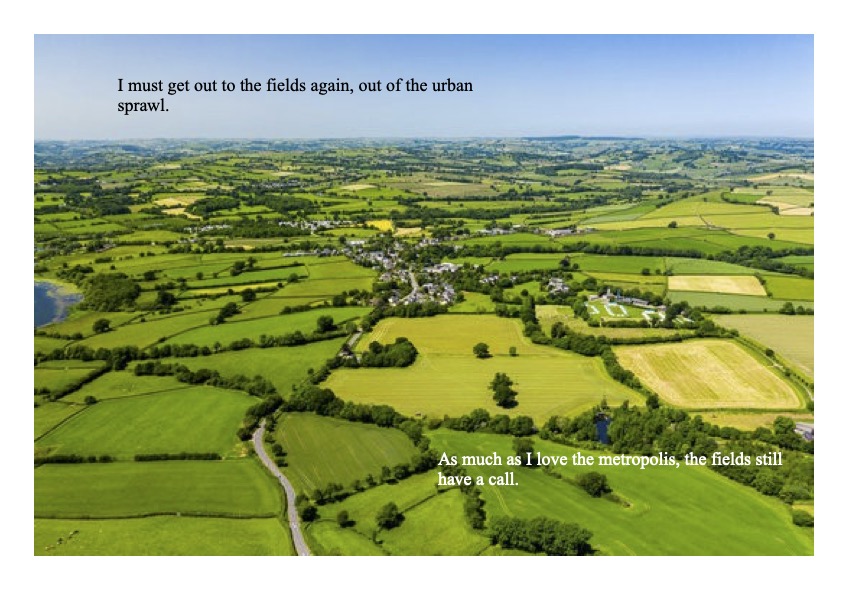
Today I had what felt to me like quite a dramatic realisation: in thirteen years of trundling around (east) London, I have never actually been outside of the city. Of course I have been outside Greater London when I visit my parents or go on holiday etc, but my daily trundles have always been confined within the M25. That’s not necessarily a bad thing- I still have a heck of a lot of the metropolis left to explore- yet I also remember that London is not the entire world, and as awesome and thrilling as the great maelstrom can be, surely there are other places I can get to.

I’m not yet sure how, but it’s surely time to put that right. There must be busses which go outside the city, or paths which lead under the M25. The weird thing is, that somehow feels far, far away, almost as if the rest of the UK is a totally different country from where I now live. Perhaps I have been living in this self-important place for too long, but it makes you think that all that is worth seeing or visiting exists here, so there’s no need to go beyond. Yet I remember towns and villages which are separated by dozens of fields, and which it took time to travel between. Places with their own character, which weren’t part of the same vast urban sprawl. I think I miss such places, so I now want to explore more of the area outside London in my daily trundles. Surely there must be places down in Kent or Sussex which I can get to and look around for an afternoon or so.